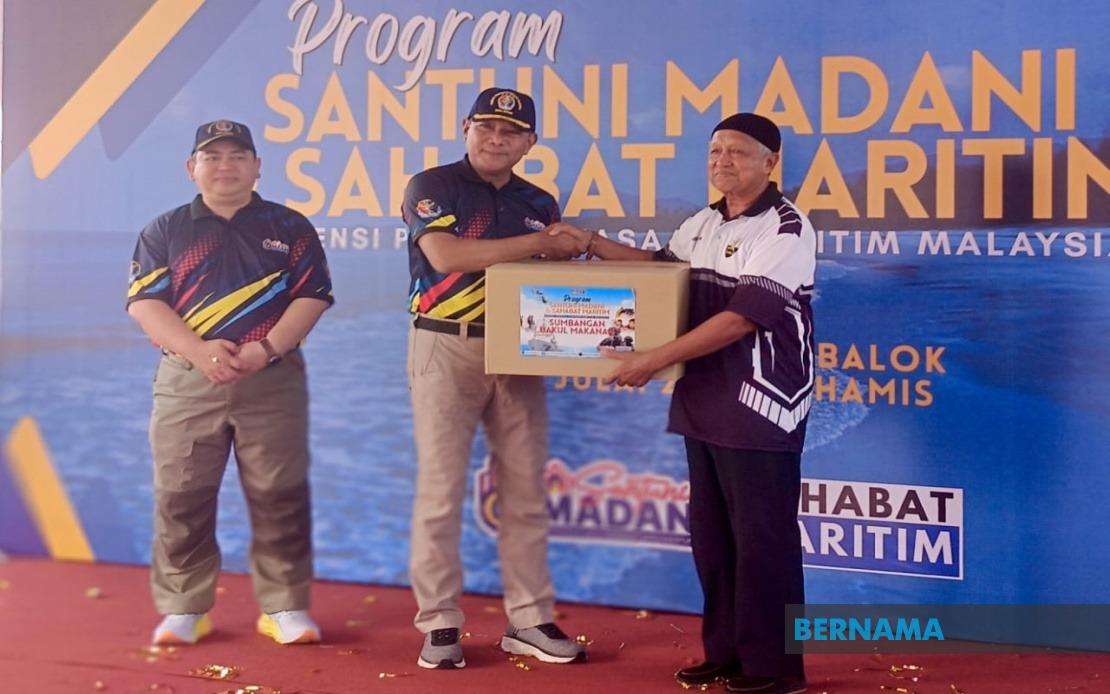
The Malaysian Maritime Enforcement Agency has recorded RM2.29 billion in seizures and detained 516 individuals across various maritime offences during the first half of 2024, underscoring the agency's intensified commitment to securing Malaysia's territorial waters against illegal activities. Maritime Admiral Datuk Mohd Rosli Abdullah, the agency's director-general, announced the figures at an engagement event held in Kuantan, emphasizing that these outcomes reflect MMEA's dedication to upholding national sovereignty and maintaining order in Malaysia's maritime domain.
The composition of the seized contraband reveals the multifaceted nature of maritime crime affecting Southeast Asia's waterways. Locally registered vessels accounted for the bulk of the value, totalling RM2.11 billion in seizures, suggesting significant trafficking of vessels themselves or high-value cargo aboard Malaysian-flagged boats. Beyond vessel seizures, the agency confiscated drugs estimated at RM86.06 million, demonstrating ongoing efforts to intercept narcotics destined for regional markets. Foreign fishing vessels worth RM66 million were also impounded, reflecting the persistent challenge of unlicensed fishing operations in Malaysian waters and the broader pattern of Illegal, Unreported, and Unregulated (IUU) fishing across Southeast Asia.
Smuggling of controlled goods constitutes another critical enforcement domain. Cigarettes valued at RM25.16 million were seized during the six-month period, highlighting the lucrative illicit tobacco trade that diverts government tax revenue and undermines legitimate commerce. Prawns worth RM5.2 million were also recovered, pointing to illegal harvesting or exportation of marine resources, while diesel seizures amounting to RM3.33 million indicate attempts to export government-subsidised fuel to neighbouring countries at profit. These seizures underscore how Malaysian's price controls and subsidies inadvertently create arbitrage opportunities for smugglers targeting regional markets with higher prices.
Mohd Rosli articulated MMEA's strategic priorities during the agency's engagement with coastal communities through the Santuni MADANI and Sahabat Maritim programmes held at Pantai Rekreasi Balok. Beyond enforcement, the agency emphasized public awareness-raising around maritime safety and the cultivation of cooperative relationships between enforcement agencies and fishing communities. This dual approach recognizes that effective maritime security cannot rest solely on reactive interdiction but requires community participation and voluntary compliance among stakeholders dependent on Malaysia's seas for livelihood.
The agency's participation in Ops Tiris alongside other Malaysian enforcement bodies demonstrates the value of integrated, multi-agency operations in tackling maritime crime. A particularly significant recent success illustrates this principle: on June 23, MMEA collaborated with partner agencies to dismantle a cigarette smuggling operation in Tawau, Sabah, resulting in the seizure of contraband cigarettes and a vessel collectively valued at approximately RM64 million. This single operation, representing a substantial portion of the six-month total, exemplifies how coordinated enforcement can deliver impact against organized maritime smuggling networks.
The scale and frequency of seizures raise important questions about trafficking trends in the region. The prevalence of vessel seizures suggests that criminal networks are investing in maritime infrastructure—acquiring or leasing vessels specifically for smuggling operations—rather than merely exploiting existing commercial shipping. This pattern indicates a shift towards more sophisticated, organized maritime crime requiring correspondingly advanced detection and interdiction capabilities from enforcement agencies. For Malaysia, where maritime commerce and fishing represent vital economic sectors, the distinction between legitimate maritime activity and criminal exploitation becomes increasingly difficult to maintain.
From a Southeast Asian perspective, these enforcement outcomes occur within a broader context of maritime challenges affecting the region. The Straits of Malacca and Singapore remain among the world's most congested shipping corridors, creating surveillance difficulties and opportunities for criminal activity. Cross-border smuggling networks exploit porous maritime boundaries and varying regulatory regimes across the region, requiring coordination between Malaysia and neighbouring countries. The prevalence of foreign fishing vessels among seizures underscores regional tensions over resource competition and the inadequate capacity of individual nations to police their exclusive economic zones effectively.
Mohd Rosli's emphasis on preventing the smuggling of controlled and subsidized goods highlights an economic dimension often overlooked in maritime security discussions. Government subsidies designed to protect domestic consumers from commodity price shocks—whether fuel, food, or tobacco—inadvertently create financial incentives for smuggling when neighbouring economies lack equivalent support. The RM3.33 million in diesel seizures alone represents the differential profit margin that criminal operators exploit. Addressing this dimension requires not only stronger enforcement but also regional coordination on subsidy policies and pricing mechanisms.
The agency's continued focus on maritime crime prevention, search and rescue capabilities, and maritime security reflects a comprehensive understanding of MMEA's role within Malaysia's broader national security architecture. Maritime crime exists on a continuum from petty smuggling to large-scale trafficking operations and piracy. By maintaining capabilities across this spectrum, MMEA contributes to general order in Malaysian waters while addressing specific threats to commerce, fishing communities, and national interests. The 516 arrests during this period represent individual accountability for criminal conduct, though the true measure of success requires assessing recidivism rates and the impact of prosecutions on trafficking organization operations.
Looking forward, the enforcement agencies face mounting challenges as criminal networks adapt their tactics and routes. The sophistication evident in the June 23 Tawau operation—involving substantial vessel values and coordinated smuggling infrastructure—suggests that maritime criminals are investing in capabilities that rival those of enforcement agencies in some respects. Sustaining momentum in interdiction requires continued investment in surveillance technologies, personnel training, and cross-border intelligence sharing. For Malaysian policymakers and enforcement leadership, the RM2.29 billion in seizures represents both an achievement in operational terms and an indicator of the scale of contraband flowing through the region's waters.

