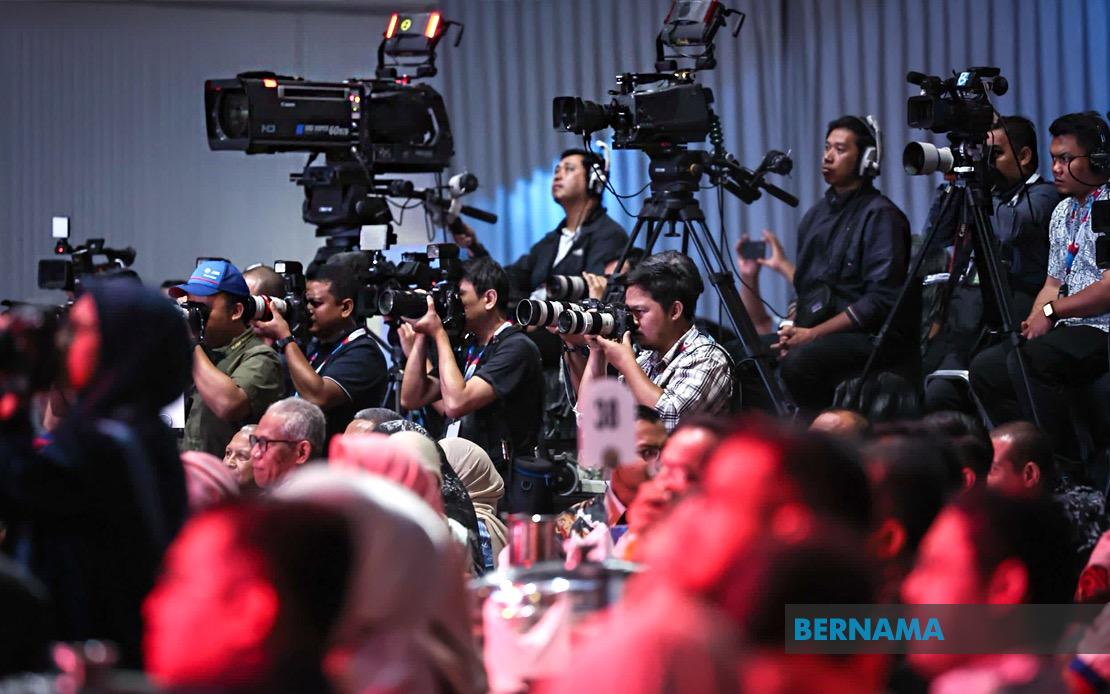
The Malaysian Media Council has thrown its weight behind Prime Minister Datuk Seri Anwar Ibrahim's recent pronouncement that grievances filed against journalists employed by recognised media organisations must first pass through the Council's review mechanism before proceeding to other avenues. The endorsement signals an important alignment between government leadership and media industry self-regulation, addressing long-standing concerns about how disputes between the press and aggrieved parties are handled in Malaysia.
MMM framed the Prime Minister's intervention as vital recognition of its standing as an autonomous regulatory authority overseeing the nation's media sector. The Council emphasised that this approach reinforces its foundational mandate: safeguarding press freedom, elevating journalistic standards, fostering ethical media conduct, and delivering impartial, methodical complaint resolution. By channelling disputes through established frameworks rather than circumventing them, the system aims to protect both the integrity of journalism and the legitimate interests of those affected by media coverage.
Crucially, MMM clarified that its role as a self-regulatory body operates alongside, rather than in place of, judicial and law enforcement mechanisms. The Council does not seek to supplant courts or police investigations, but rather to address matters centred on journalistic practice, editorial standards, reporting accuracy, the right of reply, publication corrections, and allegations of unfair treatment. This demarcation prevents the self-regulatory framework from becoming a shield against legitimate legal accountability while creating a specialized pathway for media-specific disputes.
The Council articulated a fundamental principle underpinning its approach: journalists and media organisations remain fully bound by Malaysian law. However, this legal obligation need not mean that every lodged complaint automatically triggers investigations or punitive action. Instead, complaints must undergo contextual assessment that considers journalism's democratic role, media responsibilities to the public, and the substantive nature of the grievance. This buffer prevents arbitrary targeting of journalists through complaint mechanisms weaponised by malicious actors.
MMM's complaints process begins with an initial assessment by its Secretariat, which determines whether a complaint falls within the Council's jurisdiction and involves journalism or media practice issues. If the complaint qualifies, MMM typically requests the relevant media organisation to provide a response, explanation, or appropriate remedial action. Should preliminary resolution prove impossible, the matter advances to deeper examination using the Council's Code of Conduct and internationally recognised journalism principles. This graduated approach balances expeditious resolution with thoroughness.
The Council rejected characterisations of its mechanism as shielding media from accountability. Instead, it positioned professional review as the mechanism through which genuine media accountability functions properly, transparently, and equitably. The distinction matters profoundly: accountability exercised through arbitrary pressure differs fundamentally from accountability exercised through established standards-based processes. MMM contended that media freedom and media responsibility need not conflict but should reinforce each other, a perspective increasingly central to global debates about press regulation.
MMM's statement occurred against the backdrop of Malaysia's performance in international press freedom rankings, particularly the World Press Freedom Index, which tracks countries' media environments. The Council acknowledged the Prime Minister's implicit concern that Malaysia's standing had suffered, potentially due to perceptions of arbitrary action against journalists or inadequate protection for media practitioners. By advocating for structured, proportionate complaint procedures, MMM positioned professional self-regulation as beneficial to both Malaysia's international reputation and the practical functioning of its media ecosystem.
The Council explicitly invited all stakeholders—government bodies, politicians, public institutions, civil society organisations, and ordinary citizens—to utilise its complaints mechanism when disputes arise concerning media coverage. This inclusive messaging sought to normalise the self-regulatory pathway as the default option for conflicts, steering disputes away from public confrontation, threats, harassment, or punitive measures initiated outside proper channels. A cultural shift toward professional dispute resolution could mitigate the politicisation of media-related grievances.
For Malaysian readers, this development carries several implications. First, it suggests that the government recognises functional media self-regulation as consistent with democratic governance rather than antithetical to it. Second, it establishes a formal, transparent process through which individuals and organisations can seek redress for alleged media wrongs without resorting to litigation or political pressure. Third, it provides journalists and media organisations with a clearer framework for responding to complaints, reducing uncertainty about legal or regulatory exposure. Fourth, it positions Malaysia's media environment within international standards discourse, where self-regulatory bodies are recognised as legitimate governance mechanisms.
For Southeast Asian observers, the model reflects broader regional efforts to balance press freedom with media accountability, a tension acute across the region where concerns about media standards coexist with concerns about authoritarian restriction. Countries such as Indonesia, the Philippines, and Thailand have grappled with similar questions about how to institutionalise media regulation without enabling state censorship. MMM's framework, anchored in journalist participation and transparent procedures, offers a reference point for other jurisdictions seeking comparable approaches.
MMM committed to collaborative implementation of this framework, pledging continued partnership with government, Parliament, media organisations, civil society, and the public. The Council acknowledged that success depended on stakeholder buy-in and willingness to channel disputes through professional processes rather than resorting to pressure campaigns or punitive measures. This commitment suggests MMM recognises its authority as contingent on demonstrable fairness, consistency, and genuine independence.
The broader significance of this moment lies in its potential to establish precedent for how Malaysia addresses future conflicts between media practitioners and other parties. Should the self-regulatory pathway prove effective, credible, and widely utilised, it could substantially diminish the frequency of arbitrary actions against journalists while providing genuine remedies to aggrieved parties. Conversely, should the mechanism falter through ineffectiveness or perceived bias, pressures for more formal, state-directed regulation could intensify, with consequent implications for press freedom. The coming months will reveal whether this alignment between government policy and media self-regulation translates into meaningful protection for journalism and equitable dispute resolution.

