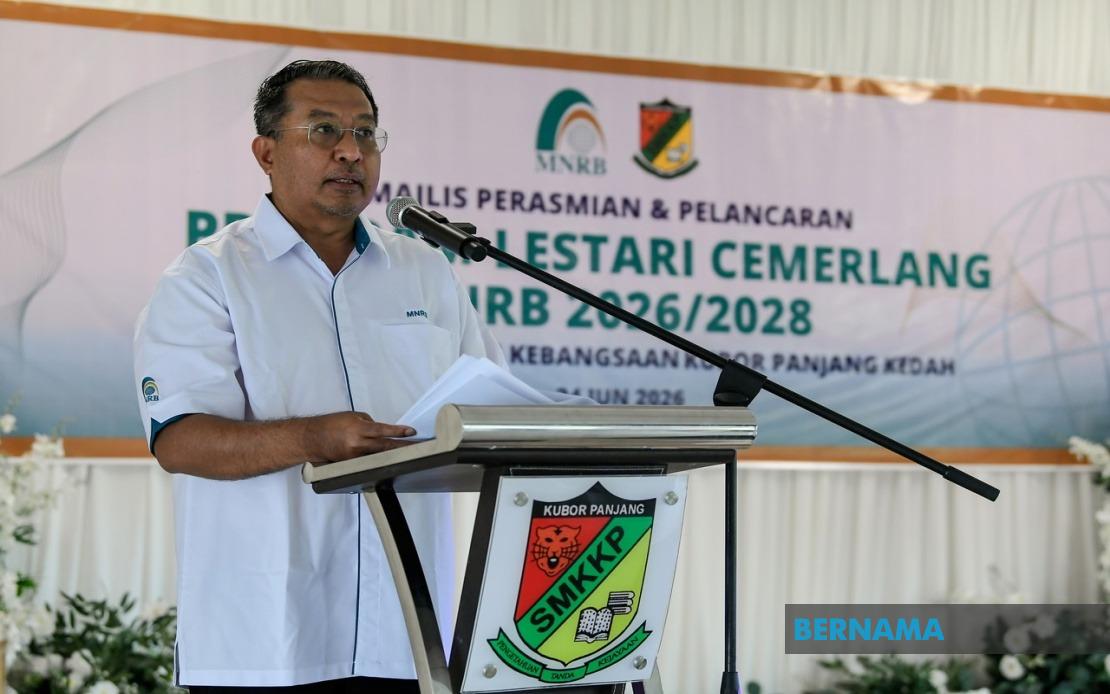
Malaysia's MNRB Holdings Berhad, an investment holding company, has committed nearly RM600,000 to support six schools nationwide through its Lestari Cemerlang Programme, reinforcing the company's long-standing commitment to educational excellence and community development. The initiative was formally launched at Sekolah Menengah Kebangsaan Kubor Panjang in Pendang, Kedah, marking the sixth school to join a programme that has grown steadily since its introduction more than a decade ago.
Datuk Rudy Rodzila Che Lamin, interim president and group chief executive officer of MNRB Holdings, underscored the philosophical foundation of the adopted school programme during the launch ceremony. Established in 2011, the initiative represents a carefully designed corporate social responsibility strategy that moves beyond traditional charitable giving to create lasting structural improvements in educational institutions. The programme's dual focus on academic rigour and character development reflects a holistic understanding of what contemporary schools require to nurture well-rounded citizens capable of competing in an increasingly complex economy.
The geographical spread of the programme demonstrates MNRB Holdings' deliberate focus on supporting institutions across Malaysia's states. Prior to SMK Kubor Panjang's selection, the company had already extended support to schools in Perak, Pahang, Negeri Sembilan, Melaka, and Selangor. This nationwide approach ensures that the benefits of corporate-backed educational enhancement are not concentrated in urban or economically prosperous regions, but rather distributed to communities that may face greater resource constraints. For rural schools particularly, such partnerships often provide access to facilities and expertise that would otherwise remain beyond their operational capacity.
The substance of MNRB's support extends across multiple practical dimensions that address contemporary educational challenges. The company has implemented extra tuition classes targeting Form Five students, a critical juncture when examination performance determines university entrance prospects. Beyond academics, the programme incorporates motivational camps designed to build student resilience and aspiration, elements increasingly recognised as essential to academic success, particularly in communities where educational pathways may seem uncertain. Concurrent investments in physical infrastructure, including upgrades to learning facilities and sports equipment sponsorships, create an environment where students feel valued and motivated to engage seriously with their education.
One particularly significant component of MNRB's intervention involves the establishment of what the company terms MNRB Smart e-Learning Rooms, facilities equipped with smart television technology and reliable internet connectivity. This infrastructure addresses a substantial gap affecting rural Malaysian schools, where inconsistent digital access remains a barrier to participation in modern, technology-enabled instruction. By integrating these spaces into schools' standard learning environments, MNRB is effectively lowering the digital divide and ensuring that students in remote areas can access online educational resources with the same facility as their urban counterparts. The investment in digital infrastructure carries implications extending well beyond individual schools, as it positions rural students to develop technological competency essential for future employment.
Parallel to these institutional supports, MNRB Holdings operates a dedicated scholarship scheme, the Tabung Biasiswa MNRB, that targets exceptional students from participating schools who pursue tertiary education in fields directly relevant to the company's business operations. This year, five top performers from SMK Kubor Panjang have been selected to receive sponsorship covering diploma, bachelor's, and master's level studies. The scheme's strategic alignment with the company's human resource needs represents a pragmatic approach to corporate social investment: by supporting talented students in specific disciplines such as insurance, takaful, and finance, MNRB simultaneously addresses its own talent pipeline requirements whilst creating genuine advancement pathways for high-achieving students from less privileged backgrounds.
The track record of the scholarship initiative demonstrates tangible career outcomes for participating students. Hazlina Hazani, MNRB Group chief people officer, revealed that fourteen students from previously adopted schools have received scholarship support to date, with eight subsequently securing employment within MNRB Group upon graduation. This employment conversion rate is significant, suggesting that the scholarship programme functions as more than symbolic support; rather, it creates genuine, verified pathways from rural schools into professional careers within a major Malaysian corporation. For students without established family networks in the corporate sector, such direct employment access represents a transformative opportunity that might otherwise remain inaccessible.
The distinction between the Lestari Cemerlang Programme and the Tabung Biasiswa MNRB reflects nuanced thinking about how corporate investment can operate at different educational levels. While the former provides broad institutional support benefitting all students at participating schools, the latter creates intensive, selective support for students demonstrating both academic excellence and career interest in MNRB-related fields. This tiered approach allows the company to maximise impact by ensuring that students with the greatest potential for advancement receive concentrated support, whilst simultaneously ensuring that all students at partner schools experience improved facilities and teaching quality.
The launch event, officiated by Kedah State Education Department deputy director Ishak Awang, demonstrates the integration of this corporate initiative within broader state-level educational development frameworks. Such official recognition signals that MNRB's work aligns with government educational priorities, potentially facilitating deeper collaboration between corporate and public sector actors. For rural states like Kedah, where resource constraints are particularly acute, such partnerships become crucial multipliers of educational investment, allowing state education departments to achieve excellence objectives that might otherwise require significantly greater budget allocation.
The implications of MNRB's investment extend beyond the six schools directly receiving support. As a visible example of substantial corporate commitment to rural educational development, the Lestari Cemerlang Programme may inspire comparable initiatives from other major Malaysian companies. Corporate social responsibility in education often functions as much through demonstration effects and norm-setting as through direct financial transfers; when prominent corporations visibly invest in rural school improvement, they create pressure and templates for industry peers to undertake similar commitments. This competitive dynamic between corporations to demonstrate educational responsibility can ultimately benefit far more schools than any single company's direct programmes.
For Malaysian and Southeast Asian policymakers, MNRB's model offers instructive lessons about public-private partnership structures in education. The company's approach combines targeted infrastructure investment with human resource development, creating a comprehensive support ecosystem rather than isolated interventions. The explicit focus on digital learning infrastructure is particularly relevant across Southeast Asia, where technological gaps between urban and rural areas represent a persistent development challenge. By treating smart learning facilities as essential components of educational equity rather than luxury enhancements, MNRB demonstrates how corporate investment can address systemic inequalities in educational access.
Looking forward, the success of the Lestari Cemerlang Programme in reaching six schools raises questions about scalability and sustainability. As the company continues to expand its school adoption network, maintaining programme quality across multiple institutions whilst ensuring that earlier schools continue receiving sustained support will require careful management. The scholarship initiative's focus on career pathways aligned with company needs offers a replicable model, but scaling such programmes requires corresponding growth in hiring capacity or creative partnership arrangements with other firms in complementary sectors. How MNRB manages this expansion will likely influence whether the model becomes a template for other corporations or remains a distinctive but ultimately limited initiative.
The RM600,000 investment represents a meaningful but finite commitment that, when distributed across six schools, translates to approximately RM100,000 per institution—substantial, yet insufficient alone to address the multifaceted challenges facing rural Malaysian schools. The real value of MNRB's approach lies not primarily in the monetary amount, but in the sustained organisational attention, expertise, and networking opportunities that corporate partnership brings to schools that would otherwise lack such support. For participating students and institutions, MNRB's presence creates access to professional mentoring, employment networks, and technological infrastructure that money alone cannot purchase. This recognition of corporate partnership's multidimensional value offers important perspective for discussions about education funding and development, highlighting how strategic non-monetary contributions often matter as much as direct financial transfers in creating genuine educational transformation.