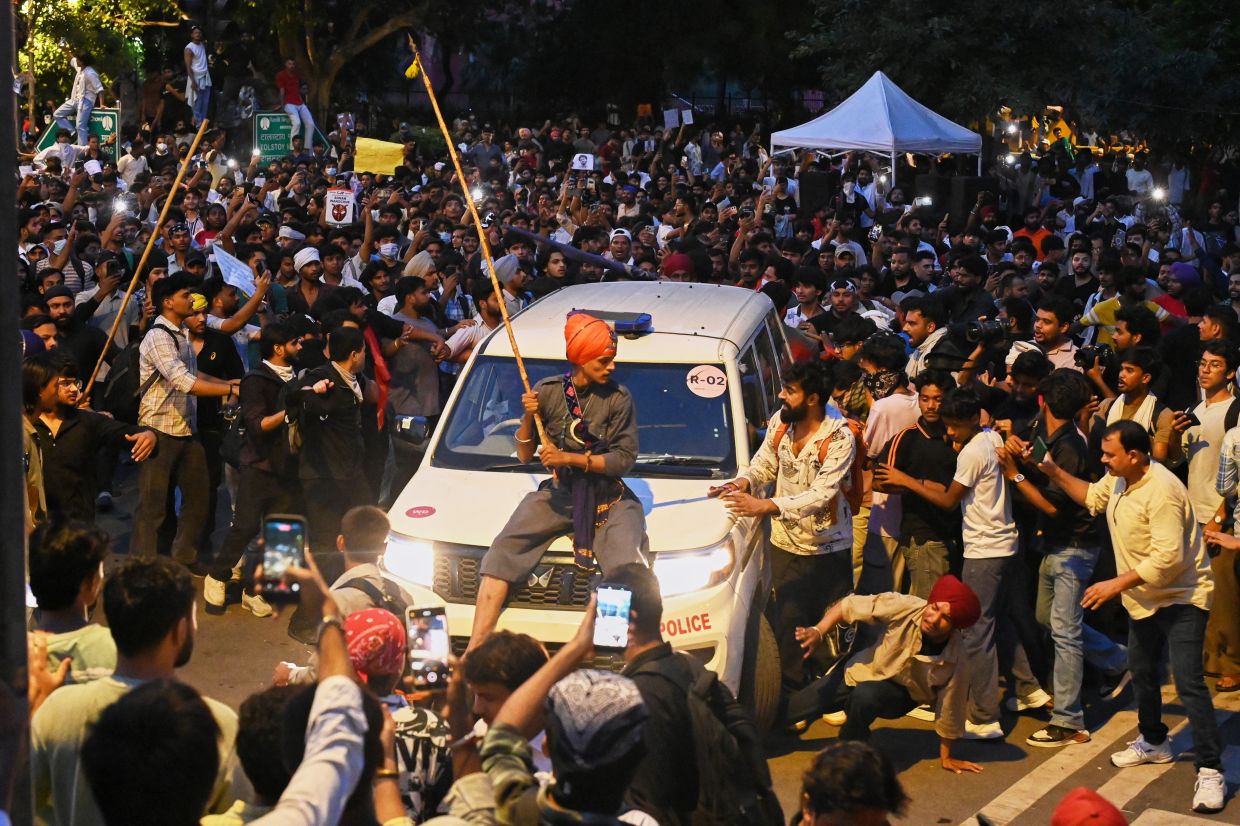
Indian Prime Minister Narendra Modi has directly addressed escalating student protests by pledging "stringent punishment" for those responsible for examination irregularities, signalling the scale of public discontent his government now faces. Speaking through social media on Thursday, Modi stated that establishing fast-track courts to prosecute those involved in question paper leaks would be a priority, emphasising that "nothing is more important than the welfare and future of our youth." His intervention came after the Cockroach Janta Party (CJP), a social media-driven movement, mobilised thousands of demonstrators in New Delhi on Wednesday in what represents one of the most significant challenges to Modi's authority since his electoral victory for a third term in 2024.
The crisis centres on a series of damaging examination failures that have eroded public confidence in India's testing infrastructure. A particularly high-profile incident saw the leak of a medical entrance examination question paper, necessitating the retaking of tests by over two million candidates nationwide. A parallel controversy involving online marking systems for nearly two million secondary school students has further inflamed frustration. These systemic failures have become a focal point for broader youth grievances, with students demanding accountability and the resignation of the education minister.
The CJP movement itself represents a fascinating evolution in grassroots activism within India's digital landscape. Originating in May as satirical commentary responding to Chief Justice Surya Kant's controversial remarks describing young people as "cockroaches" and "parasites" during court proceedings, the movement rapidly transformed into a vehicle for articulating deeper concerns about employment scarcity, limited opportunities for younger generations, and what participants characterise as increasingly authoritarian governance under Modi. With millions of social media followers, the CJP has channelled youthful frustration into coordinated action that transcends the initial education policy trigger.
Mondayís confrontation between security forces and protesters represented a turning point in the agitation's intensity. As tens of thousands attempted to march towards parliament on the opening day of the monsoon session, police deployed tear gas and baton charges to disperse the crowd. The demonstrators responded with stone-throwing, resulting in the largest street protest in the capital in approximately five years. At least 178 individuals, including security personnel, sustained injuries during the violent clashes, according to official police accounts. Wednesday's renewed violence outside the Jantar Mantar protest site, which culminated in late-night police actions, drew additional criticism from CJP spokesman Ashutosh Ranka, who alleged demonstrators were "brutally" beaten following an internet shutdown.
Disputes over police tactics have become a secondary flashpoint, with the CJP and opposition parties contesting official narratives about demonstrator behaviour. Whilst Delhi Police maintain that protesters attacked officers with stones and plastic bottles, causing serious injuries, the opposition characterises the police response as disproportionate suppression of legitimate dissent. This competing narrative reflects broader tensions about the government's handling of public criticism, with opposition figures like Congress Party leader Rahul Gandhi using the platform to attack Modi directly, accusing him of destroying India's education system and protecting those responsible for its degradation.
The geographical spread of demonstrations underscores the movement's resonance beyond Delhi's political epicentre. Smaller protests emerged in major urban centres including Mumbai, Bengaluru, and Patna on Wednesday, suggesting that examination fraud has catalysed discontent with deeper structural issues affecting young Indians. This distribution pattern parallels successful youth-led movements elsewhere in the region, most notably the 2024 student protests in neighbouring Bangladesh that precipitated the government's collapse and forced Sheikh Hasina's departure from office.
Regional significance extends further still. On Thursday, Bangladeshi students announced plans for a "torch rally" to demonstrate solidarity with Delhi's protesters, signalling how educational grievances and generational frustrations transcend national boundaries in South Asia. The parallels between Bangladesh's transformative 2024 student movement and India's emerging agitation reflect commonalities in how young people across the region perceive institutional failures and governmental accountability.
Politically, Modi's governing coalition faces mounting pressure from opposition parties who have weaponised the protests within parliament itself. Members have disrupted legislative proceedings whilst demanding a formal apology from the Prime Minister regarding Monday's police action. This parliamentary dimension compounds the government's challenges, transforming street-level discontent into institutional conflict that complicates legislative business and sustains media attention on the administration's crisis management failures.
The examination system's collapse of credibility poses particular long-term hazards for India's human capital development. When standardised tests become unreliable mechanisms for educational and professional advancement, the consequences ripple through career pathways and social mobility expectations. Young people facing uncertainty about whether test results genuinely reflect merit have legitimate cause for anger, especially given that millions have invested time and resources in preparation. This dimension explains why student movements, once activated, often persist beyond initial triggering events.
Modi's swift response, whilst addressing immediate political pressure, remains circumscribed by the depth of systemic problems requiring resolution. Fast-track courts processing fraud cases addresses accountability but cannot rebuild institutional trust that examination irregularities have severely damaged. The government must simultaneously confront questions about education system governance, employment landscape challenges, and generational anxiety about India's future that the CJP movement has successfully channelled into political consciousness. Whether Modi's administration can satisfy these multifaceted demands whilst managing regional opposition pressure will determine whether this movement represents a temporary crisis or a more enduring political realignment reflecting youth disengagement from current governance models.

