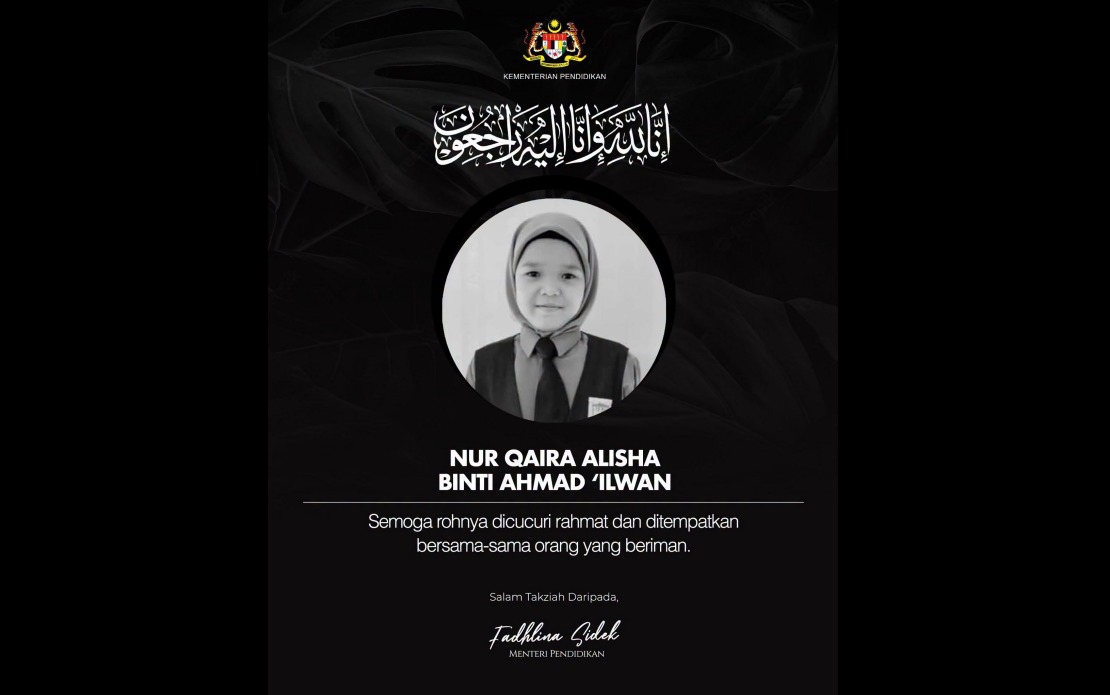
Education Minister Datuk Seri Fadhlina Sidek has instructed the Ministry of Education's Integrity Unit to pursue investigations into a formal complaint lodged by relatives of Nur Qaira Alisha Ahmad Ilwan, a primary school pupil whose recent death has raised serious questions about student welfare protocols in Malaysian schools. The directive comes after the Kedah State Education Department conducted its own preliminary investigation into the matter, signalling escalating concern within government circles over the circumstances surrounding the child's passing.
The minister's announcement reflects the gravity with which authorities are treating the case, emphasising that any investigative steps must adhere to established procedures and uphold fairness to all stakeholders involved. Fadhlina stressed that the Ministry of Education views matters concerning pupil safety and wellbeing with utmost seriousness, positioning student protection as a central institutional priority. Her statement on social media also extended formal condolences to the bereaved family, acknowledging their grief whilst the investigation proceeds.
Nur Qaira's medical history presents a critical dimension to the unfolding inquiry. The nine-year-old had lived with a heart condition since infancy—diagnosed when she was merely three months old—a reality that prompted her school to formally exempt her from participating in competitive sports activities. The family possessed documented medical evidence confirming her vulnerability, which the school administration reportedly held on record. Yet according to parental accounts, these protections proved insufficient to prevent a sequence of events that would ultimately prove catastrophic.
On April 15, during what is typically a routine school event—the selection process for sports house competitions—Nur Qaira was allegedly instructed by a teacher to participate in a running activity. Her parents contend that this directive contradicted the school's own exemption granted on medical grounds and disregarded explicit medical advice communicated to the institution through an official letter detailing her cardiological status. The alleged instruction to run represents, from the family's perspective, a fundamental breach of duty of care that placed their child in immediate physical jeopardy.
Nine days after the disputed sports event, Nur Qaira's condition deteriorated sharply. On April 24, she experienced severe vomiting accompanied by facial swelling around her eyes—warning signs that demanded urgent medical intervention. Her parents rushed her to Sultanah Bahiyah Hospital in Alor Setar, where doctors conducted comprehensive diagnostic procedures. Medical assessment revealed heart failure stemming from decompensated dilated cardiomyopathy—a serious weakening of the heart muscle that reduces its pumping capacity. For a child already living with chronic cardiac compromise, such decompensation proved catastrophic. Nur Qaira subsequently succumbed to her condition whilst under hospital care.
The timeline connecting the April 15 sports event to Nur Qaira's hospitalisation and death within a fortnight suggests a possible causal relationship that investigators must now examine thoroughly. The question of whether the physical exertion precipitated or materially worsened her underlying condition forms the crux of the family's allegation and will likely dominate the inquiry's technical and procedural dimensions. Medical experts will need to assess whether a child with her specific cardiac history should have engaged in strenuous running activity and whether alternative accommodations existed.
This case illuminates persistent challenges within Malaysia's education system regarding the implementation of duty of care protections for students with documented medical vulnerabilities. Schools receive medical correspondence and exemption certificates intended to shield vulnerable pupils from harm, yet the gap between formal policy and ground-level execution remains a persistent concern. Teachers and administrators must balance inclusive school participation with individual health protections—a responsibility demanding careful judgment and adherence to established guidelines.
The involvement of the MOE's Integrity Unit signals that the investigation will extend beyond simple procedural compliance to examine whether institutional failures occurred and whether accountabilities should be assigned. The inquiry must determine what communication breakdowns, if any, permitted a teacher to override established medical exemptions, whether training inadequacies contributed to the incident, and what systemic reforms might prevent similar tragedies. Such investigations often expose uncomfortable truths about professional standards, supervision, and institutional cultures.
For Malaysian parents managing children with chronic health conditions, this case will reverberate as a cautionary reminder regarding the need for robust documentation, direct communication with school leadership, and proactive advocacy. Many families depend on schools to implement medical protocols conscientiously, and the Nur Qaira case underscores that formal exemptions alone provide insufficient protection without aligned school culture and staff accountability. Parents across the nation will await the investigation's conclusions with considerable concern.
The broader implications extend to questions of institutional responsibility within Malaysia's education ecosystem. Schools employ professional educators entrusted with safeguarding children during school hours—a trust that demands scrupulous attention to medical guidance and individual circumstances. When that trust appears violated through allegedly disregarding documented health contraindications, public confidence in school safety protocols faces genuine erosion. The MOE's forceful intervention and commitment to proper investigation represent necessary steps toward restoring institutional credibility and reassuring parents that student welfare constitutes a non-negotiable priority.
As the Integrity Unit commences its formal investigation, the education ministry faces a critical juncture in determining not merely what happened on April 15 and subsequently, but why existing safeguards failed to protect a vulnerable child. The inquiry's findings will likely influence policy revisions, training enhancements, and staff accountability measures across Malaysian schools. For Nur Qaira's family, the investigation offers a formal mechanism for truth-seeking and potential accountability, though no institutional process can restore their profound loss. The case will inevitably shape how Malaysian schools balance inclusion, participation, and protection for medically vulnerable students.

