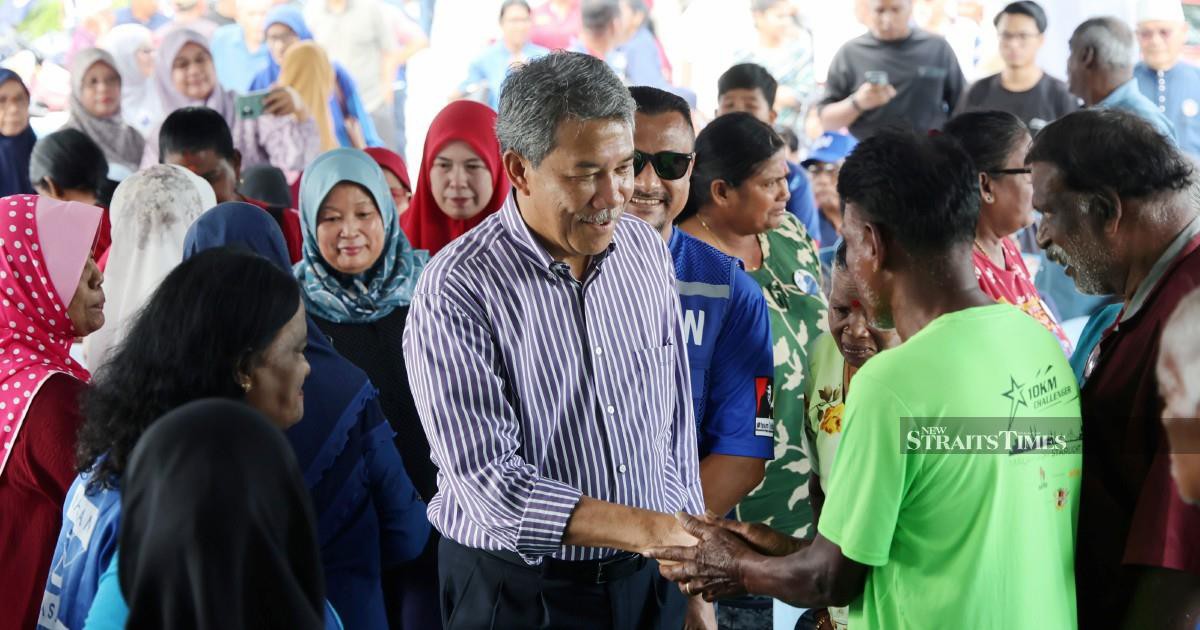
Datuk Seri Mohamad Hasan, Malaysia's Foreign Minister, made a striking declaration of loyalty in Rembau, indicating that he stands prepared to relinquish his ministerial portfolio at the behest of Prime Minister Datuk Seri Anwar Ibrahim. The statement carries particular weight in Malaysia's political landscape, where ministerial positions represent significant power bases and carefully guarded portfolios. Tok Mat, as he is popularly known, essentially signalled unconditional subordination to the prime minister's authority, a posture that reflects both the hierarchical nature of cabinet governance and the contemporary volatility of coalition politics in Malaysia.
The timing of Mohamad Hasan's declaration arrives at a moment when Malaysia's political environment remains fluid despite relative stability under Anwar Ibrahim's tenure since November 2022. The country's coalition government, comprising Barisan Nasional, Pakatan Harapan, and other political partners, operates on consensus and consensus-building often requires ministers to demonstrate flexibility regarding their positions. By publicly pronouncing his readiness to resign, the Foreign Minister is essentially removing any perception that he represents an obstacle to the prime minister's broader political or policy objectives. This becomes particularly relevant given the Foreign Ministry's centrality to Malaysia's international standing and diplomatic relationships across Southeast Asia and beyond.
Modamad Hasan's portfolio encompasses Malaysia's relationship with neighbouring Indonesia, Singapore, Thailand, and Brunei, alongside strategic engagements with the ASEAN secretariat and major powers including China, India, the United States, and the European Union. The Foreign Ministry also oversees Malaysia's positions on regional issues including maritime disputes, trade arrangements through ASEAN frameworks, and humanitarian concerns. A change in the ministry's leadership would invariably carry implications for continuity in these multifaceted relationships, making the minister's personal equanimity toward potential removal a matter of diplomatic significance.
As a senior politician with extensive experience in Negeri Sembilan politics and, previously, as Menteri Besar of that state, Mohamad Hasan brings considerable administrative credentials to his current portfolio. However, his readiness to step aside at the prime minister's discretion underscores the reality that ministerial tenure in Malaysia's cabinet system remains subject to the premier's confidence and broader coalition management requirements. Political observers often interpret such statements through multiple lenses: some view them as genuine expressions of party discipline and loyalty, while others perceive them as calculated political communication designed to demonstrate reliability to the prime minister and stability to the public.
The declaration also reflects broader dynamics within Malaysian coalition politics, where smaller parties or individual figures sometimes face pressure regarding their ministerial positions. Mohamad Hasan's statement essentially removes himself from any potential controversy that might arise regarding whether he would resist removal, instead positioning him as a cooperative team player willing to sacrifice personal position for the government's stability or the prime minister's strategic objectives. This proactive stance contrasts with situations in Malaysian political history where ministers have resisted removal, creating public disputes that damaged coalition cohesion.
From a Malaysian governance perspective, the statement raises questions about continuity in foreign policy implementation. The Foreign Ministry manages long-term diplomatic relationships, trade negotiations, and multilateral engagement processes that extend across years or decades. Ministers who serve longer tenures develop deeper institutional knowledge, established networks with foreign counterparts, and accumulated diplomatic capital that enhances Malaysia's negotiating position. Conversely, frequent ministerial changes can disrupt policy continuity and necessitate repeated relationship-building efforts with international partners.
For regional observers in Southeast Asia, Malaysia's Foreign Ministry leadership carries weight beyond domestic Malaysian politics. As a major ASEAN member state and a country with significant economic and strategic interests throughout the region, the continuity and competence of Malaysia's foreign minister influences regional stability, trade relationships, and ASEAN's collective positioning on international issues. Any transition in the ministry would warrant attention from neighbouring governments and international partners monitoring Malaysian foreign policy directions.
Modamad Hasan's background in Negeri Sembilan state politics demonstrates his capacity for political manoeuvring within Malaysia's federal system. His previous role as Menteri Besar exposed him to managing state-level interests, negotiating with federal authorities, and building coalition support—experiences that translate into understanding cabinet dynamics and political negotiation. The Foreign Minister's current stance suggests he recognises these realities and has chosen a defensive political posture that maximises his perceived value to the government through demonstrating reliable compliance.
The broader context of Malaysian cabinet dynamics reveals that ministerial positions, despite their importance, ultimately remain subject to prime ministerial prerogative. Unlike some political systems where ministers enjoy constitutional protections or extended tenures, the Malaysian cabinet structure grants the prime minister considerable latitude in determining ministerial composition. This constitutional reality means that ministers who wish to survive politically must maintain positive relationships with their premier and demonstrate themselves as assets rather than political liabilities.
For Malaysian citizens and regional observers, Mohamad Hasan's statement essentially confirms that the Foreign Ministry remains under the prime minister's direct control, with its leadership contingent on Anwar Ibrahim's continued confidence. This arrangement can be interpreted positively as ensuring that foreign policy remains aligned with the premier's broader vision and political objectives, or critically as potentially subordinating diplomatic expertise to short-term political considerations. The statement ultimately illustrates how Malaysian cabinet governance operates as a carefully balanced system requiring continuous performance of loyalty alongside effective policy implementation.

