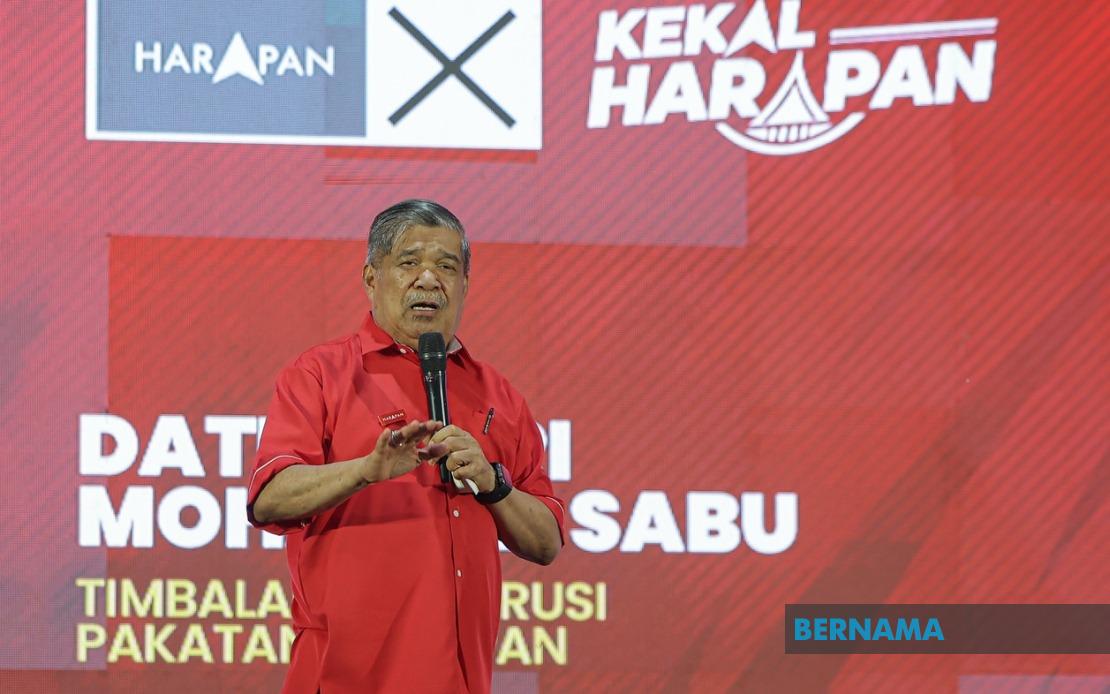
Datuk Seri Mohamad Sabu, the president of Amanah, has issued a pointed warning to voters in Negeri Sembilan, urging them to turn their backs on what he calls the 'marriage-divorce' brand of politics increasingly visible in Malaysia's political landscape. Speaking in Seremban on July 22, the Amanah leader characterized this phenomenon as a corrosive pattern wherein political parties abandon their principles and previous partnerships whenever it serves their immediate interests, treating alliances as temporary conveniences rather than substantive commitments.
The term 'marriage-divorce' politics, as Mohamad Sabu articulated it, encompasses the broader practice of frequent party-hopping and the calculated shifting of political alliances based solely on the pursuit of governmental power. This behavior, he argued, represents a fundamental threat to Malaysia's long-term political health, eroding public trust in democratic institutions and breeding uncertainty about which partners will align with whom in any given electoral cycle. Such instability, he suggested, undermines the capacity of political coalitions to develop coherent policy platforms or maintain consistent governance principles.
In his assessment, the normalization of such opportunistic realignments poses a particular danger to Malaysia's political culture. Rather than establishing parties based on ideological consistency or shared principles, the current trend incentivizes politicians to view coalition arrangements as temporary tactical maneuvers. This creates a system where voters cannot reasonably predict which parties will govern together or what priorities will guide their joint decision-making, fundamentally compromising democratic accountability and long-term policy planning.
To illustrate his concern, Mohamad Sabu offered a detailed chronology of one party's shifting loyalties, presenting a pattern that he characterized as emblematic of the broader problem afflicting Malaysian politics. According to his account, certain political actors first aligned themselves with Barisan Nasional, subsequently divorced that partnership to marry Pakatan Rakyat, only to undergo another separation in 2015. The cycle continued with a remarriage to UMNO-BN, followed by yet another dissolution after just over a year, succeeded by an alliance with Bersatu that similarly terminated. He pointed out that these same actors are now attempting to woo what he sarcastically termed their 'wife,' referring to BN, suggesting they view political partnerships as interchangeable based purely on electoral calculation.
This cautionary message carries particular resonance for Negeri Sembilan voters, who face genuine choices about which coalitions and leaders will represent their interests in forthcoming contests. By highlighting the instability inherent in alliances forged without ideological conviction, Mohamad Sabu is essentially asking voters to prioritize consistency and principle over the flashy promises of parties willing to shift allegiances at a moment's notice. His framing suggests that supporting such parties ultimately harms voters' own interests, as they cannot depend on their elected representatives to maintain stable, predictable governance.
The broader context for Mohamad Sabu's remarks reflects genuine tensions within Malaysia's coalition-based political system, where the incentives for party mobility have arguably grown stronger in recent years. The rise of swing voters, demographic shifts, and the fragmentation of electoral blocs have all contributed to an environment where defection from one coalition to another sometimes appears electorally rational, at least in the short term. However, Mohamad Sabu's intervention suggests that Amanah believes voters are increasingly fatigued by such instability and are ready to reward political consistency.
His invocation of the 'marriage-divorce' metaphor is particularly clever rhetorically, as it frames such political behavior not merely as tactical maneuvering but as betrayal and infidelity. By using domestic relationship language, Mohamad Sabu taps into voters' intuitive understanding of trust and commitment, suggesting that parties engaging in frequent realignments are fundamentally untrustworthy partners in governance. This emotional framing could prove influential in shaping public perception of which coalitions deserve voter support.
The Amanah president's explicit call for voters to reject such politics rather than merely criticizing it represents a clear mobilization effort ahead of electoral contests. His message targets not only the rival parties he implicitly criticizes but also potentially disillusioned voters within broader coalitions who may be considering their electoral options. By positioning Amanah as the antidote to political opportunism, Mohamad Sabu is attempting to redefine the political debate from one about specific policies to one about fundamental questions of political integrity and trustworthiness.
For Malaysian voters more broadly, particularly in Negeri Sembilan where Mohamad Sabu delivered his remarks, the underlying message is that political stability and consistent governance matter more than promises made by parties with a demonstrated history of abandoning previous commitments. The warning serves as an implicit endorsement of maintaining existing coalitions and supporting parties that have demonstrated loyalty to their political partnerships, rather than switching allegiances in pursuit of short-term tactical advantages. Whether this framing will prove persuasive to voters remains to be seen, but it clearly signals Amanah's belief that public appetite for political fickleness has reached its limits.

