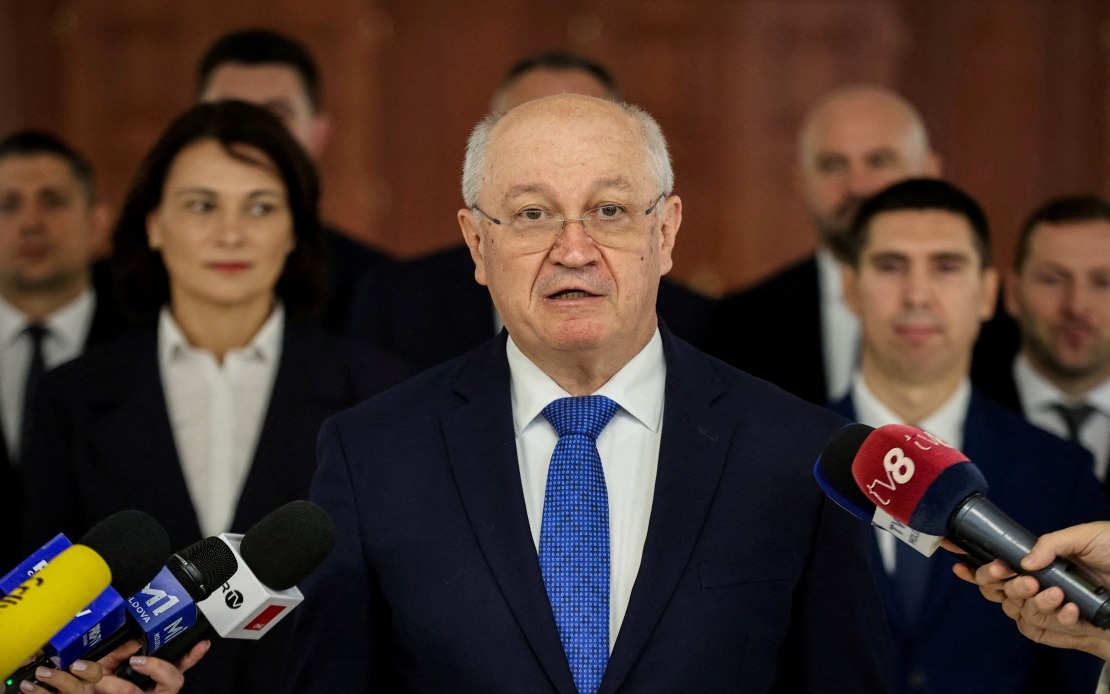
Alexandru Munteanu, Moldova's Prime Minister for the past eight months, announced his resignation on Friday without providing extensive justification for the decision. The departure marks a significant development in the country's political landscape, as Munteanu had assumed the premiership in November 2025 during a period of considerable transition for the Eastern European nation. His statement, released through social media platform X, indicated that the decision reflected a fundamental divergence between his core beliefs and the demands of the office.
The brevity and vagueness of Munteanu's departure statement have immediately sparked speculation within Moldova's political circles and among international observers. By declining to elaborate on the specific circumstances that precipitated his resignation, the outgoing prime minister has left considerable room for interpretation regarding the underlying tensions that led to his exit. This measured approach contrasts with more confrontational resignations elsewhere in the region, where outgoing officials typically use their departure as an opportunity to level criticism at their successors or describe irreconcilable policy disagreements.
Moldova's political environment has grown increasingly complex in recent years, shaped by competing pressures from Russia and the European Union, internal disputes over economic reform, and questions about the trajectory of democratic governance. The country remains deeply divided between pro-Western and pro-Russian factions, a tension that has complicated policymaking at the highest levels. Munteanu's tenure, though brief, coincided with Moldova's continued navigation of these geopolitical and domestic challenges, suggesting that his resignation may reflect the considerable strain placed upon senior officials operating within such contested terrain.
The timing of Munteanu's departure occurs as Moldova faces several pressing policy decisions. Energy security remains a critical concern, particularly following disruptions to Russian gas supplies that have periodically affected the nation. Simultaneously, Moldova has pursued deeper integration with European institutions while managing complex relations with its Russian-backed separatist enclave in Transnistria. These interconnected challenges require sustained political attention and consensus-building, responsibilities that Munteanu evidently found increasingly incompatible with his personal convictions.
For Malaysia and other Southeast Asian nations observing developments in Eastern Europe, Moldova's political instability offers instructive parallels regarding the vulnerabilities of smaller states caught between competing great powers. The pressures that contributed to Munteanu's resignation reflect broader patterns affecting nations that occupy geopolitically sensitive positions, seeking to balance divergent external pressures while pursuing domestic reform agendas. Understanding these dynamics proves valuable for regional policymakers grappling with comparable geopolitical tensions.
The succession question now becomes paramount for Moldova's governing coalition. The incoming prime minister will inherit the same structural constraints and competing mandates that proved untenable for Munteanu, suggesting that his replacement will face similarly formidable challenges from the outset. The selection process may reveal whether Moldova's political leadership possesses sufficient consensus on fundamental governance questions or whether internal divisions will continue to destabilise the executive branch.
Munteanu's departure also raises questions about the sustainability of Moldova's current coalition arrangements. If a prime minister with eight months' tenure concludes that continued service contradicts his principles, observers must consider what institutional or political factors created such an impasse. Whether the issue involved specific policy disputes, personality conflicts within the coalition, or principled objections to broader governmental direction remains unclear, though each possibility carries distinct implications for Moldova's immediate political trajectory.
International actors, particularly the European Union and neighbouring Romania, have invested considerable diplomatic capital in supporting Moldova's European orientation. The sudden resignation of a sitting prime minister during this period of critical juncture creates uncertainty regarding the continuity of Moldova's reform momentum and EU-aligned trajectory. Stability within the executive branch has proven essential for advancing the institutional and legislative changes necessary for closer European integration.
The manner of Munteanu's exit, characterised by restraint rather than recrimination, may actually facilitate smoother political transition than more acrimonious departures would permit. By avoiding public confrontation and maintaining dignity in resignation, he preserves possibilities for continued involvement in Moldova's political life should circumstances change. This approach contrasts with more divisive resignation scenarios that leave permanent scars within governing coalitions and make future cooperation difficult.
Looking forward, Moldova's political system will be tested by its ability to identify and deploy executive leadership capable of managing both the genuine policy complexities facing the nation and the geopolitical pressures that constitute the permanent backdrop of governance in this region. Munteanu's resignation, though momentarily destabilising, may ultimately prove instructive regarding the genuine constraints facing Moldova's leaders and the sincerity required of political figures willing to acknowledge when circumstances exceed their capacity to govern ethically and effectively.

