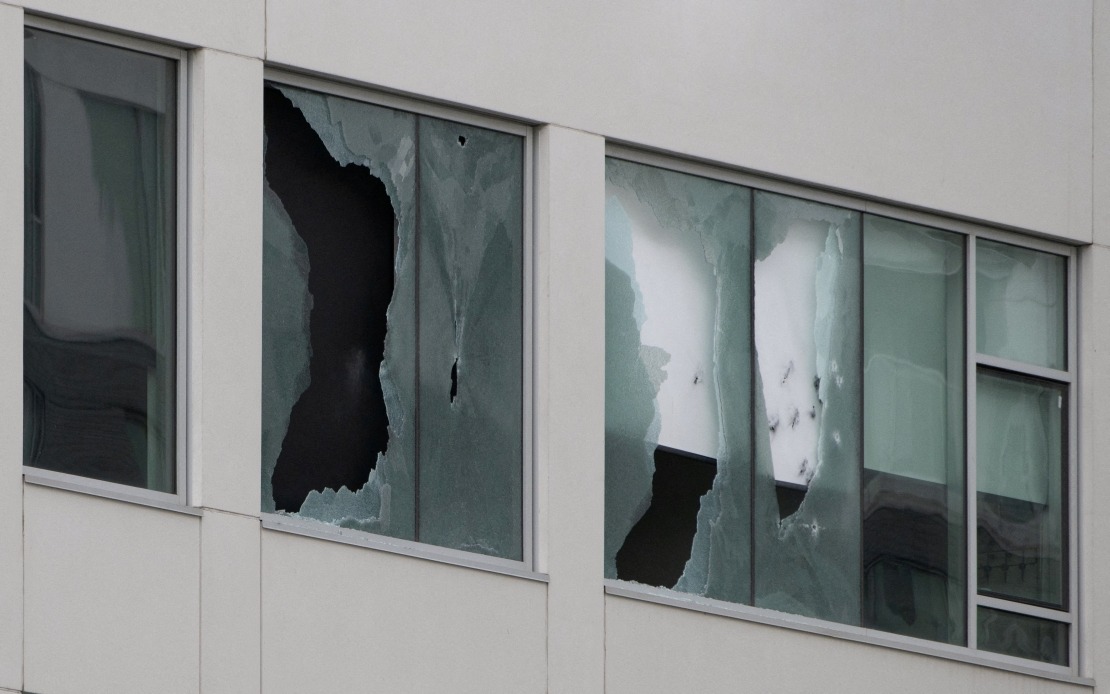
A law enforcement officer was among three people fatally shot in an incident in Montreal on Monday, marking a tragic loss for Canada's second-largest city and its police force. Montreal police confirmed the deaths through a statement on social media, expressing profound sorrow at losing one of their own while performing official duties. The incident unfolded in the Côte-des-Neiges neighbourhood, a densely populated area on the city's west side, and prompted an immediate emergency response and neighbourhood lockdown.
According to authorities, the fatal toll included the police officer responding to the scene, an unnamed resident, and the individual suspected of carrying out the shooting. In addition to those killed, two other people sustained injuries during the violent encounter, though Montreal police officials noted that the wounded officer was no longer in life-threatening condition following initial medical treatment. The circumstances surrounding the shooting suggested an escalating confrontation rather than a random act, with investigators moving swiftly to piece together the sequence of events.
When Montreal police chief Fady Dagher addressed the media, he disclosed that responding officers came under gunfire upon arriving at the location. The suspect was subsequently neutralised at the scene, according to police statements. Authorities have indicated that evidence points to a lone actor rather than a coordinated incident, though investigators remained engaged in examining the full details of what transpired. The emergency alert that had warned residents to shelter indoors and secure their doors was lifted once police determined the immediate threat had been eliminated.
Investigators moved quickly to rule out any connection to terrorism, a significant determination given the gravity of the incident and heightened security concerns across North America. Their preliminary assessment concluded there were no additional suspects at large and no evidence suggesting the shooting was motivated by extremist ideology in the conventional sense. This conclusion allowed authorities to downgrade certain emergency protocols while still maintaining an active investigation into the underlying causes and circumstances of the violence.
Early reporting, including accounts from Canadian broadcaster CBC, suggested the suspected shooter may have left behind written material containing language and themes associated with the incel movement, a loosely affiliated online community characterised by deep antipathy toward women and promotion of traditional gender hierarchies. The incel subculture, which derives its name from "involuntary celibate," has been linked to several violent incidents across North America in recent years, with adherents expressing grievances rooted in misogynistic ideology. However, security officials have not officially confirmed this connection, and such details remain under investigation pending full forensic and digital analysis.
The killing of an on-duty police officer resonates deeply within law enforcement communities across Canada and beyond, underscoring the persistent dangers officers face during emergency interventions. Montreal police authorities emphasised the sacrifice made by the fallen officer and the broader risks inherent in police work. Such incidents typically trigger comprehensive reviews of response protocols and officer safety measures within departments, with particular attention to circumstances in which officers face armed resistance upon arrival at a scene.
The Côte-des-Neiges neighbourhood, home to diverse immigrant communities and significant residential density, has historically served as a focal point for community policing initiatives in Montreal. The incident's occurrence in this area carries implications for neighbourhood stability and resident confidence in public safety. Local residents were instructed to remain indoors and lock doors during the active emergency, illustrating the disruption such events inflict on daily life and community cohesion.
Canadian law enforcement agencies have increasingly monitored online communities espousing misogynistic rhetoric and extremist ideology, particularly following several high-profile incidents attributed to incel ideology. The potential connection in this case, should it be confirmed, would add another chapter to a concerning pattern of real-world violence inspired by extreme online discourse. Researchers and security analysts have warned that such communities represent an evolving threat landscape distinct from traditional terrorism but equally capable of motivating violent action.
The ongoing investigation into the Montreal shooting will likely examine the shooter's online activity, personal history, and any warning signs that may have been overlooked by family members, acquaintances, or online platforms. Such examinations have become routine in Canadian law enforcement responses to mass violence incidents, as authorities seek to identify intervention points where tragedy might be prevented. The outcome of this investigation may inform policy discussions around threat assessment, social media monitoring, and mental health resources in Canada.
For Malaysian readers and Southeast Asian observers, the Montreal incident reflects broader North American security challenges emerging from online radicalisation and incel-related violence. While such incidents remain statistically rare, their impact on public confidence and police operations resonates across democratic societies. The case underscores how localised online communities with international reach can inspire real-world harm, a phenomenon relevant to security discussions in Southeast Asia where internet penetration and digital culture continue to expand rapidly.
The death toll and circumstances of Monday's shooting will likely prompt renewed policy debates in Canada regarding gun violence, threat assessment protocols, and responses to online extremism. Montreal authorities and provincial officials may face questions about prevention mechanisms and the adequacy of current monitoring systems for identifying individuals at risk of committing violence. The incident serves as a sobering reminder that public safety challenges in modern democracies extend beyond conventional crime to include threats emanating from ideologically motivated individuals operating within digital spaces.