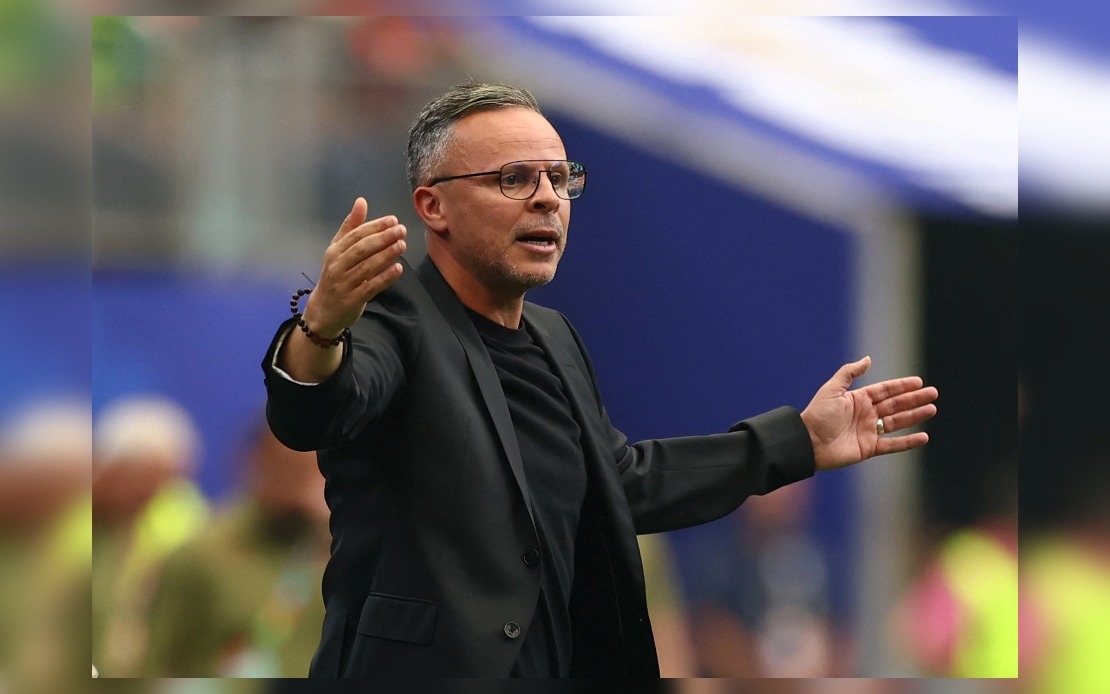
Morocco has firmly established itself among the tournament's elite teams rather than remaining an underdog curiosity, according to head coach Mohamed Ouahbi following the Atlas Lions' dominant 3-0 dismantling of Canada in the Round of 16. Speaking after Saturday's Houston match, Ouahbi reflected on how perceptions of his country's footballing capabilities have shifted dramatically, with Morocco now widely recognised as a substantial force capable of winning matches at the highest level. The coach's remarks underscore a genuine transformation in how the global football community views the North African nation, a shift earned through sustained competitive excellence on the world's biggest stages.
Ouahbi's confidence extends beyond the immediate result, as he emphasised that Morocco's emergence represents merely the opening chapter of an ambitious campaign. The coach articulated a vision of continuous progression rather than satisfaction with quarter-final qualification, signalling that the squad harbours aspirations stretching considerably further into the tournament. This mentality reflects a significant evolution in how Morocco approaches international competition, moving away from the perspective of merely participating respectably towards genuine championship ambitions. The cultural and sporting significance of this mindset shift cannot be understated, particularly for a nation increasingly asserting its identity as a serious footballing power.
Canada's aggressive approach in the opening period presented genuine challenges, with the co-hosts maintaining relentless pressure that exposed occasional defensive vulnerabilities in Morocco's normally composed backline. The North Americans attacked with purpose whenever regaining possession, attempting to overwhelm their opponents through a high-intensity pressing strategy. However, Morocco's quality shone through most conspicuously after the interval, when the team fundamentally altered its tactical approach and consequently its performance trajectory. Azzedine Ounahi's two-goal contribution, supplemented by Soufiane Rahimi's clinching third, illustrated the potency of the Atlas Lions' attacking arsenal when properly deployed.
Tactical adjustments proved decisive in transforming the contest's complexion, as Ouahbi demonstrated astute in-game management that exploited specific weaknesses in Canada's structure. The coach explained that midfield adjustments granted his team substantially improved control over possession and passing lanes, enabling the implementation of a strategy focused on executing passes designed to catch Canada's defensive line in advanced positions. This approach systematically forced the hosts into reactive defending scenarios, fundamentally shifting momentum away from Canada's aggressive intent. Such tactical sophistication reflects the contemporary demands of elite-level international football, where strategic flexibility often determines outcomes as significantly as individual technical ability.
Despite the emphatic scoreline, Ouahbi refused to minimise Canada's threatening character, maintaining realistic expectations about the difficulty that hosts customarily present in knockout environments. The coach acknowledged that 3-0 margins rarely materialise in Round of 16 matches, underscoring his view that the victory represented something genuinely commanding rather than fortunate. This assessment carries particular weight given Morocco's previous experience in major tournament knockout stages, providing the coach with perspective on how rare such comprehensive victories prove. His respectful acknowledgement of Canada's capabilities demonstrates the professionalism and measured temperament that characterises modern elite coaching.
Morocco's progression to the quarterfinals marks continuity in an extraordinary trajectory that commenced during the preceding World Cup in Qatar, where the team transcended continental boundaries to become the first African nation ever to reach a World Cup semifinal. That unprecedented achievement fundamentally redefined perceptions of African football's competitive standing within the global hierarchy. The current tournament's success demonstrates that the 2022 breakthrough represented sustainable progress rather than an isolated anomaly, suggesting Morocco has constructed institutional and technical foundations capable of sustaining high-level performance across consecutive tournament cycles. This consistency carries profound implications for African football's broader development and global standing.
The draw has positioned Morocco against France in the next phase, a matchup laden with extra context given that Les Bleus defeated Paraguay 1-0 in their Saturday contest at Boston Stadium. Despite the narrative surrounding potential revenge themes, Ouahbi deliberately steered commentary towards Morocco's authentic objectives, dismissing notions that previous encounters should define the upcoming clash. Instead, the coach framed the quarterfinal as another opportunity within an ascending trajectory, prioritising advancement towards the final and honouring his nation's expectations. This psychological positioning reflects mature championship mentality that refuses to become distracted by historical narratives or external storylines.
The coach's declaration that Morocco neither seeks retribution nor focuses on specific opponents reflects a confidence rooted in genuine capability rather than rhetoric. By emphasising the universal objective of progressing as far as possible and generating national pride, Ouahbi articulated an approach prioritising Morocco's own ambitions over reactive positioning against particular opponents. This forward-looking philosophy represents a meaningful departure from how teams historically approached matches against significantly ranked opposition, when survival and respectable performance often constituted primary objectives. Morocco's evolution now demands nothing less than championship-level ambitions, a transformation that carries cultural resonance extending well beyond football's boundaries across North Africa and the broader African continent.
For Southeast Asian observers, Morocco's rise offers instructive lessons regarding how nations can systematically develop footballing infrastructure and competitive culture over sustained periods. The Atlas Lions' success demonstrates that genuine advancement emerges not from individual moments of brilliance but from comprehensive institutional commitment spanning youth development, coaching expertise, and strategic investment. Malaysia and other regional nations contemplating serious World Cup ambitions might examine Morocco's methodical approach, which emphasises technical consistency and tactical sophistication rather than betting entirely on individual talent. The Moroccan model suggests that patience, systematic planning, and sustained resource allocation can position even traditionally peripheral football nations among genuine global competitors.
Morocco's continued advancement in this tournament carries broader implications for global football's competitive distribution, as the North African nation challenges traditional hierarchies dominated by European and South American powers. The growing strength of non-traditional powerhouses potentially reshapes international football's future, creating more volatile and unpredictable tournament dynamics. For regional football administrators and aspiring nations throughout Southeast Asia, the Moroccan example validates the feasibility of sustained improvement, even when confronting extraordinarily competitive international environments. Ouahbi's insistence that Morocco has transitioned from surprise to genuine contender encapsulates a transformation earned through dedicated effort, strategic vision, and unwavering commitment to excellence across multiple tournament cycles.

