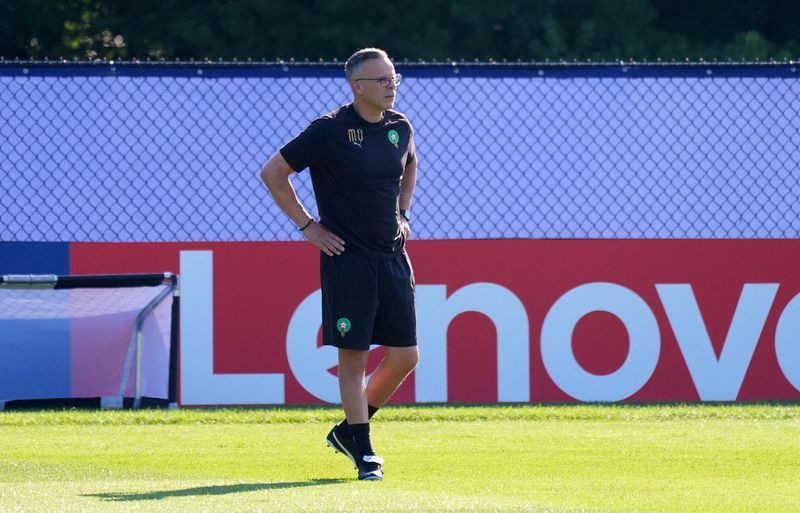
Morocco's determination to pursue World Cup glory rather than bask in their achievements so far was laid bare on Wednesday when coach Mohamed Ouahbi bluntly rejected suggestions his team should celebrate how far they have progressed. Speaking at a press conference in Foxborough, Massachusetts, ahead of Thursday's quarter-final encounter with France, Ouahbi made clear that any meaningful reflection on the tournament would only take place once the competition concludes, not before.
The North African side enters this clash as a transformed entity compared to their semi-final meeting with France in Qatar last year. Twelve months ago, Morocco were cast as unlikely contenders who had defied expectations by reaching the semi-finals. Now, after dispatching the Netherlands and co-hosts Canada in successive knockout rounds following a commanding group-stage performance, the squad has evolved into genuine championship aspirants rather than sentimental favourites.
Ouahbi's pointed comments suggest a team intent on rejecting the narrative of moral victory that often accompanies unexpected tournament runs. His repeated insistence that the team will neither listen to external praise nor allow themselves to believe they have merely achieved a respectable outcome reflects the mentality shift that has occurred within the squad. The coach stressed that his players must approach the France fixture with complete conviction, playing with maximum intensity rather than satisfaction at their current status.
France, despite being strong favourites for the encounter, scraped past Paraguay in the round of 16 through a 1-0 scoreline secured by Kylian Mbappe's penalty conversion. The defending world champions and 2022 finalists have nonetheless demonstrated the attacking potency that makes them genuine title contenders. With Mbappe having already netted seven goals in the tournament—trailing only Lionel Messi of Argentina—the French forward line remains among the most formidable assembled at a World Cup finals.
Mbappe's supporting cast includes Ousmane Dembele, Michael Olise, and Bradley Barcola, a quartet of attacking talents that provides Les Bleus with exceptional creative depth and goal-scoring threat. This assembly of pace, technical ability, and finishing quality represents a significant challenge for any defensive unit, yet Morocco's compact and organised approach to their group matches and knockout victories suggests they possess the tactical discipline required to contain such threats.
Ouahbi's refusal to acknowledge external validation stems partly from a belief that contentment represents the enemy of progression in tournament football. By categorising everything achieved to date as merely a stepping stone rather than an accomplishment warranting reflection, the coach seeks to maintain a hunger within the squad that drives them toward the semi-finals and beyond. This psychological approach differs markedly from teams that might view unexpected advancement as sufficient achievement.
The coach's framing of the World Cup title as the sole meaningful prize worth celebrating reveals an ambition that extends beyond typical tournament satisfaction. Rather than viewing a semi-final appearance as a successful campaign, Ouahbi has constructed a narrative where the trophy represents the minimum acceptable outcome. Such language indicates either supreme confidence or a deliberate psychological tactic designed to eliminate any possibility of his players accepting defeat as a respectable conclusion to their tournament.
Morocco's pathway through to the quarter-finals has demonstrated improvement across multiple facets. Their group performance established a foundation of consistency, while the subsequent removal of two well-regarded opponents proved their capacity to perform under knockout pressure. The Netherlands represent a respected European side with serious technical credentials, while Canada, though ultimately outclassed in their opening fixture, competed respectably throughout their tournament despite eventual elimination.
Ouahbi's rejection of praise also carries implicit acknowledgment of France's historical advantages and current status as tournament favourites. By declining to grant his own team credit for progress thus far, the coach avoids the trap of complacency that can affect teams receiving external validation. This psychological management technique recognises that compliments, however well-intentioned, can subtly shift focus away from the intensity required to overcome elite opposition.
The quarter-final represents a defining moment for both nations' tournaments, though the trajectories differ considerably. France enters seeking to reclaim World Cup status after their semi-final exit last year, while Morocco pursues territory entirely new to their football programme. Ouahbi's insistence that his squad will play without regret and maintain maximum intensity for the entire duration suggests Morocco intends to make France work desperately hard for their progression, rather than accepting the comfortable narrative of defeat by superior opposition.
For Malaysian and Southeast Asian observers, this fixture carries significance beyond the immediate sporting contest. Morocco's sustained emergence as a competitive force in global football, sustained through continental success and World Cup progression, demonstrates how disciplined organisation and tactical sophistication can elevate nations beyond traditional football hierarchies. The contrast between the coaches' approaches—France relying on established star power and attacking prowess, Morocco emphasising collective organisation and psychological resilience—provides instructive lessons in how different pathways lead to elite competition.

