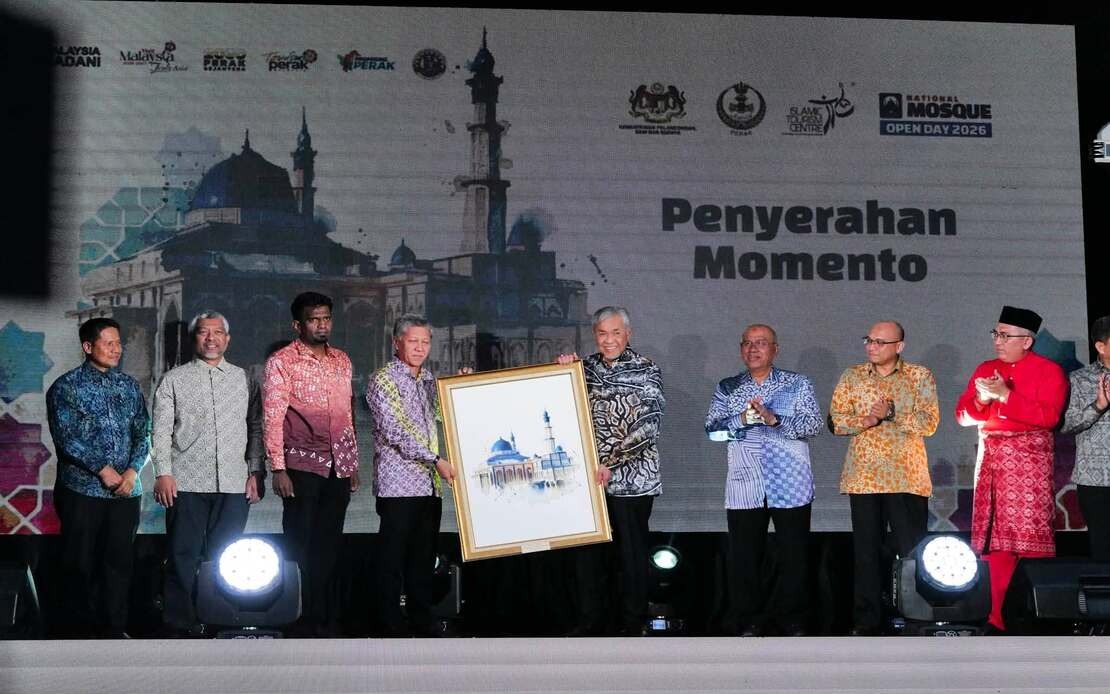
Deputy Prime Minister Datuk Seri Dr Ahmad Zahid Hamidi has advocated for Malaysia's mosques to become integral components of the nation's tourism framework, arguing that religious institutions can simultaneously fulfil their spiritual obligations and contribute to the country's international image. Speaking at the inauguration of the National Mosque Open Day 2026 in Bagan Datuk, Ahmad Zahid emphasised that mosques possess untapped potential as vehicles for showcasing Malaysia's Islamic heritage and values to global visitors, provided their core functions as places of worship and community gathering remain paramount.
The Deputy Prime Minister outlined a compelling vision wherein tourists visiting Malaysia would depart not merely with photographs of architectural grandeur, but with substantive memories of the nation's hospitality and Islamic principles in action. This approach, he suggested, transforms cultural tourism from passive observation into experiential engagement, allowing international guests to internalise Malaysia's reputation as a Muslim-majority nation characterised by tolerance and inclusive values. The National Mosque Open Day initiative exemplifies this philosophy by creating structured opportunities for people of diverse backgrounds and age groups to interact with mosque institutions within carefully curated frameworks that prioritise harmony and mutual respect.
Ahmad Zahid underscored the strategic importance of expanding similar programmes across Malaysia's mosque network, which currently comprises over 6,800 facilities nationwide. By encouraging more religious institutions to organise open-door events and develop tourism-oriented activities, the government aims to cultivate deeper cross-cultural understanding whilst simultaneously strengthening the position of Islamic institutions within Malaysia's broader heritage narrative. Such initiatives, he argued, address persistent misconceptions about Islam by demonstrating through direct interaction the religion's foundations in compassion, wisdom and generosity—principles that become tangible through the conduct and hospitality of Muslim communities themselves.
The recognition of Masjid Tuminah Hamidi in Bagan Datuk as the country's 98th Tourism Mosque represents a significant milestone in this strategic integration. Constructed in 2023 as a waqf honouring Ahmad Zahid's parents, the facility was selected by the Islamic Tourism Centre due to its distinctive architectural elements and an internal gallery dedicated to advancing Islamic knowledge. This designation reflects official acknowledgment that religious buildings need not compromise their spiritual significance to serve tourism objectives; instead, unique historical narratives and design characteristics can enhance their value as cultural ambassadors.
The Islamic Tourism Centre, operating under the Ministry of Tourism, Arts and Culture, is spearheading a coordinated effort to systematically develop Malaysia's mosque portfolio as tourism assets. Recognising that merely increasing the number of Tourism Mosques represents insufficient progress, the centre's leadership emphasises the necessity of identifying facilities with distinctive features and historical importance worthy of international promotion as Islamic tourism products. This selective, quality-focused approach prevents the commodification of religious spaces whilst ensuring that tourism designation genuinely reflects meaningful architectural or educational merit rather than serving as an arbitrary honour.
Coordination between the Islamic Tourism Centre and established regulatory bodies, particularly the Department of Islamic Development Malaysia and state-level religious authorities, establishes institutional frameworks ensuring that tourism integration aligns with Islamic principles and local governance structures. This collaborative governance model acknowledges that mosque administration remains primarily a religious responsibility, with tourism considerations functioning as a supplementary benefit rather than a primary institutional goal. Such institutional clarity prevents potential conflicts between commercial interests and spiritual obligations whilst ensuring that opening mosque doors to visitors proceeds according to Islamic standards and community preferences.
The Islamic Tourism Centre has developed complementary initiatives designed to enhance the visitor experience whilst maintaining appropriate reverence for sacred spaces. The Muslim-Friendly Tourism and Hospitality Assurance and Recognition programme establishes quality standards for institutions welcoming religious and cultural tourists, whilst the Muslim-Friendly Tourist Guides initiative equips tourism professionals with nuanced understanding of Islamic customs and sensitivities. These parallel programmes operate according to the philosophical principle that Muslim-friendly tourism should not become exclusively Muslim-exclusive tourism, thereby enabling the broadest possible engagement with Malaysia's Islamic heritage.
The National Mosque Open Day 2026, staged across three days in August at Bagan Datuk, demonstrated the practical implementation of this tourism-worship integration model through programming that balanced spiritual content with community engagement and recreational activities. The event's deliberate inclusion of family-oriented components reflects recognition that sustainable tourism appeal derives partly from programming that accommodates multiple generations and varying levels of Islamic knowledge, thereby ensuring accessibility for both observant Muslims and curious non-Muslim visitors alike.
For Malaysia's tourism industry, this strategic positioning of mosques as cultural attractions addresses a significant gap in the nation's Islamic tourism offerings. While Malaysia has successfully marketed itself as a Muslim-friendly destination, the systematic integration of religious institutions into curated tourism experiences represents an evolution toward authenticity-centred marketing that distinguishes Malaysia from competitors relying on more superficial cultural presentations. International tourists increasingly seek meaningful cultural immersion rather than transactional sightseeing, creating demand for precisely the type of experiential engagement that well-managed mosque tourism programmes can facilitate.
The implications for regional tourism competitiveness warrant consideration, particularly as other Southeast Asian nations with significant Muslim populations develop parallel initiatives. Malaysia's established infrastructure—encompassing over 6,800 mosques and institutional coordination mechanisms—provides substantial advantages, yet requires sustained investment in training, facility development and marketing to capitalise fully on this asset base. The appointment of 98 Tourism Mosques to date suggests measured progress, though substantially higher participation rates may be necessary to establish mosques as widely recognised tourism attractions comparable to temples and heritage sites in other sectors.
For local communities hosting Tourism Mosques, this designation potentially generates both opportunities and challenges. Enhanced visitor numbers can support facility maintenance and community activities through increased donations and cultural exchange, yet unmanaged tourism influx risks disrupting regular worship and eroding the spiritual atmosphere that visitors ostensibly seek to experience. Successful implementation will depend on establishing clear protocols for visitor conduct, designated prayer times, photographic boundaries and seasonal capacity limits that protect religious sanctity whilst accommodating tourism benefits.
The longer-term success of Malaysia's mosque-based tourism strategy hinges on maintaining the delicate equilibrium between spiritual authenticity and commercial viability. Ahmad Zahid's articulation of this balance—emphasising that mosques must continue serving as institutions that deepen communal connection to Islam—provides crucial philosophical guidance that should inform implementation across the expanding Tourism Mosque network, ensuring that tourism integration strengthens rather than compromises the spiritual missions these institutions fundamentally serve.

