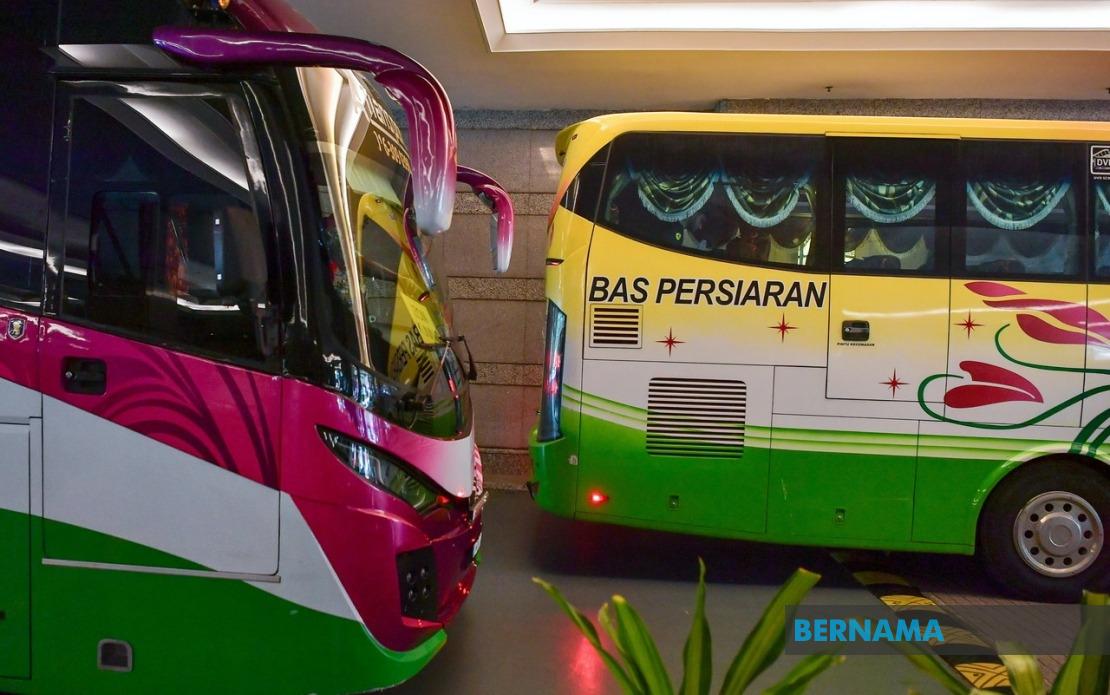
The Ministry of Tourism, Arts and Culture (MOTAC) has issued an urgent call for tour bus operators and tourism associations to furnish comprehensive diesel consumption records and supporting documentation without further delay. The ministry emphasizes that this information is essential for formulating an effective assistance programme responsive to the sector's actual financial burdens, particularly in light of recent fuel price escalations triggered by regional geopolitical tensions.
According to MOTAC's official statement, the government cannot proceed with allocating relief funds until it possesses a complete and accurate picture of how diesel price movements have affected operators' bottom lines. The Ministry of Finance has signalled its willingness to consider assistance proposals in principle, but any financial commitment requires substantiation through detailed operational and cost data that demonstrate genuine need across the industry.
The tourism ministry has already engaged with nine industry associations regarding their representations about diesel cost impacts on tour bus viability. These consultations revealed the depth of concern among operators, yet they also exposed significant gaps in the available data. MOTAC notes that without systematic documentation of fuel expenses before and after the Middle East crisis prompted global price movements, distinguishing between operators facing genuine hardship and those experiencing normal market fluctuations becomes impossible.
The significance of this data collection exercise extends beyond immediate relief allocation. Policymakers require objective benchmarks to design assistance schemes that genuinely target the most affected operators while avoiding wasteful subsidies that might benefit companies with manageable cost increases. Poorly calibrated aid, the ministry cautioned, risks generating industry dissatisfaction and could undermine confidence in government support mechanisms when they fail to reflect operators' actual circumstances.
Tour bus operations have historically operated on thin margins in Malaysia's competitive tourism sector. The recent diesel price spike, driven by international market dynamics beyond operators' control, has squeezed profitability across the industry. However, the degree of impact varies significantly depending on factors including fleet size, fuel consumption efficiency, route composition, and the proportion of international versus domestic passenger operations. Some operators may have absorbed costs through pricing adjustments, while others may have accumulated debts. Without granular data, any assistance formula risks either underfunding those most severely affected or overcompensating those with manageable exposures.
The ministry's insistence on before-and-after fuel cost comparisons reflects an understanding that credible relief programmes demand empirical foundations. International precedent suggests that assistance schemes justified by anecdotal complaints rather than systematic data often encounter criticism regarding fairness and efficacy. Malaysia's approach, demanding documentation of actual cost increases against historical baselines, follows prudent fiscal governance principles particularly important given the country's macroeconomic constraints.
For Malaysian tourism stakeholders, timely submission of this data carries substantial implications. Delayed compliance risks pushing relief decisions further into the future, extending the period operators must contend with elevated costs. Conversely, rapid and comprehensive data submission could accelerate government evaluation and implementation of targeted measures. The ministry's staged implementation approach—acknowledging that assistance will be rolled out progressively rather than as a single injection—underscores that relief is coming, but its timing and scale depend largely on how quickly and thoroughly operators furnish evidence of their cost burdens.
The diesel price shock arrives at a particularly delicate moment for Malaysian tourism. The sector has been recovering gradually from pandemic-related disruptions, and renewed cost pressures threaten to derail this momentum. Tour operators form a crucial part of Malaysia's tourism value chain, directly shaping visitor experiences and indirectly supporting accommodation, dining, and attraction sectors. Protracted uncertainty about operator viability could dampen international confidence in Malaysia's tourism competitiveness relative to neighbouring destinations less burdened by fuel cost volatility.
MOTAC's repeated calls for immediate action suggest mounting frustration with submission delays. The ministry recognises that every week without comprehensive data extends the evaluation timeline, pushing any relief implementation further down the calendar. This dynamic creates mutual incentives for both government and operators: policymakers gain faster access to decision-making foundations, while operators accelerate the timeline toward potential financial support. The data submission process thus functions as a critical threshold determining whether tourism sector relief becomes reality this fiscal year or slips into subsequent budget cycles.
The government's stated commitment to balancing tourism sector sustainability with broader fiscal prudence indicates that relief, when approved, will likely be calibrated rather than unlimited. MOTAC explicitly notes that assistance levels must account for Malaysia's overall fiscal position and the imperative of maintaining sustainable economic growth. This language suggests that while relief is forthcoming, policymakers will not implement measures that create unsustainable fiscal obligations. Operators should therefore understand that assistance will be meaningful but measured, proportionate to documented need rather than addressing every cost increase in full.
For associations and individual operators still deliberating on submission, the calculus has become straightforward. Submitting detailed diesel cost documentation represents the sole pathway toward accessing government relief resources. Operators who fail to participate in the data collection process effectively remove themselves from consideration for assistance, regardless of actual hardship faced. The ministry's administrative requirement thus functions simultaneously as an eligibility screen and a fairness mechanism ensuring that only demonstrably affected operators compete for limited relief resources.
Looking ahead, this episode reflects broader evolution in how Malaysian government evaluates sector-specific relief claims. Rather than responding to organised grievances with immediate, across-the-board support, ministries increasingly demand empirical evidence justifying financial interventions. This approach protects fiscal resources while strengthening the legitimacy of relief programmes among both beneficiary and non-beneficiary communities. For the tour bus industry, rapid compliance with MOTAC's data submission requirements represents not merely an administrative obligation but an investment in securing government support for navigating the current cost environment.

