A tragic road accident in Muar has claimed the lives of an elderly woman and her adult daughter, highlighting ongoing concerns about vehicle safety and road discipline in Malaysian highways. The incident unfolded on Jalan Temenggung Ahmad near Parit Unas at 10.30 am on July 17, when a Perodua Myvi sedan veered into the opposite traffic lane and collided head-on with a heavy goods vehicle. The 58-year-old driver of the compact car died at the accident scene, while her 83-year-old mother succumbed to injuries during emergency treatment at Sultanah Fatimah Specialist Hospital in Muar.
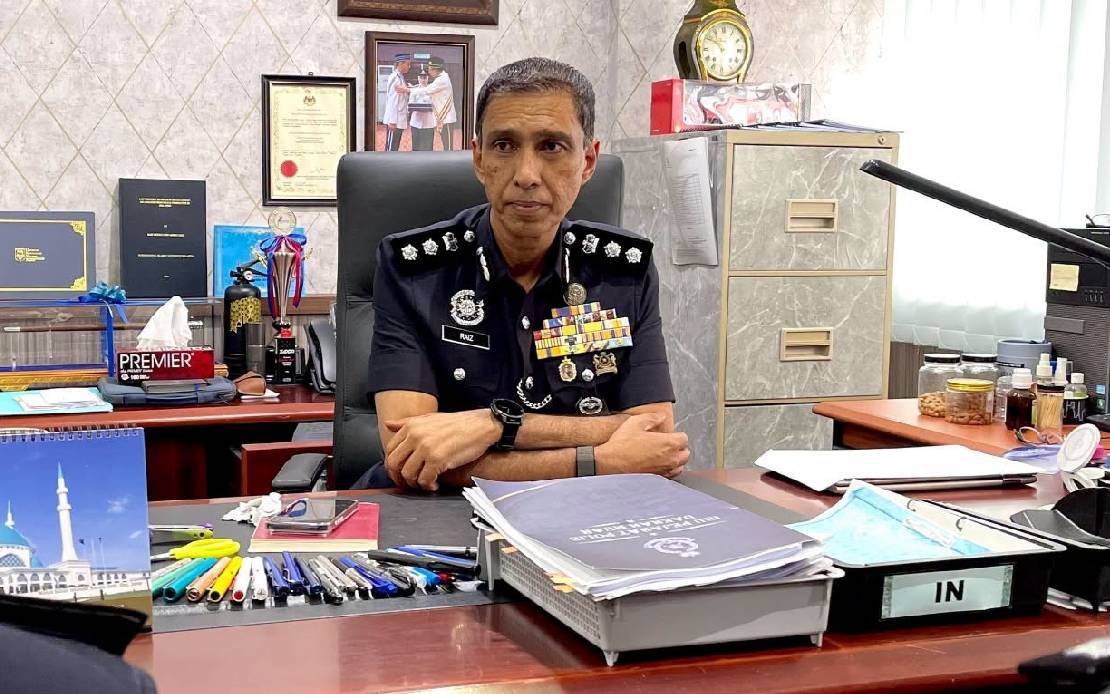
According to Muar District Police Chief ACP Raiz Mukhliz Azman Aziz, the initial phase of the investigation indicates that the Myvi lost directional control and crossed the centre line into oncoming traffic. The lorry, which was traveling from Muar town in the direction of Parit Jawa, had no opportunity to avoid the collision. This sequence of events underscores how rapidly road accidents can become catastrophic, particularly when lighter vehicles engage in frontal impact with heavy commercial vehicles where the mass differential is extreme.
The 35-year-old lorry driver, despite being the operator of the larger vehicle, sustained significant injuries to both hands and legs in the collision. He was conveyed to the same hospital where he continues to receive medical treatment. While his injuries appear non-life-threatening at this stage, the psychological trauma of being involved in a fatal accident resulting in two deaths will likely affect him considerably. The lorry driver's condition represents the often-overlooked human cost borne by commercial vehicle operators who become unwitting participants in preventable tragedies on Malaysian roads.
Muar's highways, which form critical transport corridors linking Johor's northern and southern regions, have been the site of numerous serious accidents in recent years. The locality experiences significant traffic volumes from both commuters and heavy goods vehicles transiting between Kuala Lumpur and Port Klang facilities to southern Johor ports. Road infrastructure in the area, while regularly maintained, faces mounting pressure from increasing vehicular density and varied driver compliance with traffic regulations. Accidents of this nature raise questions about whether speed management, road markings, and vehicle maintenance standards are adequately enforced along these routes.
The police have initiated formal investigations under Section 41(1) of the Road Transport Act 1987, which addresses causing death by rash or negligent driving. This legal framework establishes accountability for road users whose actions result in fatalities, though prosecutions under this provision can be complex given the need to establish causation and negligence beyond reasonable doubt. The investigation phase will likely examine vehicle mechanical condition, driver health status at the time, and environmental factors such as weather and road surface conditions that may have contributed to loss of vehicle control.
Vehicle control loss incidents like this one warrant examination of multiple potential causative factors. Preliminary considerations typically include sudden medical events affecting the driver, tyre failure, mechanical brake malfunction, or inattention at the wheel. The investigation team will obtain vehicle examination reports, medical records, and witness statements to construct a complete narrative of events. Modern vehicles like the Perodua Myvi are equipped with stability control systems, yet accidents still occur when drivers are incapacitated or when failures in these systems occur simultaneously.
For Malaysian road safety advocates, this incident reinforces persistent concerns about driver behaviour and the consequences of momentary lapses in concentration or vehicle control. The fact that the victims were family members—a mother and daughter traveling together—adds an emotional dimension that resonates across communities throughout the nation. Families undertaking routine journeys across Malaysia's highway network do so with an implicit assumption of reasonable safety, yet statistics consistently show that the road environment remains one of the more dangerous aspects of daily life.
The police appeal for public assistance in the investigation reflects standard protocol in traffic fatality cases. Witnesses who observed the vehicle's behaviour prior to the collision, or who can provide information about the conditions immediately preceding the impact, are urged to contact authorities. Such eyewitness accounts frequently prove invaluable in reconstructing accident sequences and identifying factors that may not be immediately apparent from physical evidence alone. The investigation remains open, and the police statement indicates that further details will emerge as the inquiry progresses.
This accident serves as a reminder of the fragility of road safety and the critical importance of driver vigilance, vehicle maintenance, and compliance with traffic regulations. Road fatalities in Malaysia continue to represent a public health concern requiring sustained attention from enforcement agencies, vehicle manufacturers, and road users themselves. Each incident provides an opportunity for the broader community to reflect on personal driving practices and the responsibility each motorist bears toward fellow road users.

