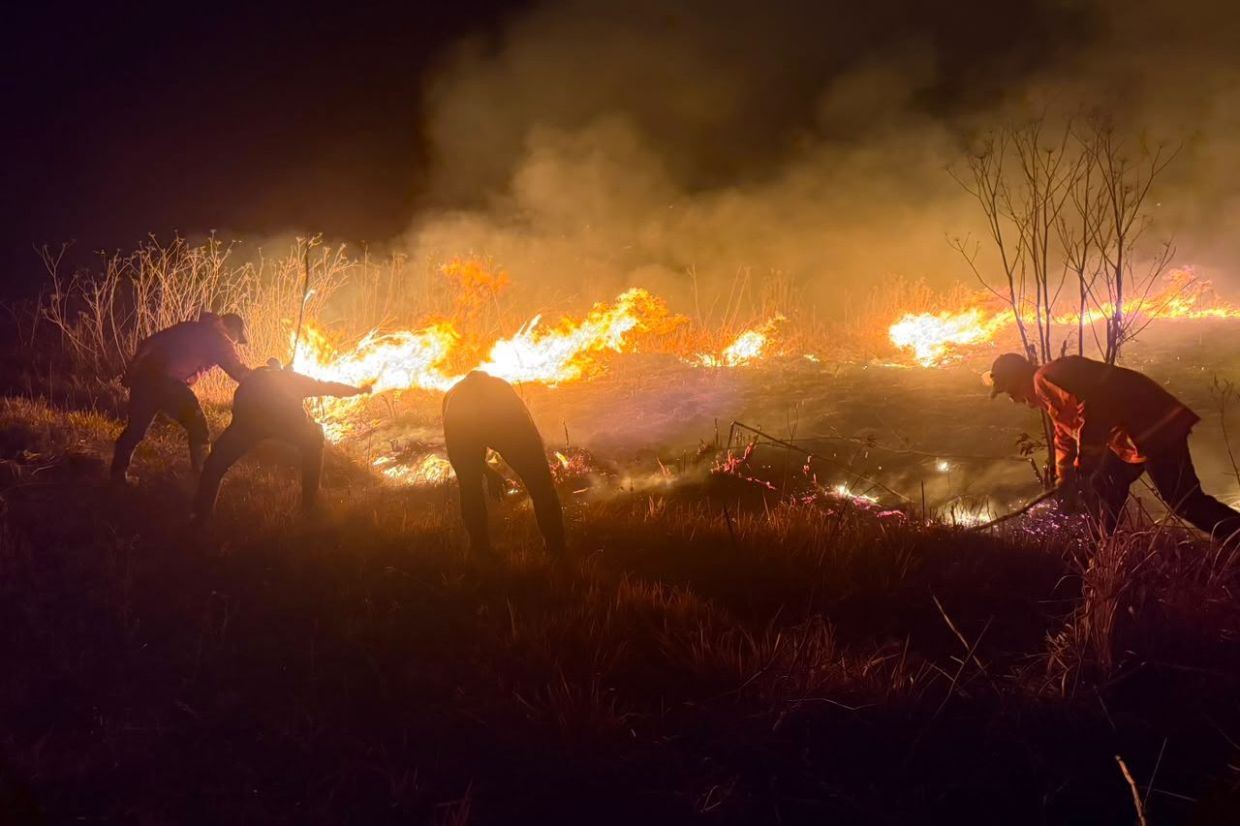
A major wildfire consuming Mount Bromo in East Java has grown to encompass approximately 520 hectares of terrain, with officials warning conditions are deteriorating as powerful wind systems accelerate the spread of flames across the volcanic landscape. The fire, which dramatically flared up Saturday evening, has advanced beyond the mountain's upper slopes into surrounding savanna areas, creating what authorities describe as an increasingly difficult containment challenge. The expansion marks a significant escalation in what started as a more localized incident, transforming the situation into a regional environmental emergency requiring substantial firefighting resources.
Bromo Tengger Semeru National Park Authority director Rudijanta Tjahja Nugraha attributed the rapid expansion directly to atmospheric conditions that have persisted since Saturday afternoon. The combination of gusty winds channeling flames downslope and the combustible state of the vegetation has created ideal conditions for rapid propagation. Nugraha explained that fire does not spread uniformly across such terrain but rather moves progressively from higher elevations toward lower areas, a dynamic that complicates prediction and resource deployment for firefighting teams working against the elements.
The underlying vulnerability lies in the accumulated dry vegetation blanketing the mountain's slopes and savanna. Extended dry season patterns have left grasses and plant matter severely desiccated, transforming what would normally be slower-burning material into highly flammable fuel. This seasonal drying is a predictable phenomenon in East Java's climate, yet the density of vegetation across Mount Bromo's protected areas means that once ignition occurs, suppression becomes exponentially more difficult. The fire's rapid intensification reflects this dangerous intersection of human activity, natural aridity, and topographical factors that concentrate wind and flame.
Responding to the escalating emergency, park authorities made the decision Saturday evening to implement a complete tourist closure across all access points to Mount Bromo, effective from 10pm and continuing indefinitely until conditions improve. This measure represents a significant economic impact for the tourism sector that depends heavily on Mount Bromo's status as one of Indonesia's most iconic natural attractions. Officials justified the closure as essential both for protecting visitors from hazardous smoke and flames and for allowing firefighting personnel to operate without managing civilian presence simultaneously. The park has established mechanisms to assist affected visitors, permitting them either to defer their bookings to later dates or to secure full refunds, though such measures provide limited consolation to tourism operators facing extended revenue loss.
The investigation into the fire's origin has become a focal point for government response, with Indonesian Forestry Minister Raja Juli Antoni indicating that law enforcement agencies will lead the inquiry into causation. Park authorities preliminarily assessed that human activity likely initiated the blaze, though definitive conclusions await comprehensive investigation. This determination carries significant implications, as it suggests the fire was not a natural event stemming from geological activity or lightning strikes but rather resulted from deliberate or negligent human conduct. Such findings typically trigger criminal investigations and potential prosecution under Indonesia's forestry and land protection statutes.
The minister's public statement regarding penalties underscores the government's intention to pursue accountability aggressively. Indonesian law prescribes serious consequences for forest and land burning, reflecting the nation's recognition that such activities threaten biodiversity, air quality, and regional stability. However, enforcement historically remains inconsistent, with prosecution rates failing to match the frequency of violations. The Mount Bromo incident provides an opportunity to demonstrate commitment to these legal frameworks, particularly given the fire's scale and the protected status of the affected national park.
The implications for Southeast Asia extend beyond Mount Bromo itself. This region experiences recurring wildfire crises driven by similar combinations of seasonal drought, vegetation density, and human activity. Malaysia and other neighbouring nations have experienced transboundary smoke impacts from Indonesian fires, creating diplomatic tensions and public health concerns. The Mount Bromo situation reflects systemic challenges in fire prevention and management across the region, including inadequate land-use oversight, insufficient resources for early detection, and limited coordination between agencies responsible for different aspects of fire response.
Mount Bromo's status as a national park and major tourist destination amplifies the stakes of this crisis. The protected area contains unique ecosystems and volcanic landscapes that draw substantial international visitation. Extended closures risk long-term damage to tourism infrastructure, local employment, and regional economic development. Beyond economic considerations, wildfire damage to protected areas diminishes conservation value and can trigger cascading ecological consequences that persist for years following the initial incident.
The situation underscores the complexity of managing natural disasters within protected areas where conservation, tourism, and public safety objectives must be balanced simultaneously. Indonesian authorities face the immediate challenge of suppressing an active, expanding fire while conducting investigations, managing displaced tourists, and communicating transparently about ongoing risks. The resolution of the Mount Bromo crisis will likely influence how Indonesia approaches similar emergencies affecting other protected areas throughout the archipelago.

