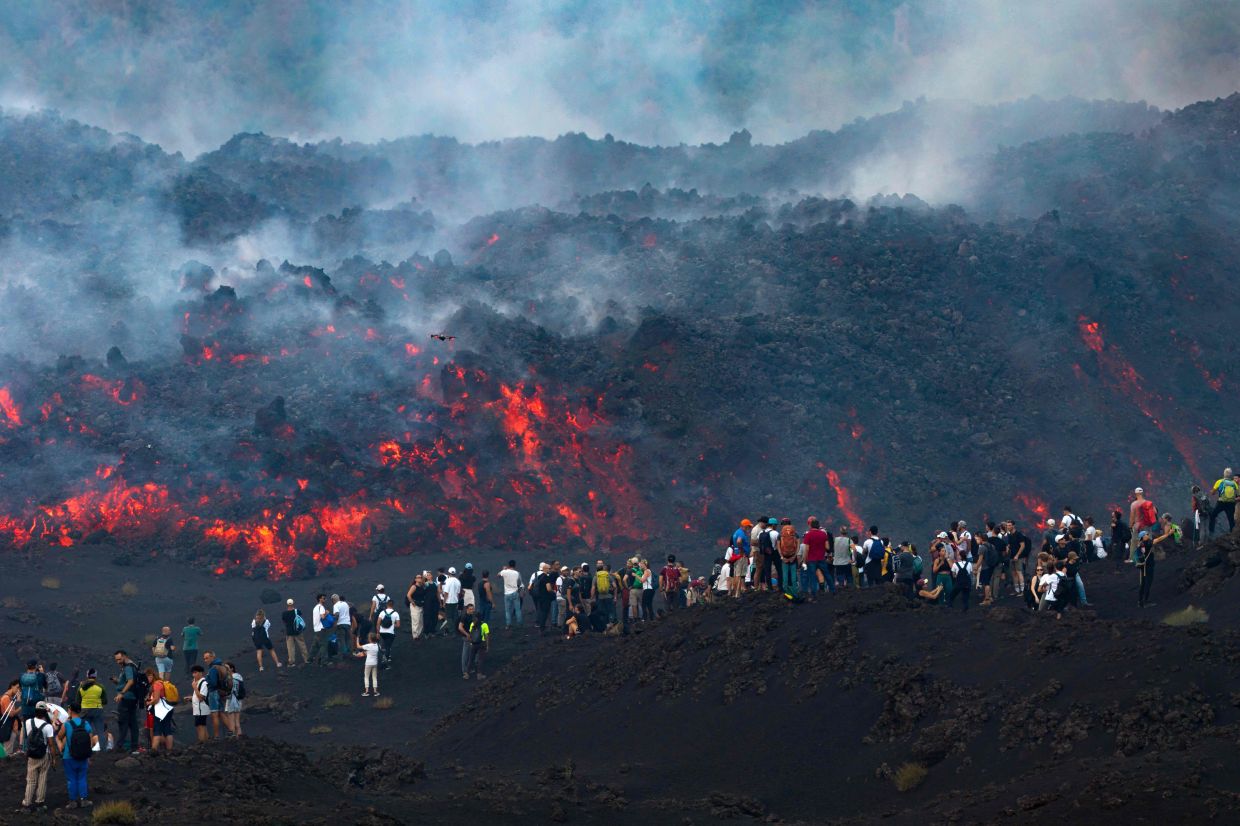
Europe's most prominent active volcano is currently in the throes of a dramatic eruption that has captivated the public imagination and transformed Sicily into an unexpected tourism hotspot. Mount Etna, situated on the Italian island of Sicily, has been discharging molten lava and volcanic ash for several consecutive days, creating breathtaking scenes that have circulated widely across social media platforms. The phenomenon has triggered an extraordinary surge in demand from visitors wanting to witness the geological spectacle firsthand, fundamentally altering the dynamics of tourism in the region and presenting novel challenges for those operating within the volcano tourism sector.
The immediate impact of the eruption extends well beyond the slopes of the volcano itself. Catania airport, which functions as the primary entry and exit point for tourists travelling to Sicily, has been forced to suspend flight operations repeatedly due to dense ash clouds blanketing the region. This disruption has cascading effects throughout the tourism infrastructure, with Italian media outlets documenting the cancellation of hundreds of flights since the eruption intensified over the weekend. For a major international gateway handling approximately 12 million passengers annually, such interruptions represent significant economic consequences not only for airlines but for the broader ecosystem of hotels, restaurants, and attractions that depend on this passenger traffic.
Local guides operating volcano tour companies have found themselves at the centre of an unprecedented demand surge. Guide Etna, a company operating evening expeditions to observe the eruption, typically accommodates several dozen visitors per night during peak summer tourism. The eruption has fundamentally transformed their business model overnight, with the operation now receiving approximately 300 daily inquiries, representing a three-fold increase compared to average summer demand. Daniele Perricelli, a 41-year-old guide leading these operations, articulates the paradox at the heart of this phenomenon: while the eruption undoubtedly presents the kind of dramatic natural spectacle that tourists find irresistible, the volume of visitors has begun to exceed the capacity of tour operators to manage them safely.
The characterization of this event as a "touristic eruption" by another seasoned guide, Ernesto Maria Magri, captures the peculiar nature of the moment. Unlike many volcanic events that can pose genuine dangers to nearby populations, Etna's current activity occurs at altitudes and distances that allow for relatively secure observation by prepared visitors. This accessibility, combined with the visual drama of flowing lava, has created optimal conditions for tourism. However, Magri notes that the situation is compounded by the behaviour of local residents, many of whom have also ventured up the mountain, sometimes congregating in disorganized groups that lack proper safety protocols.
The inadequate preparation of many visitors presents a mounting concern for experienced guides. Perricelli emphasizes that Mount Etna represents a complex and unstable natural environment that demands respect and expert knowledge to navigate. He reports observing approximately 2,000 climbers ascending the mountain each evening, creating congestion on limited pathways. More troublingly, some visitors arrive inadequately equipped, with Perricelli specifically noting instances of people attempting the climb while wearing flip-flops—footwear wholly unsuitable for traversing volcanic terrain where sharp, jagged rock poses constant hazards. These observations underscore a fundamental gap between visitor expectations and the actual demands of safe volcano tourism.
The regulatory framework governing access to Mount Etna attempts to balance public access with safety imperatives. Current regulations permit independent climbing to approximately 2,400 metres altitude, but ascents beyond this threshold require accompaniment by a certified guide. This tiered system aims to restrict the most dangerous higher-altitude zones to trained professionals capable of reading the mountain's conditions and responding appropriately to changing circumstances. Yet the sheer volume of visitors attempting unauthorized or independent ascents suggests that regulatory enforcement remains inadequate to manage current demand levels.
Social media has added another dimension to the safety equation. Several high-profile incidents have attracted critical attention online, most notably when Italian television personality Diletta Leotta posted photographs apparently taken from dangerously close proximity to active lava flows. Such content, while generating engagement and publicity, potentially encourages increasingly risky behaviour by setting problematic examples for other visitors attempting to capture their own memorable images. Guides note that while it is indeed possible to approach within several metres of cooled lava flows at lower altitudes, the active volcanic processes occurring higher up the mountain demand significantly greater caution and expertise.
The Italian civil protection agency has responded to the escalating situation by issuing a yellow alert for the region, positioning Mount Etna at the second level on a four-point hazard scale. This classification reflects the frequency of eruptions and the possibility of explosive events that could rapidly transform the current situation from a manageable tourism spectacle into a genuine emergency. The repeated closure of Catania airport demonstrates that the volcanic activity's impacts extend far beyond those actively ascending the mountain, affecting the mobility of millions of travellers throughout the eastern Mediterranean tourism corridor.
For Malaysia and broader Southeast Asia, this situation offers instructive lessons regarding the management of natural disaster zones that simultaneously attract significant tourism interest. Many nations within the region, from Indonesia with its numerous active volcanoes to the Philippines, face similar dynamics where geological hazards possess inherent touristic appeal. The Mount Etna situation illustrates how the absence of coordinated management between tourism operators, regulatory authorities, and emergency services can create dangerous conditions even when the underlying geological risk remains relatively manageable. As Malaysia develops its own volcano tourism products and manages sites near geologically active regions, the experience of overwhelmed guides and under-enforced safety regulations provides cautionary context for developing robust frameworks that prioritize visitor safety without entirely suppressing the economic benefits of responsible nature tourism.

