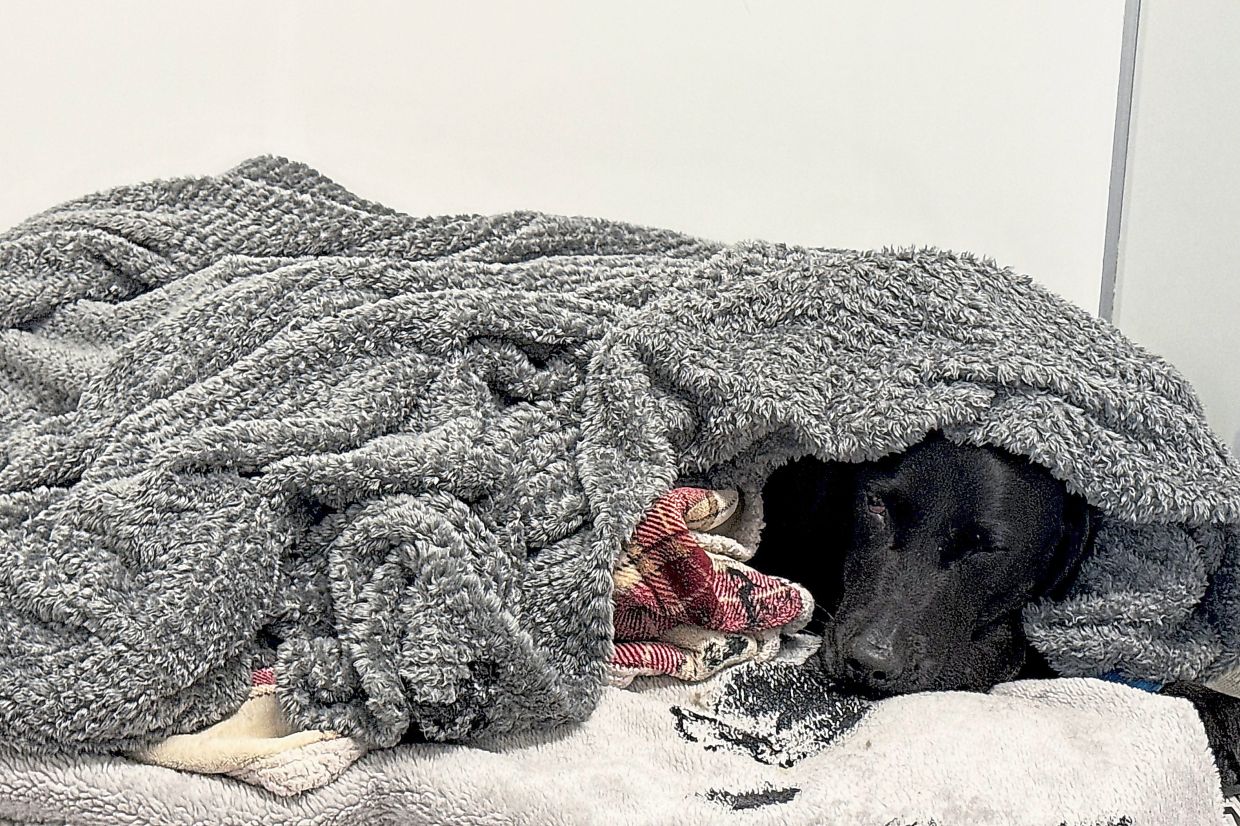
A dramatic rescue operation on Ben Nevis, Britain's tallest mountain, has highlighted an emerging animal health crisis as more pets across the developed world fall victim to accidental cannabis poisoning. Christina Bluhme, an experienced canine trainer with 25 years of professional experience, found herself in a terrifying situation when her five-year-old black Labrador retriever, Tokyo, began exhibiting alarming symptoms during a July 5 hike near the Scottish peak. What started as a routine mountain excursion transformed into a life-or-death emergency when the dog appeared to become severely intoxicated, swaying unsteadily before collapsing entirely.
The circumstances surrounding Tokyo's condition baffled Bluhme initially. Working at an altitude of roughly 1,200 metres with her son Magnus and two dogs, the family was deep into their ascent toward the 1,345-metre summit when the incident occurred. The mountain's weather had shifted dramatically from clear skies to driving rain with temperatures plummeting to just five degrees Celsius, transforming what had been pleasant conditions into a hazardous environment. Bluhme's professional background with canines made the sudden physical deterioration all the more alarming, as she recognised the symptoms did not correspond to any common ailment she had encountered in her quarter-century of training work. The deterioration was swift and severe enough that continuing the climb became impossible.
Convincing her son that immediate descent was necessary, Bluhme made the difficult decision to abandon their summit attempt and focus entirely on getting Tokyo down the mountain safely. The situation grew more precarious when the family called for emergency assistance, as police initially expressed uncertainty about whether a rescue crew could be deployed to their location on the exposed, rocky terrain. Fortune intervened through the presence of the Lochaber Mountain Rescue Team, an all-volunteer organisation that was already in the vicinity after assisting with a helicopter evacuation of another injured hiker from the summit area. The rescue team, trained in mountain operations and equipped with proper stretchers, intervened decisively.
The descent would have been extraordinarily challenging under normal circumstances, but the combination of steep inclines, slick rock surfaces, and deteriorating weather conditions made the operation particularly demanding. The rescue volunteers placed Tokyo, a 25-kilogramme animal requiring careful handling, into a mountain stretcher and executed a rapid descent that took approximately one hour to reach the trailhead. Bluhme described the team's performance with evident admiration, noting their remarkable agility and speed as they navigated the treacherous path while maintaining the dog's safety. The urgency with which they moved suggested they fully grasped the seriousness of the animal's condition and the imperative to reach veterinary care quickly.
Arrangements had been coordinated with Crown Vets in Fort William, located near the mountain base, ensuring that trained veterinary staff were available and prepared when the rescue team arrived. Initial examinations proved inconclusive, with veterinarians first suspecting a spinal injury given Tokyo's inability to coordinate movement and consciousness levels. However, a senior veterinarian recognised patterns inconsistent with typical spinal trauma, instead identifying symptoms characteristic of neurotoxin exposure. The veterinary team contacted a poison control centre to discuss Tokyo's specific presentation: drifting consciousness, loss of motor control, and unusual neurological responses. The consultation yielded a diagnosis that initially seemed improbable—cannabis intoxication.
Tokyo's recovery began immediately upon administration of activated charcoal, a standard treatment for many forms of ingestion-based toxicity. By the following morning, the dog had made a complete recovery, showing no residual effects from the previous day's ordeal. Bluhme reflected that the transformation was so complete that observing Tokyo the next day, one would never suspect the dog had experienced a life-threatening emergency. The experience left Bluhme herself somewhat emotionally depleted, still processing the trauma even as her beloved pet bounced back to full health and normal behaviour.
While the Ben Nevis incident might appear isolated, it reflects a broader and increasingly concerning trend affecting animal welfare across multiple developed nations. Cannabis toxicity cases among pets in Britain have been rising steadily in recent years, driven partly by increased availability of the substance and partly by higher concentrations in modern cannabis products. The problem is substantially more severe in the United States, where the American Society for the Prevention of Cruelty to Animals documented sufficient cases to include cannabis among the top ten animal toxins for the first time in 2023. This elevation to the ASPCA's priority list signals that cannabis poisoning has transitioned from a rare curiosity to a significant public health concern for companion animals.
The geographic and regulatory context matters significantly for understanding this phenomenon. Britain maintains restrictive cannabis laws, yet toxicity cases continue rising, suggesting that environmental contamination and wildlife consumption patterns may play roles alongside intentional human use. In the United States, where numerous states have legalised cannabis in various forms, the availability and concentration of the substance has increased dramatically, creating greater exposure risks for pets through both direct and indirect means. Hiking trails and outdoor recreational areas may become contamination zones when users discard cannabis products or when naturally occurring exposure occurs through concentrated products left in public spaces.
Veterinary professionals have identified several pathways through which pets encounter cannabis. Direct ingestion occurs when dogs consume discarded joints, edibles, or cannabis plants themselves. Secondary exposure can happen through contaminated food or environments. Concentrated cannabis products, including oils and edibles marketed for human consumption, pose particular risks because their potency far exceeds that of traditional plant material, making even small quantities potentially dangerous. For animals like dogs, whose body weight may be a fraction of a human's, the same amount of substance produces dramatically more severe effects.
The financial cost of Tokyo's rescue and veterinary treatment totalled £1,000, approximately RM5,445, an expense Bluhme characterised as money well spent given the alternative of losing her companion. The cost reflects not only emergency veterinary services but also the mountain rescue operation, which despite being volunteer-staffed still incurs significant expenses through training, equipment maintenance, and operational costs. These rescue operations place demands on emergency services that might be reduced through increased public awareness about cannabis safety in outdoor environments and responsible product disposal practices.
For Malaysian readers and Southeast Asian observers, this incident carries implications despite cannabis's stricter legal status in these regions. Tourism sectors increasingly attract visitors from nations with different cannabis regulations, and enforcement challenges around drug control remain significant throughout the region. The incident underscores how substance availability in developed nations with permissive policies can create unexpected consequences for animal welfare, demonstrating that comprehensive drug policy considerations must extend beyond human health to encompass environmental and animal welfare dimensions.
Bluhme's experience has prompted reflection on how apparently personal decisions regarding substance use intersect with public safety and animal welfare. Her professional expertise proved insufficient to diagnose Tokyo's condition quickly, highlighting how cannabis intoxication in animals represents a relatively new medical challenge for veterinarians still building diagnostic and treatment protocols. The incident serves as a cautionary tale about recreational substance access in outdoor public spaces and the unintended consequences that cascade from policies permitting broader availability of drugs previously restricted or limited.

