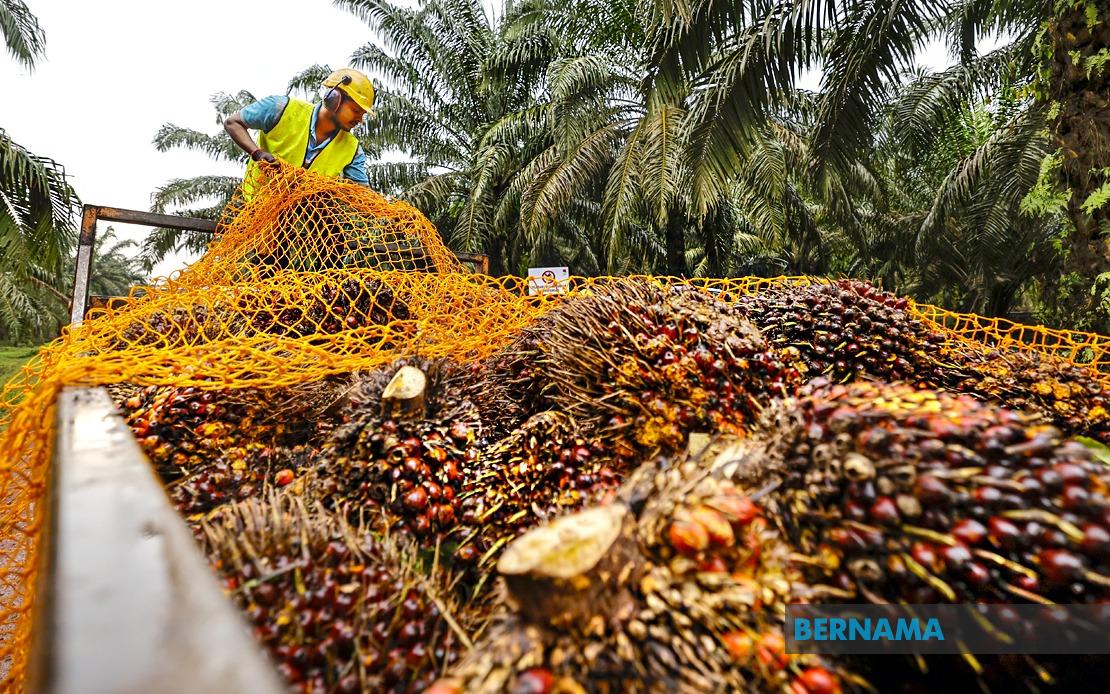
The Malaysian Palm Oil Board (MPOB) is moving forward with plans to establish a major research and development facility in Melaka that signals the government's commitment to modernising the country's flagship commodity sector. The 40.47-hectare complex, to be located in Seri Mendapat, Sungai Rambai, will carry a price tag of between RM20 million and RM25 million and represents a significant investment in agricultural innovation infrastructure for the state.
Melaka Chief Minister Datuk Seri Ab Rauf Yusoh unveiled the initiative during a visit to Kampung Seri Mendapat, emphasising that the research station forms part of the state's broader strategy to revitalise its commodity sector under the broader framework of the 13th Malaysia Plan. The decision to locate the facility in this particular area reflects recognition of the region's agricultural heritage and its concentration of farming communities who depend directly on palm oil production for their livelihoods.
The proposed facility represents a comprehensive approach to sector advancement, incorporating multiple functional elements designed to serve both research and community development objectives. The campus will feature a model plantation where new cultivation techniques and seedling varieties can be tested under realistic commercial conditions, alongside a dedicated research and development centre staffed with scientists and agronomists. Modern laboratory facilities will support quality testing and innovation work, whilst a dedicated training centre will equip farmers and industry professionals with contemporary skills. The complex will also accommodate quarters for TUNAS advisory officers and enforcement teams, embedding technical support directly within the agricultural community.
The strategic placement of this research hub aims to catalyse the transformation of Sungai Rambai into a knowledge economy epicentre for the palm oil industry across Southeast Asia. By concentrating expertise, research capacity, and training infrastructure in one location, the facility can generate spillover benefits throughout the supply chain whilst creating employment opportunities for local residents. Ab Rauf framed the initiative as part of a wider vision to elevate palm oil production beyond its traditional role as a simple commodity generator, positioning it instead as a modern, competitive sector capable of capturing higher-value market segments through innovation and quality differentiation.
Complementing the research station project, the state government has secured funding for critical rural infrastructure improvements that directly benefit smallholder farmers who constitute the backbone of Melaka's agricultural economy. A five-kilometre private farm road at Ladang Lembah Kesang in Semujuk has received approved funding of RM400,000 for construction. Whilst infrastructure projects of this scale might appear routine, their impact on agricultural productivity and farmer profitability is substantial. Improved road access dramatically reduces the time and cost associated with transporting fresh fruit bunches to processing facilities, directly improving margins for farmers operating on thin profit margins. The project is anticipated to deliver direct benefits to more than two hundred smallholder operators in the immediate vicinity.
The emphasis on smallholder farmer support reflects the demographic reality of Sungai Rambai, where nearly forty-five percent of the population derives income from farming or smallholding operations. Many of these operators manage relatively modest landholdings, making them particularly vulnerable to infrastructure gaps and financing constraints that larger commercial producers can more easily absorb. Recognising this vulnerability, the state government has positioned itself as an active partner in enabling smallholder competitiveness and sustainability, viewing agricultural prosperity at the grassroots level as essential to broader rural economic development.
At the national level, the MPOB has introduced financing instruments specifically designed to address one of the sector's most persistent challenges: the ageing of palm oil trees across smallholder estates. The Smallholder Oil Palm Replanting Financing Incentive Scheme 2.0 extends financial support of up to RM14,000 per hectare to enable farmers to replace low-yielding, mature trees with superior, higher-productivity seedling varieties. Critically, the scheme defers repayment obligations until the fifth year of the loan term, providing a grace period that allows newly-planted trees to mature and begin generating revenue before farmers must service debt obligations. This financial architecture recognises the biological realities of agricultural production whilst attempting to balance lender security with borrower feasibility.
Beyond agricultural production directly, the state government is advancing water management and coastal infrastructure projects responsive to environmental and livelihood concerns raised by fishing communities. An ageing watergate at Jeti Sebatu requires upgrade work, with the state having requested RM200,000 in federal government support for these improvements. Simultaneously, drainage enhancement works along a three-hundred-metre stretch of Sungai Sebatu outlet are proceeding, targeting flood risk reduction in areas frequently affected by seasonal inundation. These infrastructure projects address immediate concerns raised by fishing communities regarding flooding impacts on their vessels and equipment.
The interconnected nature of these initiatives—combining research and innovation infrastructure, smallholder support mechanisms, and environmental risk mitigation—demonstrates an emerging policy approach to agricultural and rural development that extends beyond traditional production support. By simultaneously addressing research gaps, infrastructure deficiencies, financing constraints, and environmental vulnerabilities, Melaka's government is attempting to create an integrated ecosystem supporting agricultural viability across multiple dimensions. This holistic strategy potentially offers a replicable model for other Malaysian states grappling with rural economic sustainability challenges.
For Malaysian agriculture more broadly, the MPOB research station investment signals continued commitment to maintaining competitiveness within a global palm oil sector increasingly subject to environmental certification requirements and sustainability scrutiny. Investment in research facilities capable of developing productivity gains without expanding cultivation area becomes strategically important in an environment where land availability is constrained and environmental regulations are progressively tightening. The facility's emphasis on innovation and knowledge-intensive production methods positions Malaysian producers to potentially maintain market share and premium pricing even as global production expands elsewhere.
The initiatives also reflect recognition that rural poverty and agricultural viability remain consequential development challenges for Malaysia despite the country's overall middle-income status. Approximately forty-five percent of Sungai Rambai's population depending on agricultural income suggests significant population segments whose living standards remain substantially affected by commodity price fluctuations and production efficiency. Infrastructure investments and financing assistance represent direct interventions in the economic lives of farming households and communities, offering tangible mechanisms through which state policy can influence agricultural outcomes and rural living standards.

