Parliament's special sitting on the Tabung Haji Royal Commission of Inquiry report has crystallised growing demands from lawmakers for a rigorous, transparent investigation into the fund management failures of recent years. The RCI report, released publicly on July 29 following government approval, has exposed significant governance weaknesses across the 2014-2020 period and triggered renewed calls for accountability that goes beyond the initial findings.
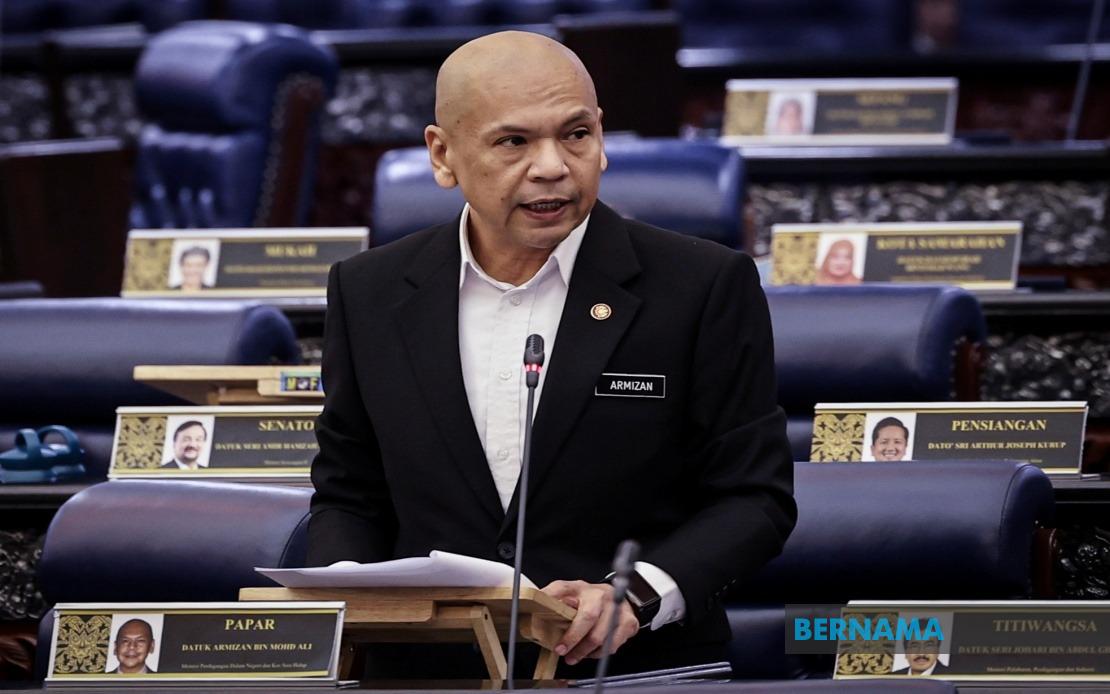
Minister of Domestic Trade and Cost of Living Datuk Armizan Mohd Ali articulated the parliamentary sentiment during Tuesday's debate, emphasising that any enforcement action stemming from the RCI must unfold with both transparency and genuine independence. His intervention reflected a broader frustration among MPs that the Tabung Haji controversy has degenerated into a murky landscape of competing accusations and counter-claims, where determinations of guilt have become obscured by partisan positioning. Armizan highlighted the erosion of public clarity, noting that disagreement between various parties—each armed with assertions of slander and defamation—has left ordinary citizens and depositors uncertain about where responsibility truly lies.
This confusion carries real consequences for Malaysia's Islamic financial landscape. Tabung Haji manages the savings of millions of Muslim Malaysians preparing for the hajj pilgrimage, making governance failures in the organisation a matter of profound public concern that extends beyond boardroom incompetence. The reputational damage to Islamic financial institutions in the region depends partly on how decisively authorities respond to exposed weaknesses. Armizan's call for enforcement agencies to conduct proper investigative action represents a recognition that parliamentary debate, while necessary, cannot substitute for systematic inquiry by bodies with prosecutorial powers.
The RCI report itself encompasses 25 recommendations for operational and structural improvement, with Tabung Haji having implemented approximately 75 per cent of these measures by late July. This substantial remedial progress demonstrates that the organisation has moved swiftly to address identified gaps. However, implementing recommendations is itself distinct from investigating the individuals and decisions that led to the initial failures. The existence of corrective measures does not resolve questions of accountability for past conduct, a distinction that remains central to the parliamentary discussion.
Minister of Women, Family and Community Development Datuk Seri Nancy Shukri advanced a separate but interconnected argument regarding institutional architecture and appointment protocols. She defended the existing division whereby haj management responsibilities remain with the Ministry in the Prime Minister's Department (Religious Affairs) while financial and investment matters fall under the Finance Ministry, characterising this arrangement as a rational specialisation that reduces duplication and leverages appropriate expertise. Her framing treats institutional design as a technical matter rather than a turf-war issue.
Nancy's substantive contribution focused on board composition and the question of political appointments, a contentious matter in Malaysian corporate governance. She rejected the notion that political background alone disqualifies individuals from board service, instead proposing that the relevant criterion should be whether appointees possess the requisite integrity, qualifications, experience and demonstrable competence. This formulation attempts to navigate between two extremes: the blanket exclusion of politically-connected figures and the uncritical acceptance of political patronage regardless of capability. Her position holds that a former politician with genuine expertise and proven track record warrants consideration on equal footing with apolitical candidates.
Yet Nancy's framework also identifies a persistent weakness in Malaysian governance practice. She called for explicit criteria for board appointment, transparent selection methodologies and clarity about required areas of expertise. These structural safeguards would shift the appointment process from discretionary judgment toward systematised evaluation. By making selection criteria public and binding, authorities would constrain the possibility that political labels could function as hidden admission tickets to corporate boards. The emphasis on "fit and proper" requirements as the primary lens rather than political considerations represents, in principle, a recalibration toward merit-based governance.
For Malaysian depositors who entrusted savings to Tabung Haji, the parliamentary discourse reflects an institutional reckoning with failures that may have cost individuals and families significant financial losses. The RCI's examination of management and operational weaknesses between 2014 and 2020 identified systemic problems rather than isolated incidents. Understanding the precise nature of these failures—whether they resulted from incompetence, negligence, or deliberate malfeasance—requires investigation that transcends fact-finding and extends into potential criminal conduct.
The regional significance of Tabung Haji's governance crisis extends beyond Malaysia's borders. Islamic financial institutions across Southeast Asia observe how the country handles institutional failure and accountability. A response perceived as vigorous and even-handed would reinforce confidence in Malaysia's financial oversight mechanisms. Conversely, an investigation that appears incomplete or compromised by political considerations could undermine depositor confidence in Islamic financial products more broadly. The intersection of religious institutions, government involvement and financial management creates unique scrutiny dynamics that other corporate sectors do not face.
The call for transparent investigation also speaks to evolving expectations about corporate accountability in Malaysia. Successive governance scandals involving major institutions have created public awareness that internal audits and board-level reviews, while necessary, may prove insufficient without external enforcement scrutiny. The movement toward greater transparency in investigation procedures reflects this accumulated experience. MPs across the political spectrum recognise that public confidence in financial institutions depends on visible, credible processes for establishing accountability when failures occur.
Armizan's observation that confusion has bred public scepticism points to a governance communication challenge. Malaysian authorities must not only conduct rigorous investigations but also communicate their processes and findings in accessible language that ordinary depositors and citizens can comprehend. The technical complexity of financial investigations can itself become a barrier to public understanding. Transparency requires both substantive openness and pedagogical clarity about what investigators discover and how they reach conclusions.
As enforcement agencies begin investigative work flowing from the RCI findings, the framework emphasised by parliamentary speakers will shape expectations. The call for independence protects investigations from political interference. The emphasis on professional conduct ensures that evidentiary standards and procedural fairness govern the process. Together, these demands articulate a vision where institutional accountability operates according to law and fact rather than political convenience. For Tabung Haji, its depositors and Malaysia's broader financial governance architecture, the stakes of meeting these expectations prove substantial.

