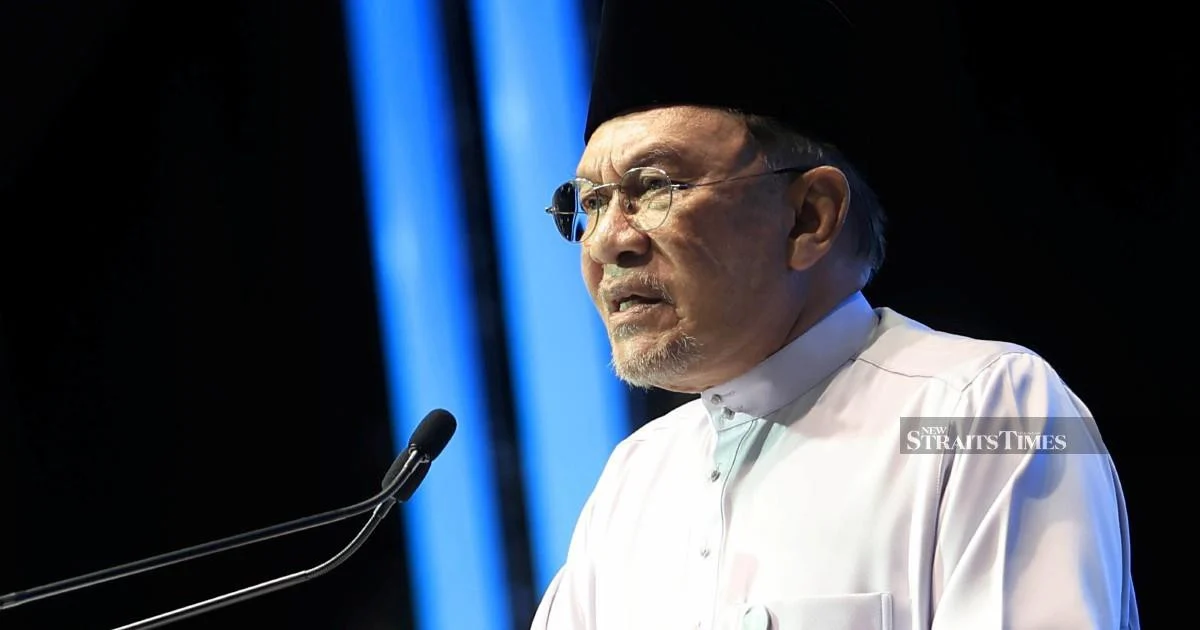
The Muar district office has formally rejected accusations that Prime Minister Datuk Seri Anwar Ibrahim was barred from accessing the Penghulu Mukim Sungai Balang Complex to conduct a community engagement programme during the previous month. The denial comes amid heightened scrutiny of administrative procedures in Johor as the state approaches its electoral cycle, with questions emerging about how government facilities are allocated and whether partisan considerations influence their use.
Government complexes and community halls across Malaysia have become focal points of political activity, particularly during periods of electoral mobilisation. The Penghulu Mukim Sungai Balang Complex in Muar, serving the Sungai Balang locality, functions as a venue for official gatherings and public programmes. The facility's administration falls under the purview of the Muar district office, which oversees scheduling, maintenance, and allocation of such spaces. Clarifying the actual circumstances surrounding any request to use the venue is crucial for understanding whether administrative decisions follow established guidelines or whether external political pressures shape access.
The timing of this dispute carries particular significance within the context of Johor politics. As the state gears up for elections, tensions often intensify between political factions regarding control of government resources and the equitable provision of facilities. Allegations that a sitting Prime Minister faced administrative obstacles in accessing a district government building would represent a serious breach of protocol and an inappropriate exercise of local authority. The district office's swift denial suggests institutional awareness of how such claims could reflect poorly on governance standards and create the impression of politicised administration.
Muar, located in the southwestern region of Johor, represents a constituency with considerable political significance. The district encompasses both urban and rural communities, with diverse economic activities ranging from agriculture to manufacturing. Community engagement programmes by senior political figures serve multiple purposes: they provide platforms for officials to communicate directly with constituents, gather feedback on local concerns, and demonstrate government accessibility. Prime ministerial visits to conduct such activities are typically scheduled well in advance through formal channels to ensure proper coordination with relevant authorities.
The allegation itself, regardless of its veracity, raises broader questions about administrative independence and political neutrality in the distribution of government amenities. Malaysia's institutional framework relies on the assumption that local government officials execute their duties according to established protocols rather than responding to partisan directives. When claims emerge that access to publicly funded facilities has been selectively restricted, they undermine public confidence in institutional impartiality. The district office's response represents an attempt to reassert administrative credibility and clarify that procedural propriety has been maintained.
Context surrounding the referenced community programme from the previous month remains important for understanding the full picture. Details regarding how the request was submitted, whether all required approvals were obtained, and what scheduling considerations may have applied would provide substantive clarity. The complexity of administrative procedures means that seemingly arbitrary denials may sometimes reflect legitimate scheduling conflicts, maintenance issues, or procedural gaps rather than political obstruction. Conversely, routine denials of requests from opposition figures might indicate systemic bias masked by technical justifications.
For Malaysian observers and international observers alike, incidents of this nature highlight the importance of transparent governance mechanisms and clear criteria for facility allocation. When government complexes operate under guidelines that lack clarity or when decision-making processes remain opaque, suspicions of impropriety naturally arise. Southeast Asian democracies face ongoing challenges in establishing genuinely neutral administrative systems that function independently from electoral pressures and partisan considerations. Johor, as a strategically important state with substantial economic and political influence, serves as a microcosm of these broader governance questions.
The district office's categorical denial, issued in response to specific allegations, serves as both clarification and institutional reassurance. Public statements from government bodies carry particular weight because they officially represent the administration's position on matters of procedure and conduct. In contexts where electoral competition intensifies, such denials may be viewed with varying degrees of scepticism depending on observers' existing perceptions of institutional impartiality. The credibility of the denial ultimately depends on whether documentary evidence, facility records, and corroborating testimony support the office's account.
Looking forward, the incident underscores the value of establishing clear, publicly accessible protocols governing the use of government buildings. Facilities funded by public revenue should serve all legitimate users equitably, irrespective of their political affiliation. Creating transparent scheduling systems, publishing allocation criteria, and maintaining detailed records of facility use would serve multiple purposes: they would reduce opportunities for discriminatory decisions, provide a clear audit trail for oversight bodies, and help insulate local administrators from accusations of partisan conduct. Such measures benefit governance quality across political divides.
As Johor moves toward its electoral processes, maintaining administrative standards and ensuring that government resources are deployed according to established rules rather than political calculations will remain essential to preserving public trust. The resolution of this particular dispute, whether through documentation, witness testimony, or clarification of procedures, will contribute to the broader assessment of institutional performance in managing the intersection of routine administration and political competition.

