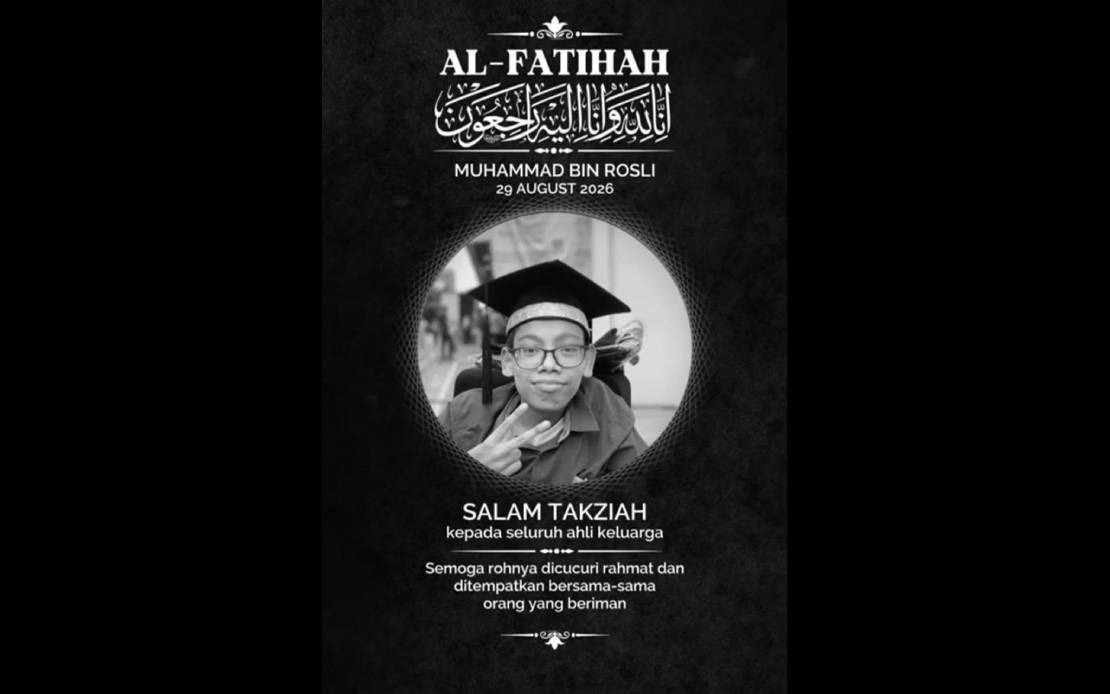
Muhammad Rosli, whose separation from his conjoined twin brother Ahmad through pioneering surgical intervention two decades ago captured the nation's imagination, died this morning at Chancellor Tuanku Muhriz Hospital in Cheras, Kuala Lumpur. The 10:45 am passing marked the end of a medically significant life that had made an indelible imprint on Malaysia's medical achievement and public consciousness. Ahmad, his twin, confirmed the death through social media, expressing gratitude for the prayers and support that had sustained his brother throughout his illness.
The separation of Muhammad and Ahmad represented a watershed moment in Malaysian medical history, though the procedure itself occurred across borders. In 2001, the twins underwent initial assessment and preparatory surgery at the University Malaya Medical Centre in Kuala Lumpur, marking the beginning of a complex medical journey. The definitive separation procedure took place the following year at King Fahd National Guard Hospital in Riyadh, Saudi Arabia, where a surgical team undertook an extraordinarily intricate 22-hour and 45-minute operation in September 2002. This length and complexity underscored the technical challenges inherent in safely dividing shared organs and tissue between two individuals who had developed as a single biological entity.
Muhammad's recent decline stemmed from a diagnosis of bladder cancer, which necessitated his return to the King Fahd National Guard Hospital beginning in July 2025 for specialized treatment. The cancer required aggressive intervention, with medical records indicating he underwent five separate surgical procedures alongside five courses of chemotherapy at the Saudi facility. For a period following these treatments, the medical team determined that the cancer had been sufficiently controlled to permit discharge, and Muhammad transitioned to ongoing follow-up management protocols. However, the disease trajectory took a troubling turn in recent weeks, suggesting that remission had not been durable.
Yesterday, Ahmad disclosed that his brother's condition had deteriorated markedly, with physicians noting dangerously elevated blood acid levels that precipitated a semi-conscious state. These metabolic complications often signal severe systemic dysfunction and carry grave prognostic implications. The rapid decline from a stable enough state to receive outpatient follow-up care to critical illness within days suggests either an acute complication or progression of underlying malignancy that overwhelmed the body's compensatory mechanisms. Ahmad's announcement of this deterioration proved to be a final farewell, as Muhammad did not survive the night.
The twins' story resonated deeply throughout Malaysia and Southeast Asia because it represented triumph over seemingly insurmountable biological adversity. Conjoined twins occur with rare frequency, and their separation demands not only technical surgical mastery but also careful preoperative planning, flawless execution, and exceptional postoperative care. The international dimension—with initial assessment in Malaysia followed by definitive separation in Saudi Arabia—also reflected the reality that even advanced developing nations sometimes must access specialized expertise abroad for the most challenging cases. Muhammad and Ahmad became symbols of medical possibility during an era when such procedures remained extraordinary.
Their case arrived at a propitious moment in the history of conjoined twin surgery. By the early 2000s, imaging technology, anesthetic technique, and surgical approaches had advanced sufficiently to make separation feasible for twins sharing complex structures. Yet each case remained unique, presenting distinct anatomical challenges that required customized surgical strategy. The fact that both Muhammad and Ahmad survived the separation and went on to live for over two decades afterward represented vindication of the surgical team's approach and the twins' own resilience. While separation always carries inherent risks, the outcome in this instance had been considered successful by standard medical criteria.
Muhammad's death from bladder cancer illustrates a broader medical reality: successful separation does not eliminate all health risks for conjoined twins. Survivors must navigate the same disease vulnerabilities as the general population while potentially managing unique complications related to their surgical history. The immunological stress of undergoing such intensive surgery and the potential long-term tissue effects remain areas where separated conjoined twins may face distinctive challenges. Muhammad's cancer journey thus represents not merely a personal tragedy but also a data point in the larger medical literature on post-separation outcomes.
The funeral arrangements proceeded swiftly according to Islamic custom, with burial at USJ 22 Muslim Cemetery in Subang Jaya occurring at approximately 6:00 pm on the day of death. This adherence to traditional practice reflected the family's commitment to religious observance even amid grief. Ahmad's public announcement, delivered through Facebook with its assurance of divine reward for those who had supported Muhammad's medical struggles, demonstrated how contemporary social media has become the medium through which Malaysian families share major life milestones with extended networks of relatives, friends, colleagues, and well-wishers.
The passing of Muhammad Rosli closes a significant chapter in Malaysian medical history. While the twins themselves are no longer both alive, their legacy persists in the annals of surgical achievement and in the collective memory of a nation that watched their remarkable journey unfold. Medical professionals who trained during the era of their separation studied the case as an exemplar of complex surgical decision-making. Families facing prenatal diagnosis of conjoined twins could look to Muhammad and Ahmad's outcome as evidence that separation, though fraught with challenges, could result in two individuals capable of living independent lives for many years. Muhammad's death does not diminish that achievement; rather, it underscores the profound humanity beneath every medical milestone—the knowledge that even successful interventions represent merely a chapter in a longer life story shaped by countless other forces beyond surgical skill.

