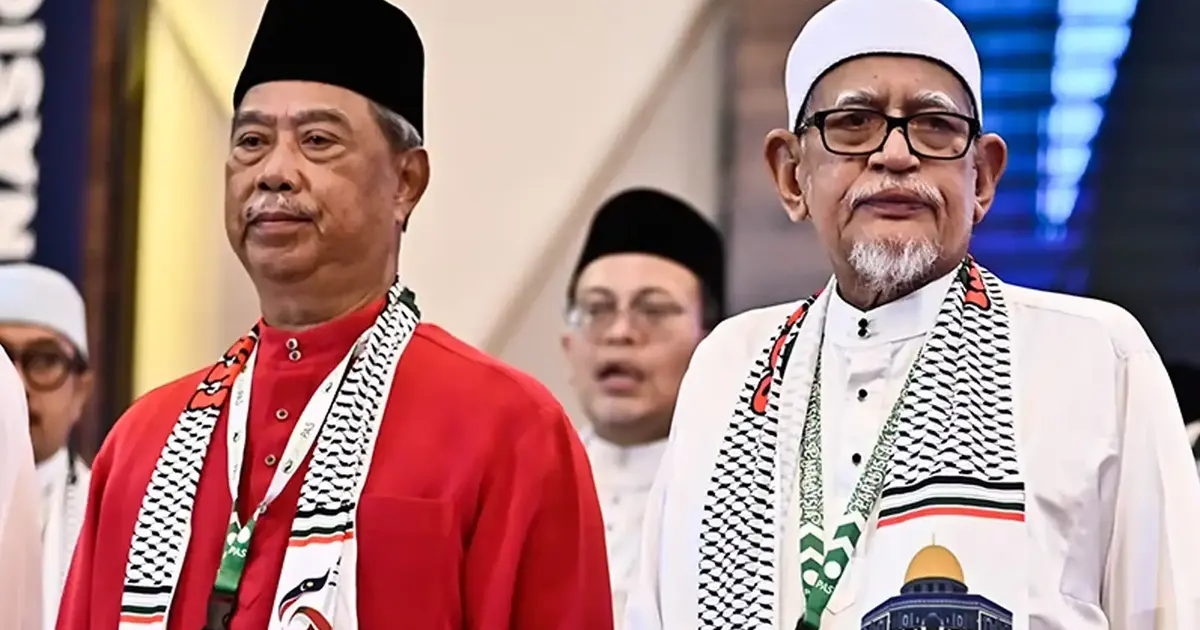
Bersatu president Muhyiddin Yassin has launched a sharp critique against PAS, accusing the Islamist party of pursuing independent negotiations with Barisan Nasional without consulting coalition partners, a move he characterizes as fundamentally undermining the Perikatan Nasional alliance structure. The rebuke reflects mounting tensions within Malaysia's opposition bloc, exposing fractures that threaten the coalition's ability to present a unified political front ahead of potential electoral contests.
Muhyiddin's grievance centers on what he describes as PAS making unilateral strategic decisions that contradict the collective interests established within Perikatan Nasional. Such autonomous maneuvering, he argues, violates the fundamental principle of coalition governance whereby major political moves require consultation and consensus among member parties. The allegation suggests that PAS, the largest component of Perikatan Nasional by membership and parliamentary representation, has proceeded with its own agenda without first securing approval from the alliance leadership or coordinating with fellow members including Bersatu and others within the bloc.
The timing of these tensions carries particular significance for Malaysian politics. Perikatan Nasional emerged as a substantial political force following the 2022 elections, positioning itself as a counterweight to Pakatan Harapan and Barisan Nasional. Any visible fissures within the coalition risk undermining its credibility as a cohesive alternative governing option and may signal to supporters and observers that internal discipline has deteriorated. Such instability could complicate the political calculations of smaller parties or independent politicians considering alignment with various blocs.
PAS's separate engagement with Barisan Nasional warrants examination within the context of broader Malaysian coalition politics. Historically, PAS has maintained the flexibility to negotiate across traditional political divides, driven by its primary goal of advancing Islamic governance principles and securing institutional advantages for the party. Barisan Nasional, meanwhile, continues efforts to rebuild its coalition after sustained electoral losses and has actively sought new partnerships to reclaim political dominance. The convergence of these interests explains why bilateral talks between PAS and BN merit serious consideration, despite the existing Perikatan alliance framework.
Muhyiddin's public criticism reflects the precarious nature of Malaysian political coalitions, which often depend more on transactional arrangements and shared opposition to rivals than on ideological cohesion or institutional trust. Previous alliances have repeatedly fractured when individual parties perceived greater advantage in alternative partnerships. Bersatu, itself born from a faction split within UMNO and having previously aligned with both Pakatan Harapan and Perikatan Nasional at different junctures, faces vulnerability should PAS determine that closer ties with Barisan Nasional—particularly with component parties like UMNO—serve its organizational interests more effectively.
For Malaysian voters and political observers, these developments underscore the fluid and often unstable character of domestic political alignments. Coalition loyalty remains subordinate to strategic advantage, meaning public alliances can shift dramatically if member parties perceive altered electoral prospects or institutional benefits. The willingness of PAS to explore BN overtures despite existing Perikatan membership demonstrates how political pragmatism frequently trumps stated commitments to collective structures.
The controversy also highlights the asymmetry within Perikatan Nasional itself. PAS commands significantly more parliamentary seats and party members than either Bersatu or other coalition partners, potentially justifying its assertion of greater autonomy in strategic negotiations. Smaller parties often find themselves constrained by coalitions where larger members exercise disproportionate influence, creating resentment and challenges to unified decision-making. Whether PAS leadership views its dialogue with Barisan Nasional as a legitimate exercise of party autonomy or whether it genuinely intended such discussions to remain confidential remains unclear from available accounts.
Regional implications extend beyond internal Malaysian politics. Southeast Asia's democratic systems increasingly feature multi-party coalitions navigating complex negotiation terrain, and Malaysia's experience offers instructive lessons regarding coalition stability, party autonomy, and the tension between individual organizational interests and broader alliance objectives. The region's other democracies, including Indonesia, Thailand, and the Philippines, similarly grapple with coalition management challenges that frequently pit short-term tactical advantages against longer-term strategic partnerships.
Moving forward, Perikatan Nasional faces critical decisions regarding enforcement of coalition discipline and establishment of mechanisms for managing internal disputes before they escalate into public recriminations. Whether the alliance can develop institutional frameworks to prevent members from unilaterally pursuing major strategic repositioning will substantially influence its viability as a genuine political alternative. Absent such mechanisms, continued tensions and periodic defections appear inevitable, ultimately weakening the bloc's electoral appeal and governance capacity should it ever secure sufficient parliamentary support to form government.

