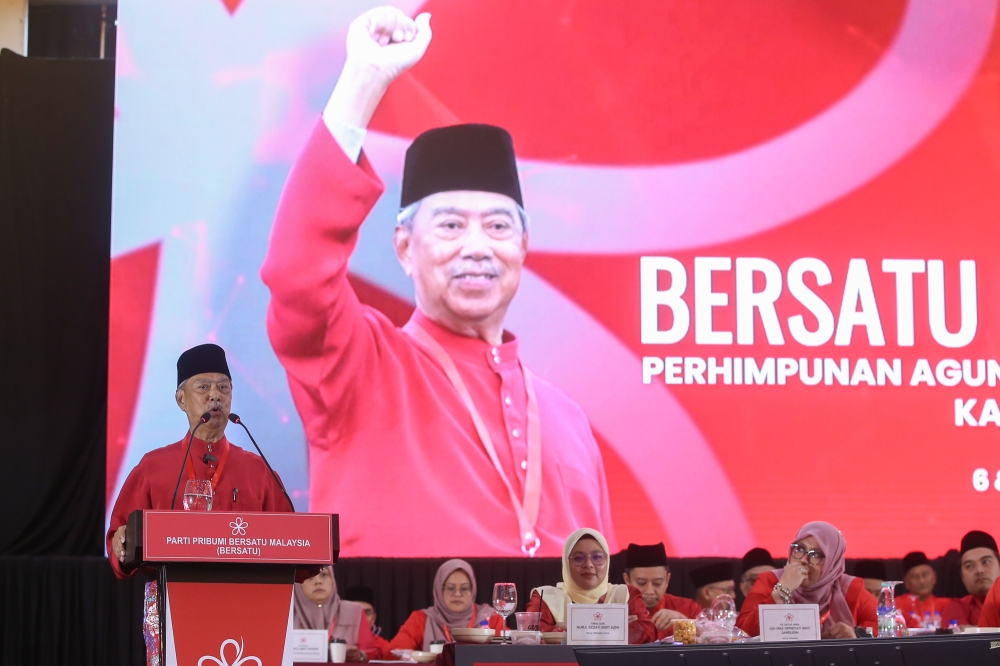
Bersatu president Tan Sri Muhyiddin Yassin has launched a pointed critique of Perikatan Nasional, contending that the coalition has systematically marginalised his party from substantive involvement in political decision-making. Speaking in Kuala Lumpur, Muhyiddin articulated growing frustrations within Bersatu regarding its standing within the broader alliance, suggesting that the party's voice has been sidelined in matters of strategic importance to the grouping.
The seasoned politician's remarks underscore mounting tensions within Perikatan, which comprises Bersatu, PAS, and other constituent parties. Muhyiddin's assertion that Bersatu has been excluded raises questions about the coalition's internal cohesion and whether the partnership remains functional as originally conceived. This development signals potential fractures within an alliance that has positioned itself as a major force in Malaysian politics, particularly among Malay-Muslim voters.
Crucially, Muhyiddin challenged the legitimacy of Perikatan's broader political project, specifically targeting the proposed alliance with Umno. He contended that any arrangement involving Umno cannot authentically represent what he characterised as genuine Malay unity, implying that such combinations lack the ideological coherence necessary to advance Malay-Muslim interests comprehensively. This framing suggests Muhyiddin views Umno as ideologically incompatible with Perikatan's core mission.
The alliance between Perikatan and Umno has been a subject of considerable debate within Malaysian political circles. Muhyiddin's criticism implies that bringing Umno into the equation compromises Perikatan's positioning as a unifying force for Malay political interests. His argument effectively questions whether Perikatan can maintain its distinctive political identity whilst accommodating Umno's substantial political machinery and institutional interests.
For Malaysian readers, these developments carry significant implications for the country's evolving political landscape. The apparent strain within Perikatan reflects broader struggles within Malay-Muslim political coalitions to establish unified platforms that can command substantial electoral support. The fragmentation Muhyiddin's comments suggest may influence coalition-building dynamics ahead of future electoral contests, particularly as parties jockey for position and attempt to maximise their respective spheres of influence.
Bersatu's predicament within Perikatan illustrates a fundamental challenge facing multi-party coalitions in Malaysia's electoral system. Smaller partners frequently find themselves subordinated to larger constituents, leading to grievances about representation and decision-making authority. Muhyiddin's public airing of these concerns indicates that internal management of the alliance has perhaps deteriorated, necessitating public recourse to expressing dissatisfaction.
The question of Malay unity itself remains contested terrain in Malaysian politics. Muhyiddin's invocation of this concept whilst simultaneously criticising potential Umno involvement suggests he envisions a particular conception of Malay political organisation distinct from what Umno represents. This distinction may reflect different approaches to governance, institutional development, or strategic vision for Malay-Muslim communities.
The timing of Muhyiddin's intervention warrants consideration as well. Public statements of this nature typically emerge when internal coalition discussions have reached impasse, suggesting that bilateral or multilateral negotiations between Perikatan constituents may have foundered. By proceeding with public commentary, Muhyiddin effectively escalates the internal dispute into a matter of public discourse, potentially constraining the latitude available to other coalition partners for negotiation or compromise.
Regionally, Malaysia's political stability remains relevant to Southeast Asian economic and strategic considerations. Coalition instability within major political groupings can have ramifications for governance consistency, policy continuity, and investor confidence. The apparent discord within Perikatan therefore extends beyond domestic political interest to encompass broader regional implications for economic performance and institutional predictability.
For Perikatan's component parties, particularly PAS, these developments present strategic dilemmas regarding continued participation in the coalition versus potential realignment. The coalition's viability depends on maintaining sufficient internal consensus regarding objectives, resource allocation, and acceptable partners. Muhyiddin's public criticism fundamentally challenges this consensus, potentially accelerating decisions by other parties regarding their coalition commitments.
The substantive disagreement regarding Umno incorporation indicates deep philosophical or strategic divisions within Perikatan that rhetoric alone cannot resolve. Whether the coalition can navigate these tensions through internal restructuring, reconceptualised partnership terms, or accommodation of Bersatu's particular interests remains an open question. Failure to address these concerns risks further deterioration of the alliance's functionality and electoral viability.

