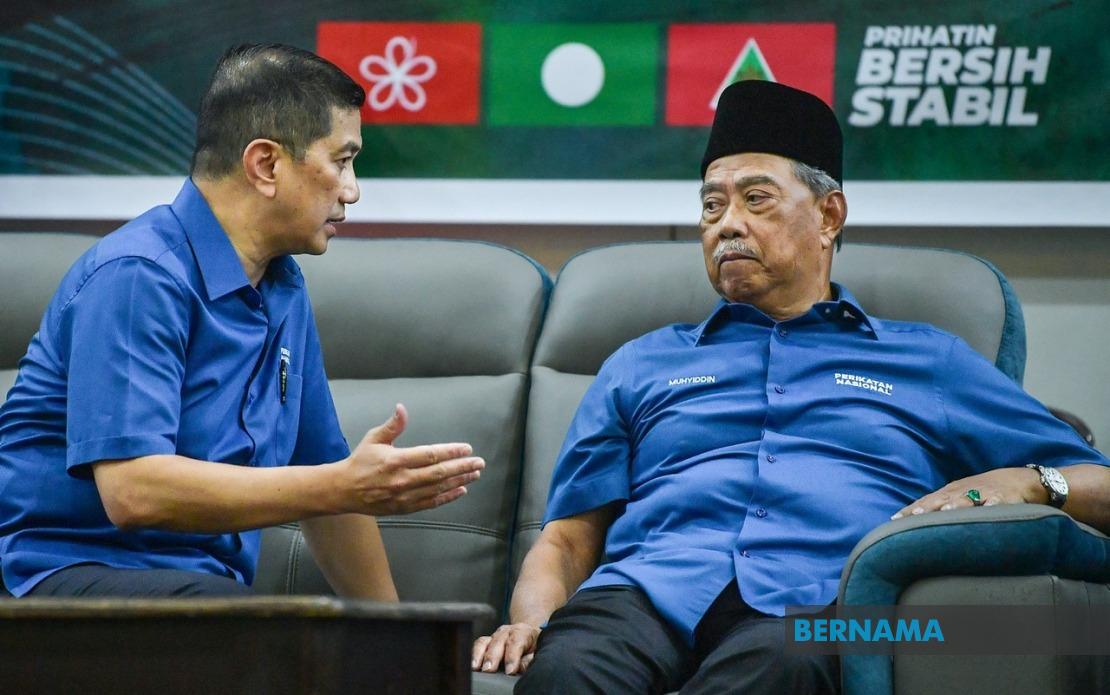
Tan Sri Muhyiddin Yassin has thrown his backing behind the government's recently announced package of measures designed to alleviate financial pressures on ordinary Malaysians and the business community. Speaking through a Facebook post, the Bersatu president commended the administration's recognition of mounting cost-of-living concerns, signalling cross-partisan support for the initiatives that Prime Minister Datuk Seri Anwar Ibrahim unveiled on Sunday and are scheduled to take effect on September 1.
Among the flagship reforms receiving Muhyiddin's endorsement is the restoration of the RON95 petrol subsidy eligibility cap from 200 litres to 300 litres per month. This expansion represents a meaningful relief for middle-income households and daily commuters who have felt the squeeze of fuel price volatility. The increase effectively allows eligible drivers to benefit from subsidised fuel for a longer driving period, reducing the cumulative impact on household transportation budgets during a period when inflation remains a persistent concern for Malaysian families.
Equally significant is the government's decision to raise the e-Invoicing exemption threshold for businesses from its previous level to annual sales reaching RM3 million. This adjustment removes substantial compliance burdens from Malaysia's small and medium enterprise sector, which has long grappled with digital transition costs while competing in an increasingly technology-dependent economy. For thousands of traders operating at the lower and mid-tier segments, the administrative and financial savings from this exemption create space to reinvest in growth rather than regulatory compliance infrastructure.
Muhyiddin has cautioned that announcement alone is insufficient without rigorous execution. He stressed that relevant ministries and government agencies must prioritise the swift disbursement of allocated funds and ensure that assistance genuinely reaches the intended beneficiaries. This emphasis reflects a broader reality in Malaysia's administrative landscape, where programme design often exceeds implementation effectiveness, and delays in fund release can render well-intentioned initiatives ineffective in real-world conditions.
The former premier also identified the RM1 billion additional micro-credit facility scheme and RM200 million in direct grants targeting small traders, night market vendors, and home-based entrepreneurs as instrumental in revitalising grassroots economic activity. These measures directly address the MSME segment, which constitutes a vital economic engine but has faced credit constraints and limited access to working capital. By expanding financing options and direct grant support, the government creates pathways for informal-sector participants to formalise operations and scale activities, particularly benefiting women entrepreneurs whose participation in the economy remains constrained by systemic barriers.
Beyond immediate livelihood support, Muhyiddin welcomed the government's broader infrastructure and service investments. An additional RM500 million allocation for school maintenance promises to improve educational facilities, particularly in rural and underserved urban areas where infrastructure deterioration has undermined learning outcomes. Simultaneously, initiatives to digitalise healthcare services and provide subsidised access to artificial intelligence software subscriptions for young Malaysians position the nation toward technology adoption, addressing skills gaps and modernising public service delivery in critical sectors that shape citizen welfare and economic competitiveness.
However, Muhyiddin has called for the government to venture beyond these immediate relief measures and conduct comprehensive reviews of taxation and subsidy rationalisation policies. This recommendation acknowledges that structural economic pressures demand deeper interventions than temporary assistance can provide. Tax reform and subsidy restructuring, though politically sensitive, represent long-term solutions to financial strain, suggesting that the former prime minister envisions sustained policy architecture rather than cyclical relief announcements.
The endorsement from Muhyiddin carries particular significance within Malaysia's fractious political environment. As a figure who commanded considerable support during his tenure as premier and maintains substantial standing within the Bersatu party, his validation lends credibility to the government's initiatives across a diverse political spectrum. This cross-partisan acknowledgement, even if measured, reduces the risk that relief measures become entangled in partisan controversy and helps establish a policy consensus around addressing cost-of-living pressures as a national priority transcending factional interests.
The government's announcement reflects recognition that cost-of-living anxieties constitute the paramount concern for Malaysian households across income tiers. Fuel prices, business taxation, education quality, healthcare accessibility, and digital inclusion represent touchpoints where state policy directly intersects with citizen experience and financial security. By clustering reforms addressing these domains, the administration demonstrates an integrated understanding of interconnected pressures rather than treating them as isolated complaints.
For Malaysian businesses, particularly the MSME community that generates substantial employment, the expanded subsidies and tax relief create marginal but meaningful improvements to operational margins. However, analysts note that such measures function more effectively as short-term stabilisers than as engines of expansion. Sustained business growth requires complementary policies addressing labour availability, supply-chain efficiency, market access, and innovation capacity—domains requiring more sustained engagement beyond temporary relief funding.
The effectiveness of these initiatives will ultimately depend upon implementation discipline and coordination across multiple government agencies. Muhyiddin's emphasis on swift disbursement acknowledges that Malaysia has historically witnessed gaps between budgeted allocations and actual fund deployment, undermining the intended impact of well-designed programmes. Establishing accountability mechanisms and transparent progress tracking will prove essential to translating announced measures into tangible benefit for ordinary Malaysians and businesses struggling against persistent economic headwinds.

