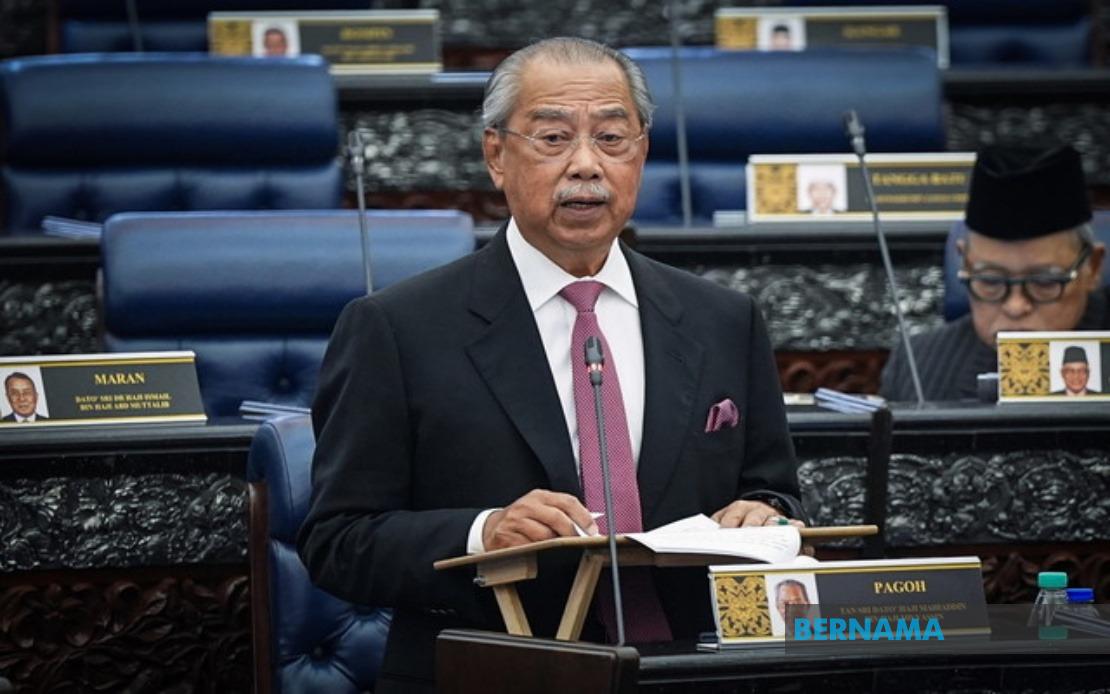
During parliamentary debate on the Tabung Haji Royal Commission of Inquiry report, former Prime Minister Tan Sri Muhyiddin Yassin has pressed the government to initiate a comprehensive and transparent forensic audit of the pilgrimage fund's management. The Pagoh MP and Bersatu president emphasised that such an investigation must be completed within a twelve-month timeframe, treating the governance failures exposed in the RCI findings as a matter of urgent national concern requiring decisive intervention.
The RCI report, released to the public on July 29, documented troubling patterns in TH's operations spanning 2014 to 2020, during which the institution recorded estimated cumulative losses ranging from RM10 billion to RM12.6 billion. These figures represent an extraordinary depletion of assets entrusted to TH by millions of Malaysian Muslims saving for the Hajj pilgrimage. Muhyiddin stressed that the scale of these losses cannot be dismissed as merely administrative oversight, but rather demands rigorous investigation into the mechanisms by which such substantial erosion of funds occurred.
Muhyiddin articulated a specific rationale for the forensic audit methodology. An independent forensic investigation, he argued, serves a critical dual purpose: tracing the precise pathways through which funds moved within TH's systems while simultaneously identifying whether losses stemmed from deliberate fraudulent conduct, systematic abuse of authority, or negligent decision-making. This distinction matters considerably for accountability purposes, as each category of failure carries different legal and institutional implications.
The former prime minister further insisted that accountability must follow investigation. Anyone determined to bear responsibility for TH's financial deterioration—whether through fraud, misuse of position, or failure of oversight—must face appropriate legal consequences. This stance reflects growing parliamentary and public sentiment that the scale of losses demands more than administrative reforms; it requires individual accountability commensurate with the breaches uncovered.
Parallel to Muhyiddin's intervention, Syed Saddiq Syed Abdul Rahman, the MUDA representative from Muar, presented a complementary proposal focused on specific problem areas. He identified fourteen problematic TH investments explicitly highlighted in the RCI report and urged the government to establish a Multi-Agency Task Force dedicated to investigating each of these transactions. This approach recognises that different categories of TH failure may require different investigative expertise and enforcement capabilities.
Syed Saddiq's proposal encompasses coordination among multiple enforcement bodies, including the Malaysian Anti-Corruption Commission, the Royal Malaysian Police, and the Inland Revenue Board. The rationale underlying this multi-agency framework is straightforward: TH's investment losses likely resulted from various causes—some potentially involving criminal misappropriation, others involving tax implications, still others involving regulatory breaches—requiring the specialised investigative approaches each agency brings. By operating in concert rather than independently, these bodies can build more comprehensive evidentiary foundations and prevent investigative gaps that might otherwise allow accountability to slip through jurisdictional seams.
Syed Saddiq's proposal extended beyond TH itself, suggesting that similar investigative scrutiny should encompass related institutions—Felda, FGV, and Eagle High—which may share similar vulnerabilities to mismanagement. This broader frame acknowledges that TH's problems may not represent isolated institutional failure but rather a systemic challenge affecting multiple state-linked entities that accumulate substantial assets on behalf of stakeholder communities. Understanding patterns of failure across these entities could illuminate systemic weaknesses in how Malaysia's government-linked companies are overseen and regulated.
Datuk Seri Hasni Mohammad, representing BN's Simpang Renggam constituency, introduced a governance framework to ensure that investigation and remediation do not dissipate without follow-through. He proposed that enforcement agencies provide regular, time-bound progress updates on all investigations initiated by RCI findings. This mechanism addresses a persistent problem in Malaysian institutional oversight: inquiries conclude, reports are tabled, and subsequent action becomes diffuse, allowing initial momentum toward accountability to attentuate over time.
Hashmi's broader proposal advocated for establishing continuous, bipartisan parliamentary oversight of TH's implementation of the RCI's twenty-five recommendations. This oversight mechanism would embed the investigative agenda within parliamentary routine, requiring enforcement agencies to report regularly to the Dewan Rakyat and creating institutional expectation that TH's remediation would be monitored systematically. As of late July, TH had implemented seventy-five percent of the RCI's recommendations, suggesting significant work remains incomplete.
The special sitting itself represents an important procedural development. By dedicating parliamentary time to detailed examination of the RCI report following its public release on July 29, the legislature signals that institutional failures of TH's magnitude warrant sustained political attention. This differs from the previous closed-door treatment of the RCI's findings and reflects evolving expectations that matters affecting millions of Malaysian pilgrims should receive transparent parliamentary scrutiny.
The combined interventions from Muhyiddin, Syed Saddiq, and Hasni outline complementary mechanisms for transforming the RCI's diagnostic findings into actionable accountability. Muhyiddin's forensic audit would establish systematic understanding of how losses occurred and who bears responsibility. Syed Saddiq's multi-agency task force would ensure that specific problematic investments receive focused investigation and legal scrutiny. Hasni's parliamentary oversight framework would embed accountability into ongoing legislative routine, preventing inquiry recommendations from becoming shelved reports.
For Malaysian citizens, particularly the millions who hold Tabung Haji accounts, these parliamentary interventions signal potential movement toward understanding losses that have directly diminished their accumulated savings. The forensic audit, task force investigations, and parliamentary oversight collectively represent mechanisms through which governance failures documented in the RCI might finally translate into both institutional reform and individual accountability, addressing the legitimate expectation that losses of such magnitude warrant consequences commensurate with their impact on millions of Malaysian families' savings.
The effectiveness of these proposed mechanisms, however, will ultimately depend on government commitment to their implementation and political will to pursue accountability wherever investigations lead, particularly if those pathways implicate powerful figures from preceding administrations.

