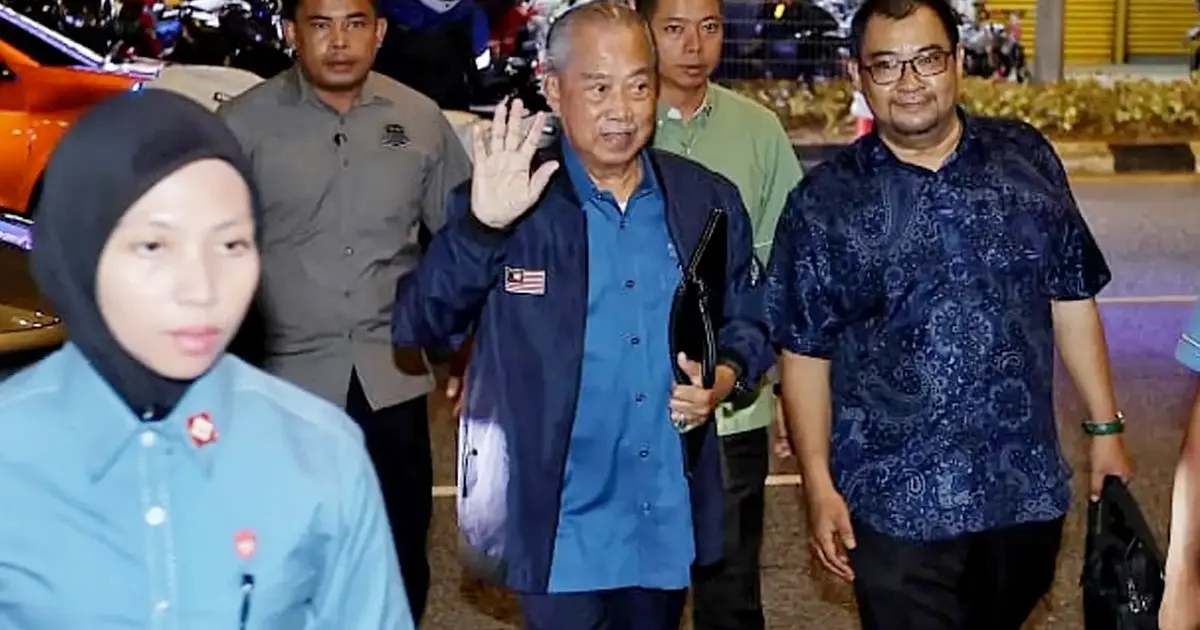
Muhyiddin Yassin and other senior Bersatu party officials convened for an emergency Perikatan Nasional assembly late today, responding urgently to the Islamic party PAS's decision to sever its association with Bersatu. The hastily arranged gathering underscores deepening fractures within the bloc that has served as a significant opposition and coalition force in Malaysian politics since its formation.
The timing of the emergency convocation reflects the gravity of the situation confronting the three-party coalition. PAS's withdrawal represents a consequential blow to Bersatu's standing within the alliance and raises fundamental questions about the viability of the broader Perikatan Nasional framework. For Muhyiddin, who has sought to position himself as a stabilising force in opposition politics, the meeting represents a critical juncture requiring decisive coalition management.
Bersatu's predicament carries particular significance for Malaysian political observers tracking the broader realignment occurring since the 2022 general election. The party, which emerged from within UMNO and subsequently positioned itself as an alternative force, has gradually found itself isolated from traditional Malay-Muslim constituencies that have gravitated toward PAS. The PAS departure effectively signals that the Islamic party has opted to pursue independent political positioning rather than maintain the coalition framework that previously bound them together.
The emergency session was expected to explore Bersatu's strategic options moving forward and determine whether the coalition retains sufficient cohesion to function as a meaningful political force. Analysts have noted that the departure of PAS, which commands substantial grassroots influence particularly in the northern and east coast states, fundamentally alters the coalition's electoral calculus and parliamentary weight. For Bersatu, which lacks the extensive party machinery or voter base of either PAS or UMNO, the implications could prove existentially significant.
Within Malaysian political circles, observers have been scrutinising whether this rupture represents a permanent reconfiguration or a temporary tactical manoeuvre. PAS has previously demonstrated flexibility in coalition partnerships, shifting alliances based on strategic calculations and internal party dynamics. However, the deliberateness of the withdrawal announcement suggests deeper ideological or strategic divergences that may prove difficult to reconcile through conventional negotiation processes.
For the broader opposition landscape, the Perikatan Nasional breakdown creates both opportunities and complications. While it potentially weakens a consolidated opposition front, it may also open pathways for different political actors to pursue varied strategies in pursuit of electoral advantage. The reconfiguration could influence everything from state-level politics to the trajectory of federal opposition politics in coming electoral cycles.
Muhyiddin's role in these proceedings carries additional weight given his history of coalition-building and his efforts to establish himself as a credible opposition leader. His ability to manage this crisis and chart a viable path forward for Bersatu could significantly influence his political standing and that of his party in the increasingly complicated post-2022 political environment. The meeting represented an opportunity to demonstrate leadership capable of adapting to rapidly shifting political circumstances.
Regionally, Malaysia's political instability continues to draw attention from neighbouring states monitoring developments in the world's third-largest Muslim-majority democracy. The fragmentation of opposition coalitions and shifting alignment patterns carry implications for regional political dynamics and the broader democratic trajectory within Southeast Asia. Coalition stability has become a persistent challenge across the region, with Malaysian developments serving as an instructive case study in contemporary opposition politics.
The emergency Perikatan Nasional session also reflected the broader challenge facing Malaysian opposition figures in maintaining coherent political alliances amid competing ideological positions and strategic interests. Unlike the ruling coalition, which benefits from incumbency advantages and established patronage networks, opposition parties must rely on shared programmatic commitments and alliance discipline to remain electorally competitive. The visible rupture between PAS and Bersatu suggested that these binding forces had weakened considerably.
Looking forward, the outcome of tonight's emergency discussions would likely determine whether the Perikatan Nasional framework survives in substantially its current form or whether further realignments become inevitable. The trajectory of these negotiations could reshape opposition politics for years to come, influencing everything from parliamentary dynamics to electoral strategy in preparation for future electoral contests. For Malaysian political observers, the coming days promised significant developments with far-reaching implications for the nation's democratic landscape and coalition politics.