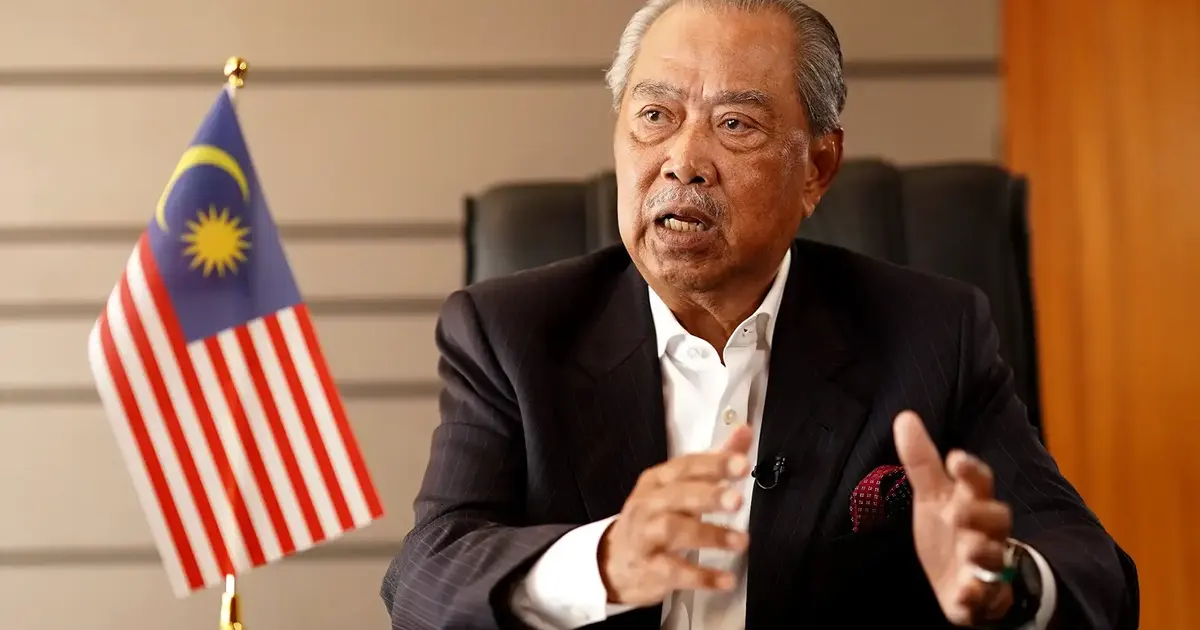
Bersatu president Muhyiddin Yassin has struck back at suggestions that his party has been marginalised within Perikatan Nasional, defending Bersatu's position as a foundational architect of the opposition coalition. The exchange underscores ongoing friction within PN as it seeks to establish itself as a unified political force ahead of potential electoral contests.
Muhyiddin's response came after remarks by Annuar, highlighting tensions that continue to simmer beneath the surface of what is ostensibly a coordinated opposition alliance. The Bersatu leader emphasised his party's instrumental role in establishing PN, arguing that such contributions cannot be dismissed or overlooked. This rhetorical positioning reflects deeper anxieties about power distribution within the coalition and the relative influence wielded by its constituent parties.
The dispute touches on a fundamental challenge facing opposition coalitions in Malaysia: balancing the interests of larger, more established parties with those of smaller players who claim founding status. Bersatu, though smaller in parliamentary representation compared to PAS or PKR, leverages its founding credentials as a basis for demanding adequate standing within coalition structures and decision-making processes. This dynamic mirrors struggles seen in previous Malaysian political alliances, where membership size, organisational reach, and historical contribution create competing claims for influence.
For Malaysian political observers, the Bersatu-PN dynamics reflect broader questions about coalition stability. Unlike Pakatan Harapan, which governed from 2018 to 2020, PN has not yet been tested by the strains of executive power. Its cohesion remains largely untested, and internal disputes over resource allocation, campaign strategy, and representation in potential future governments could prove destabilising. The current exchange suggests these underlying tensions are already surfacing.
Annuar's original assertion that Bersatu faces sidelining carries implicit criticism of how other PN components—particularly PAS, which commands the largest parliamentary presence—have dominated coalition decision-making. This taps into a grievance frequently aired by smaller coalition partners across different political alignments in Malaysia. Without clear internal mechanisms for arbitrating such disputes, personality-driven conflicts between party leaders can quickly metastasise into broader coalition fractures.
Muhyiddin's combative response signals that Bersatu intends to actively defend its interests within PN rather than acquiesce to perceived marginalisation. This assertiveness reflects his personal political style and his acute awareness that Bersatu's relevance depends partly on demonstrating that he can secure tangible benefits for the party. Should PN eventually secure governmental power, such internal jockeying will intensify as parties compete for ministerial portfolios, committee positions, and policy influence.
From a Southeast Asian perspective, Malaysia's opposition coalition dynamics illustrate challenges common to multi-party alliances across the region. In Indonesia, Thailand, and the Philippines, similar coalitions have frequently encountered internal contradictions between shared opposition to incumbent governments and the particularistic interests of individual constituent parties. PN's experience thus offers insights relevant to democratic governance challenges elsewhere in the region.
The timing of this exchange also matters. As speculation grows about potential snap elections or the trajectory of federal politics following recent state-level contests, coalition partners are increasingly conscious that internal disputes risk appearing unprofessional to voters. Malaysian electorate responses to such displays have historically been mixed—some voters see intra-coalition disagreements as evidence of healthy democratic debate, while others view them as indicators of instability unsuitable for government. PN's leadership will therefore need to calibrate their public discourse carefully.
For Bersatu specifically, the party faces distinctive pressures. Its founding in 2016 and subsequent trajectory through multiple political configurations have left it with a fluid membership base. Maintaining party discipline and coherence while asserting influence within a larger coalition represents a delicate balancing act. Muhyiddin's willingness to publicly challenge perceptions of sidelining reflects his determination to sustain party morale and prevent drift toward other political vehicles.
The substantive issues underpinning this dispute—how coalition positions are allocated, how decisions are made, and how credit for achievements is distributed—lack transparent resolution mechanisms within PN as currently structured. Unlike formal coalition agreements that specify such arrangements, PN appears to operate through less formalised arrangements subject to the bargaining power and political leverage of its components. This fluidity generates recurrent friction.
Moving forward, the trajectory of this dispute will depend partly on whether PN's leadership can broker accommodations satisfying Bersatu's core demands for meaningful influence and recognition. Failure to do so risks either driving Bersatu into independent political positioning or creating a coalition that is internally resentful even if nominally united. Either outcome would complicate PN's ability to project the coherence necessary to challenge the federal government.
Ultimately, the Muhyiddin-Annuar exchange illustrates that Malaysian opposition politics remain contested terrain where founding credentials, party size, leadership personalities, and institutional design all shape outcomes. As PN continues its evolution, managing these centrifugal forces will prove crucial to its long-term viability as a political force.

