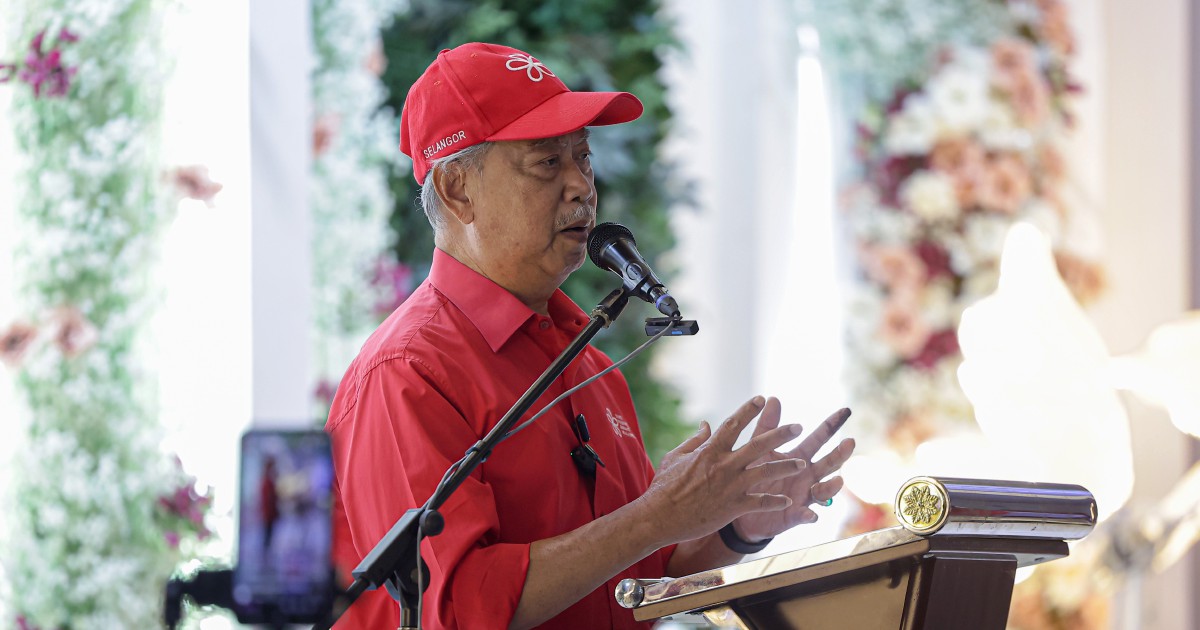
Bersatu president Tan Sri Muhyiddin Yassin has rejected accusations from Umno vice-president Datuk Seri Mohamed Khaled Nordin that his party is acting as a spoiler in the Negri Sembilan election. The criticism marks a fresh tension point within the broader political coalition that has governed Malaysia in recent years, highlighting underlying friction between component parties over electoral strategy and representation at the state level.
Muhyiddin's response underscores a fundamental dispute about political legitimacy and the role of smaller parties within Malaysia's coalition system. Bersatu, which emerged as a significant political force following the 2018 general election and the subsequent Sheraton Move in 2020, has positioned itself as a major player worthy of substantial electoral representation. The party's decision to field candidates in Negri Sembilan signals its ambition to expand its footprint beyond its strongholds and establish relevance across multiple states.
Khaled's 'spoiler' characterization reflects Umno's concern that Bersatu's participation in the election could fragment the Barisan Nasional vote and potentially hand seats to opposition parties. This worry carries historical weight in Malaysian politics, where vote-splitting among government-aligned parties has occasionally allowed opposition candidates to win in competitive constituencies. Umno, as the traditional heavyweight in the coalition, views itself as the natural vehicle for Malay-Muslim political representation and has consistently sought to minimize internal competition that might weaken the overall government tally.
The dispute reveals the inherent tensions within Malaysia's coalition politics, where multiple parties claiming similar electoral bases must negotiate both their symbolic importance and practical seat allocations. Bersatu's rise has disrupted the traditional pecking order, creating friction with Umno over ministerial portfolios, parliamentary representation, and now state-level electoral participation. These tensions have simmered beneath the surface of official unity statements but periodically surface in public criticism.
From Bersatu's perspective, participating in state elections is a legitimate exercise of democratic rights. The party argues that Umno cannot monopolize Malay-Muslim representation within the coalition, and that voters deserve a choice among different coalition-aligned candidates. This reasoning reflects a broader movement toward political pluralism even within the ruling alliance, where dominance by a single party no longer commands automatic deference from smaller allies.
The Negri Sembilan context adds another layer to this dispute. The state represents relatively neutral political ground compared to Umno's traditional strongholds in the peninsula's east coast or Bersatu's emerging bases in Pahang and elsewhere. A Negri Sembilan election thus becomes a testing ground for both parties' actual electoral appeal and organizational capacity. How candidates perform in the state could shape future negotiations over seat allocations in other elections.
Muhyiddin's pushback against Khaled's remarks suggests Bersatu will not be easily sidelined in coalition electoral calculations. The party's assertiveness signals that it views itself as a permanent fixture in Malaysian governance rather than a temporary addition subject to Umno's preferences. This positions future state and federal elections as potential flashpoints where internal coalition dynamics could affect overall political outcomes.
For Malaysian observers, this inter-coalition squabbling raises questions about the stability and coherence of government-aligned politics. While such disputes are normal in multi-party coalitions worldwide, their frequency and intensity suggest that the current power-sharing arrangement may require adjustment. The distribution of electoral opportunities, ministerial positions, and symbolic status among coalition members increasingly resembles a constant negotiation rather than an established hierarchy.
The timing of this exchange, occurring ahead of the Negri Sembilan election, suggests that both parties are positioning themselves for more substantive negotiations. Public criticism serves as a signal of their respective bargaining positions and electoral ambitions. Umno's concerns about vote-splitting are genuine, but they also reflect anxiety about Bersatu's growing political weight. Similarly, Bersatu's insistence on electoral participation demonstrates its unwillingness to accept subordinate status within the coalition.
Going forward, the Negri Sembilan election results will likely influence how the coalition manages internal competition in future state contests. If Bersatu performs well, it may justify its participation and embolden similar efforts elsewhere. Conversely, if results disappoint, Umno may find renewed leverage in arguments that party fragmentation damages the government's electoral performance. Either outcome will ripple through coalition politics during subsequent state elections and the eventual federal campaign.
The broader implication for Malaysian politics is that governance coalitions can no longer be taken for granted to function as unified blocs. Component parties negotiate constantly over representation, and those negotiations increasingly play out in public view rather than through quiet backroom arrangements. This transparency, while potentially destabilizing in the short term, may ultimately contribute to more dynamic and responsive politics as parties must justify their positions to members and supporters.

