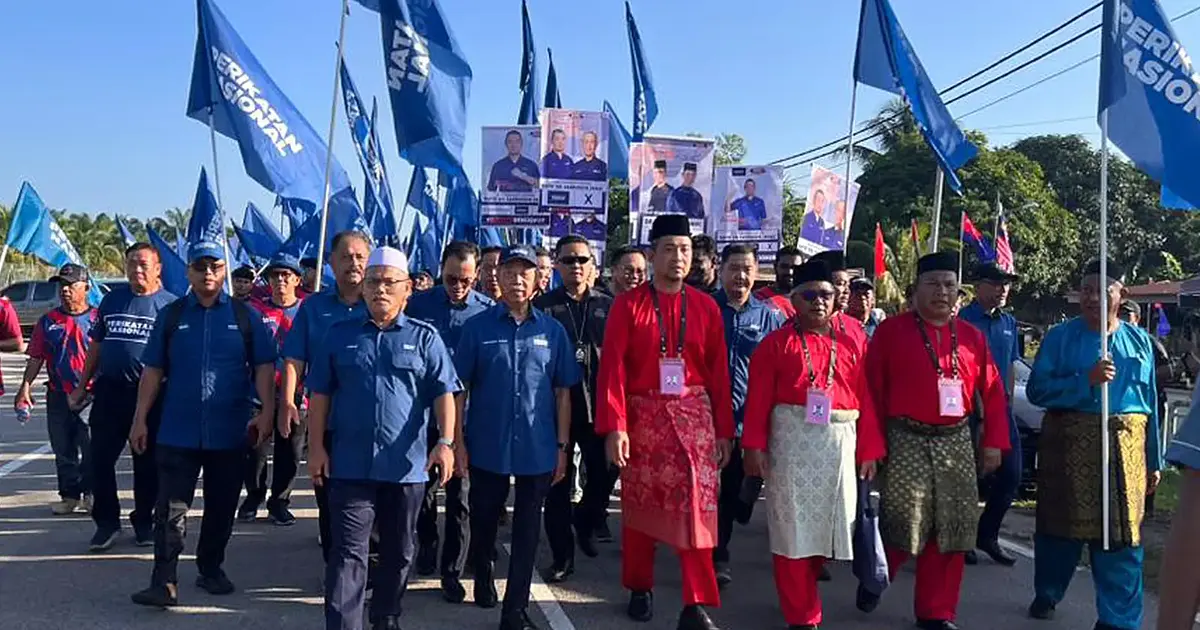
Perikatan Nasional chair Muhyiddin Yassin lent his political weight to Bukit Kepong's contested seat this week, taking to the ground alongside a substantial crowd of party faithful to support Dr Sahruddin Jamal's candidacy. The mobilisation reflects the coalition's strategic focus on a seat considered strategically important to the opposition alliance's broader territorial ambitions in the state.
Dr Sahruddin Jamal, a two-term assemblyman, carries the hopes of Bersatu, the largest component party within Perikatan Nasional's coalition structure. His previous electoral victories in the constituency have established him as an established figure in the area, though the political landscape has shifted considerably since his last campaign. The incumbent's experience navigating two election cycles gives him an institutional advantage, yet the heightened visibility from party leadership suggests internal calculations about the seat's vulnerability in a competitive environment.
Muhyiddin's personal appearance at the campaign event carries symbolic weight within coalition politics. As a former prime minister and current coalition chair, his presence amplifies Dr Sahruddin's campaign while demonstrating solidarity within Perikatan Nasional's ranks. The turnout of hundreds of supporters indicates the coalition has successfully mobilised its ground network in this particular constituency, a crucial metric for assessing organisational health during the campaign phase.
The Bukit Kepong seat has emerged as a focal point in what appears to be an intensifying electoral contest. The scale of the rally and the calibre of speaker suggest this is not merely routine campaigning but rather a deliberate show of force to energise party members and send signals to both voters and rival camps about the coalition's confidence and resources. In Malaysian electoral dynamics, such demonstrations often precede periods of heightened activity and spending on localised campaigns.
Geographically, Bukit Kepong's position within its larger constituency matrix matters considerably. The area's demographic composition, economic characteristics, and historical voting patterns all inform how political parties allocate their senior figures and campaign resources. That Muhyiddin personally attended indicates the coalition's assessment that this seat warrants leadership-level attention and energy.
For Bersatu specifically, retaining and expanding its state assembly representation remains crucial to party viability within Perikatan Nasional. The coalition model depends on member parties delivering electoral results that justify their share of ministerial positions and resource allocation. Dr Sahruddin's re-election would constitute a tangible win for Bersatu's organisational efforts, while a loss would raise uncomfortable questions about the party's electoral appeal and ground strength.
The campaign dynamics in Bukit Kepong also reflect broader trends within Malaysian opposition politics. Perikatan Nasional has positioned itself as an alternative to the Pakatan Harapan coalition, particularly in states where it holds legislative representation. Maintaining such footholds requires consistent electoral success and active engagement with existing voter bases. The rallying of hundreds of supporters demonstrates a party determined to defend its existing territory rather than concede ground.
Muhyiddin's role as coalition figurehead involves not only policy leadership but also the symbolic task of elevating candidate profiles and energising party machinery. His involvement in local campaigns reinforces hierarchical structures within Bersatu and signals to members that the leadership takes parliamentary representation seriously. In coalition politics, such visible support can influence voter perception of a candidate's importance and backing.
The timing of this campaign event, held during the period leading toward electoral processes, capitalises on heightened political engagement within constituencies. Voters tend to pay greater attention to local politics when elections approach, making this an optimal window for Perikatan Nasional to present its candidates and platforms to undecided and core supporters alike.
For Malaysian and Southeast Asian observers tracking coalition dynamics and opposition movements, the Bukit Kepong campaign illustrates how Malaysian political coalitions operate at granular levels. Rather than monolithic structures, these alliances coordinate member parties' electoral efforts while allowing individual parties like Bersatu to lead in specific constituencies. Dr Sahruddin's campaign, backed by both party resources and coalition-level leadership support, exemplifies this layered approach to political contestation.
Looking forward, the outcome of Bukit Kepong will carry significance beyond the individual seat. Electoral results accumulate to determine overall coalition strength in state legislatures, which in turn affects government formation, ministry distribution, and policy direction. Each constituency thus becomes part of a larger strategic calculation about which coalition can command majority support and claim mandate to govern.

