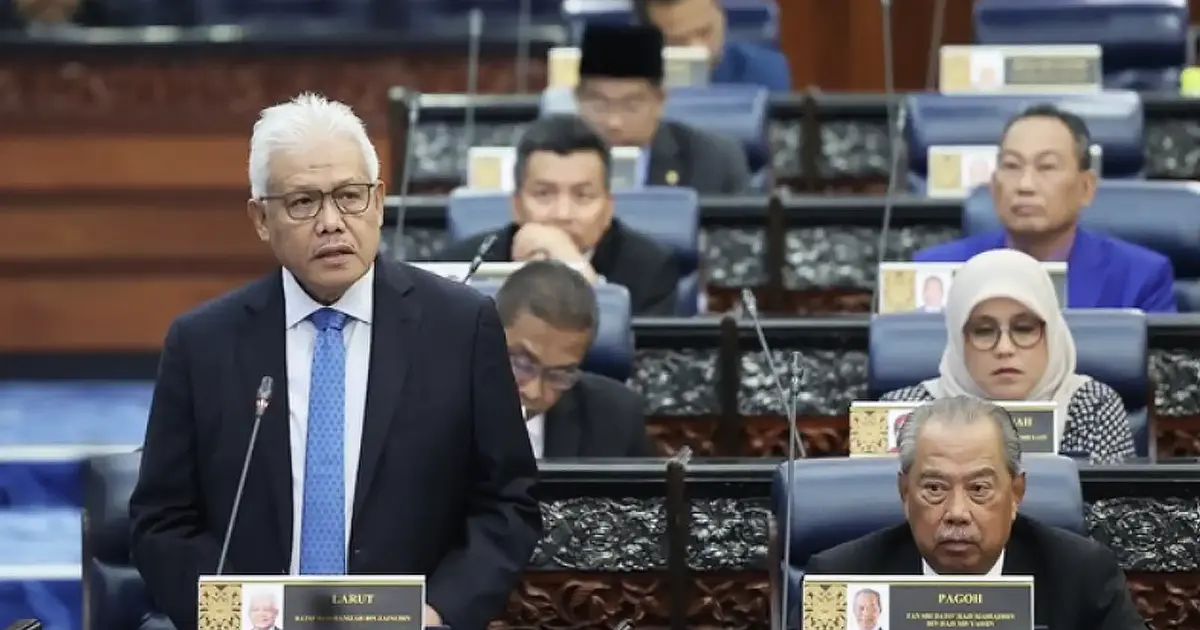
Dewan Rakyat Speaker Johari Abdul has revealed that former Prime Minister Muhyiddin Yassin sought to alter his seating position within the lower house of parliament, a development that underscores ongoing shifts in the Malaysian political landscape following recent parliamentary developments. The speaker made the disclosure while simultaneously announcing he has formally acknowledged Larut Member of Parliament Hamzah Zainudin as the recognized opposition leader through official written confirmation.
The request for a seating reassignment, while appearing procedural on the surface, carries deeper implications for parliamentary dynamics and internal political positioning. Such requests are not uncommon in the Dewan Rakyat, yet they often reflect broader strategic considerations regarding how lawmakers wish to project their political standing and affiliation during legislative sessions. The nature of Muhyiddin's specific request and the rationale underlying it remains undetailed, though it suggests the former premier may be recalibrating his parliamentary presence as factional alignments continue evolving within Malaysian politics.
Muhyiddin Yassin's role in current Malaysian politics has been subject to considerable scrutiny and realignment since his departure from the Prime Minister's office. His positioning within parliamentary structures carries symbolic weight, reflecting not merely personal preference but also the broader political trajectories of his associates and the factions he represents. Any adjustment to his physical location within the chamber could signal shifting alliances or a desire to maintain distance from particular groupings.
The concurrent formalization of Hamzah Zainudin's status as opposition leader represents a significant institutional development in parliamentary governance. This official recognition through written correspondence establishes clear constitutional and procedural standing for Hamzah in his capacity to lead parliamentary opposition activities, articulate the opposition's legislative agenda, and exercise relevant parliamentary privileges traditionally afforded to opposition leadership. The Larut MP's designation solidifies the organizational structure of opposition oversight and accountability functions within parliament.
Hamzah Zainudin's appointment to this prominent role carries particular significance given Malaysia's recent political history and the realignment of opposition formations. The recognition formalizes parliamentary arrangements and ensures that opposition parliamentary business, from adjournment debates to legislative scrutiny, proceeds through clearly defined institutional channels. This clarity benefits all stakeholders—government, opposition, and the institution of parliament itself—by establishing unambiguous protocols for legislative engagement.
The two developments disclosed by Speaker Johari Abdul reflect the ongoing organizational complexity within Malaysia's Dewan Rakyat. Parliament continuously navigates the challenge of accommodating diverse political preferences and configurations while maintaining orderly legislative functioning. The speaker's role encompasses not merely chairing debates but also managing the multifaceted administrative and institutional arrangements that enable parliament to perform its constitutional duties effectively.
For Malaysian political observers, these adjustments illustrate the fluid nature of parliamentary politics beyond headline-grabbing ministerial appointments or government formation dynamics. The seating chart of the Dewan Rakyat, while seemingly mundane, represents the crystallization of political relationships and strategic positioning that drive legislative behavior and outcomes. How individual lawmakers position themselves within the chamber often corresponds to their political alliances and the messages they wish to communicate to colleagues and constituents.
The formalization of opposition leadership also bears significance for Southeast Asian parliamentary democracy more broadly. Clear designation of opposition leadership roles strengthens legislative oversight mechanisms and ensures that governmental accountability structures function robustly. In Malaysian contexts particularly, where coalition politics remain complex and factional arrangements shift regularly, explicit recognition of opposition leadership authority helps stabilize democratic institutions and provides consistent frameworks for parliamentary scrutiny.
Speaker Johari Abdul's disclosures demonstrate the continuing importance of procedural management in parliamentary settings. Beyond legislative debates and voting records, the administrative decisions surrounding seating arrangements, recognition of formal positions, and organizational protocols shape how parliament actually operates. The speaker's management of these matters influences the practical capacity of parliamentarians to discharge their representational and legislative duties effectively.
Looking forward, these developments suggest that Malaysian parliamentary politics will continue experiencing the gradual realignment and repositioning characteristic of recent years. The recognition of formal opposition leadership provides structural stability even as individual MPs and factions navigate shifting alliances. Muhyiddin's request for seating reassignment, meanwhile, may presage further adjustments to political positioning as factional arrangements solidify or evolve.
The interplay between institutional procedure and political substance evident in these parliamentary developments underscores how Malaysia's legislative processes remain dynamic and responsive to changing political realities. Speaker Johari Abdul's role in managing these institutional arrangements positions him as a crucial administrator of parliament's organizational frameworks, ensuring that the chamber operates according to established protocols while accommodating legitimate requests and changes. These seemingly technical administrative matters ultimately enable parliament to fulfill its democratic functions effectively, regardless of the specific political configurations occupying its benches.

%22%2F%3E%3C%2Fpattern%3E%3C%2Fdefs%3E%3Crect%20width%3D%22100%25%22%20height%3D%22100%25%22%20fill%3D%22url(%23ph107xyg)%22%2F%3E%3Crect%20width%3D%22100%25%22%20height%3D%22100%25%22%20fill%3D%22url(%23ph107xyp)%22%2F%3E%3Ctext%20x%3D%2250%25%22%20y%3D%2250%25%22%20text-anchor%3D%22middle%22%20dominant-baseline%3D%22central%22%20fill%3D%22rgba(255%2C255%2C255%2C0.95)%22%20font-family%3D%22Georgia%2C%20'Times%20New%20Roman'%2C%20serif%22%20font-weight%3D%22700%22%20font-size%3D%22320%22%20letter-spacing%3D%22-0.02em%22%3EMuda%3C%2Ftext%3E%3C%2Fsvg%3E)
%22%2F%3E%3C%2Fpattern%3E%3C%2Fdefs%3E%3Crect%20width%3D%22100%25%22%20height%3D%22100%25%22%20fill%3D%22url(%23ph10b2ng)%22%2F%3E%3Crect%20width%3D%22100%25%22%20height%3D%22100%25%22%20fill%3D%22url(%23ph10b2np)%22%2F%3E%3Ctext%20x%3D%2250%25%22%20y%3D%2250%25%22%20text-anchor%3D%22middle%22%20dominant-baseline%3D%22central%22%20fill%3D%22rgba(255%2C255%2C255%2C0.95)%22%20font-family%3D%22Georgia%2C%20'Times%20New%20Roman'%2C%20serif%22%20font-weight%3D%22700%22%20font-size%3D%22226%22%20letter-spacing%3D%22-0.02em%22%3ESevere%3C%2Ftext%3E%3C%2Fsvg%3E)