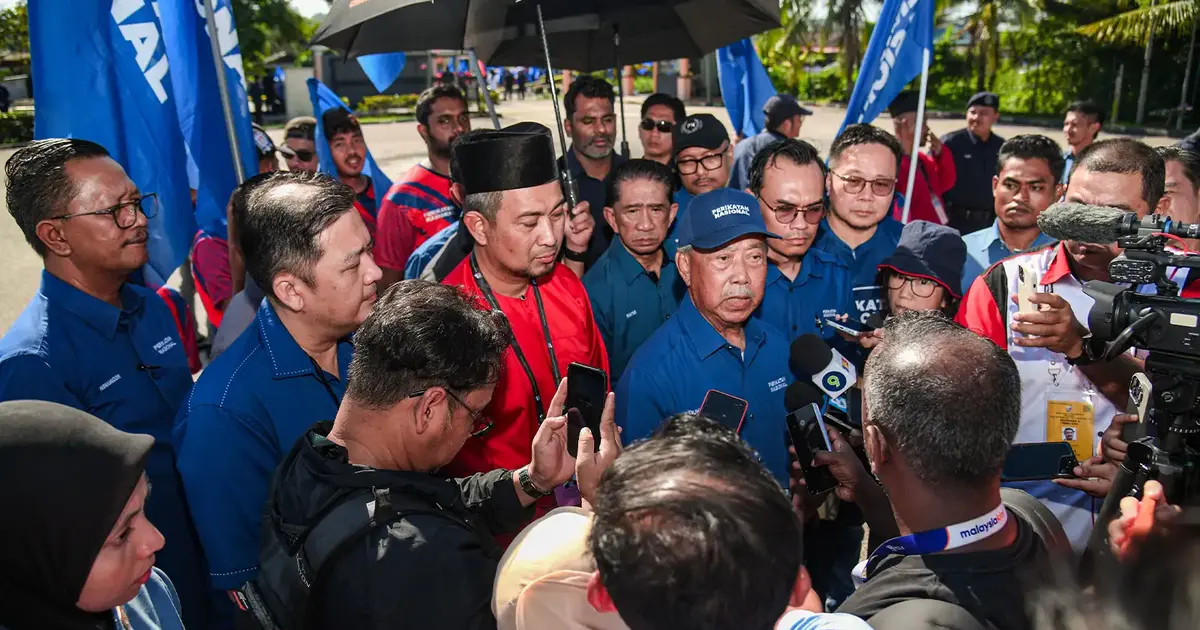
Perikatan Nasional has the political strength to lead the formation of the next state government, according to coalition president and Bersatu chairman Muhyiddin Yassin, who pointed to a growing network of allied parties extending beyond the existing bloc to bolster the coalition's positioning.
Muhyiddin's statement reflects a strategic realignment within Malaysia's political landscape as the coalition seeks to expand its base of support across multiple state administrations. His emphasis on partnerships outside the formal coalition structure suggests Perikatan Nasional is pursuing a flexible approach to governance, rather than relying solely on the three core parties that comprise the current bloc.
Among the parties positioned as potential partners, Muda has emerged as a significant ally for Perikatan Nasional. The youth-oriented political movement, founded by Syed Saddiq Syed Abdul Rahman, has attracted considerable attention in recent years by appealing to younger voters and representing fresh political perspectives distinct from more established parties. Muda's alignment with Perikatan Nasional represents a significant strategic development, as it could provide additional parliamentary and state assembly seats in upcoming elections.
This coalition-building strategy carries implications for Malaysia's broader political environment. Rather than seeking outright parliamentary majorities through a single consolidated bloc, Perikatan Nasional appears to be constructing a looser but potentially more durable coalition structure. Such arrangements allow smaller parties like Muda to maintain their independence while cooperating on specific government formation and policy objectives.
The confidence expressed by Muhyiddin suggests the coalition believes it can compete effectively in state-level elections across Malaysia's 13 states. State governments remain significant power bases in Malaysian politics, controlling substantial budgets and wielding considerable influence over local development. Control of multiple state governments would enhance Perikatan Nasional's overall political position and provide platforms for policy initiatives.
Penikatan Nasional's composition traditionally includes Bersatu, PAS, and Gabungan Parti Sarawak. Each brings distinct electoral strengths and regional bases. Bersatu appeals particularly to Malay-Muslim voters in peninsula Malaysia and enjoys support in certain constituencies; PAS maintains strong grassroots organisation and substantial backing in several states; while GPS provides the coalition crucial representation and political control in Sarawak, Malaysia's largest state by area. The addition of external allies like Muda represents an attempt to broaden appeal beyond these traditional support bases.
Regional political analysts have observed that Malaysian coalition politics operates through a complex calculus of seat mathematics, religious and ethnic considerations, and personal relationships between political leaders. Muhyiddin's willingness to publicly acknowledge partnerships outside Perikatan Nasional's formal structure suggests confidence that these relationships can translate into reliable parliamentary support when required. The viability of such looser arrangements depends considerably on the personal trust and ideological alignment among party leaders.
For Southeast Asian observers, Malaysia's evolving coalition politics demonstrates how even relatively stable democracies navigate the challenges of governing diverse societies with multiple political actors. The region has witnessed various coalition governments across Indonesia, Thailand, and other nations, each adapting their approaches based on institutional frameworks and political culture. Malaysia's approach, combining formal coalitions with flexible external partnerships, represents one model for managing political diversity.
Muhyiddin's statements also reflect Perikatan Nasional's confidence heading into what may be a significant electoral cycle. Malaysian state elections occur at different times, creating multiple opportunities for political contests. The coalition's demonstrated ability to secure state governments previously would provide evidence supporting the president's confidence in future prospects. However, electoral outcomes remain inherently uncertain, dependent on voter sentiment, campaign effectiveness, and sometimes unexpected political developments.
The mention of Muda specifically highlights the coalition's recognition that attracting younger voters and representing progressive elements within conservative political formations has become increasingly important. Muda's existence and electoral viability demonstrate that Malaysian voters seek alternatives to established political structures. By positioning itself as able to work with such movements, Perikatan Nasional presents itself as adaptable to changing political preferences rather than rigidly tied to traditional political alignments.
Critical observers have questioned whether such loose coalition arrangements prove sustainable during actual governing periods, when policy disagreements and personal rivalries can emerge. External allies may have limited incentive to maintain support if policy priorities diverge or if supporting the coalition becomes electorally disadvantageous. Nevertheless, Muhyiddin's confidence suggests the coalition leadership believes these partnerships can withstand such pressures when managing state governments.
Moving forward, Perikatan Nasional's trajectory will significantly influence Malaysia's political competition. If the coalition successfully translates its alliances and current positioning into electoral victories and durable state governments, it would represent a successful alternative to Pakatan Harapan's coalition model. Such outcomes would reshape Malaysian politics and potentially influence how subsequent governments construct coalition arrangements. The confidence expressed by Muhyiddin will ultimately be tested through actual electoral performance and the sustainability of promised partnerships with allies like Muda.

