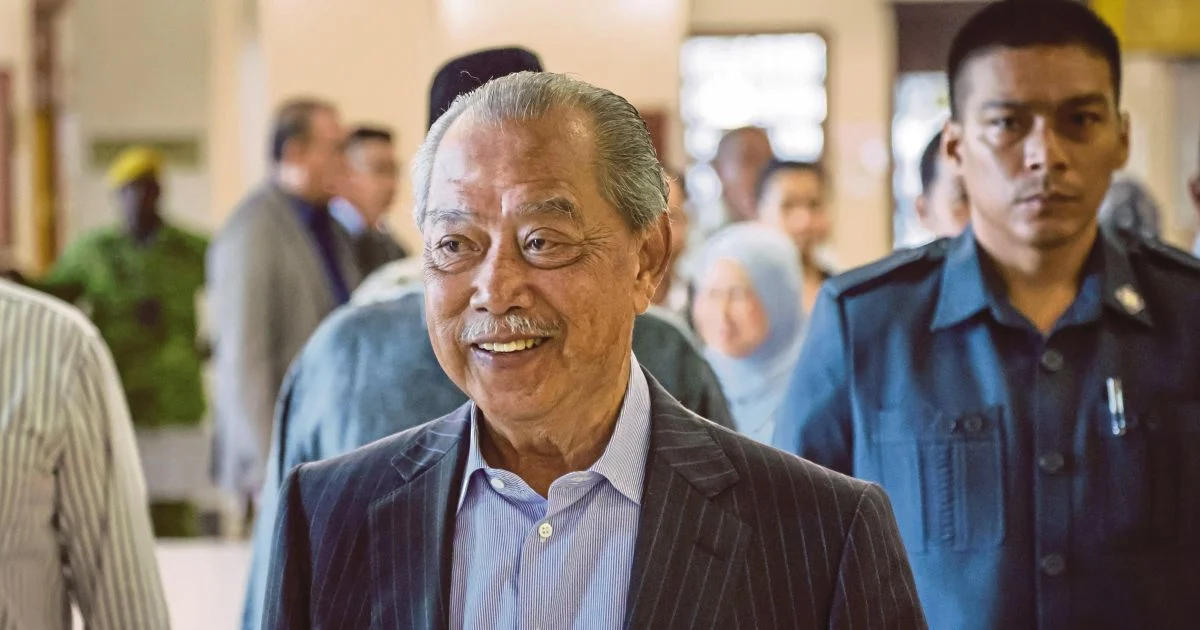
Bersatu president Tan Sri Muhyiddin Yassin has struck an optimistic tone regarding Perikatan Nasional's prospects in the Johor state election, declaring that a pathway to government remains viable despite the opposition pact fielding candidates in just 33 of 56 assembly seats. Speaking in Pagoh, Muhyiddin indicated that PN's restricted slate does not necessarily eliminate its chances of forming the next administration in the southern state.
The mathematics governing Malaysia's state-level politics mean that controlling Johor's government requires commanding at least 29 seats in the 56-member assembly. With PN entering only 33 contests, the calculation hinges on the coalition's ability to capture the overwhelming majority of seats it contests, while simultaneously benefiting from splits in opposition votes or tactical voting patterns that could disadvantage rivals. This scenario presumes a fractured political landscape where no single bloc emerges with an overwhelming majority.
Johor's electoral dynamics have shifted considerably over recent years. The state, once a Barisan Nasional stronghold, has become increasingly competitive territory where multiple political forces vie for influence. The presence of numerous contenders—including the weakened but still relevant Barisan Nasional, the fragmented opposition, and PN's own supporters—creates a more fluid environment than in previous contests. Muhyiddin's confidence appears anchored in the possibility that seat distribution could favour PN despite its reduced footprint.
The decision to contest only 33 seats represents a strategic calculation by PN, reflecting either internal resource constraints, seat-sharing arrangements with allies, or a deliberate choice to concentrate efforts in stronghold areas. In Malaysian electoral politics, such concentration strategies have occasionally yielded disproportionate results when combined with favourable vote distribution. However, the approach also carries substantial risk, as it cedes the contested terrain to opponents who may consolidate stronger positions.
For Malaysian readers monitoring state-level political developments, Muhyiddin's comments underscore the unpredictable nature of contemporary elections in the country. Unlike earlier decades when dominant coalitions could project electoral outcomes with reasonable confidence, current contests feature multiple viable scenarios and shifting voter preferences that defy simple prediction. The Johor election will serve as another data point in understanding how Malaysian voters allocate support across competing political entities.
The broader implications extend beyond Johor itself. As a major state with significant economic and political weight within the Malaysian federation, Johor's governance influences national politics and coalition dynamics at the federal level. Results here could reshape the balance of power between Barisan Nasional, PN, and other forces, potentially affecting legislative support for any federal government and influencing the trajectory toward the next general election.
Penikatan Nasional's positioning in Johor also reflects its wider strategic challenges. The coalition seeks to establish itself as a credible governing alternative, particularly in states where it perceives growth opportunities. Success in Johor—even with a minority seat contest—would validate PN's claim to being a serious political force. Conversely, a poor performance would raise questions about the coalition's viability and potentially accelerate defections to better-positioned blocs.
The assertion that PN can still secure victory despite contesting only 60 percent of seats demonstrates Muhyiddin's faith in either his coalition's competitive strength in those specific constituencies or the likelihood of fragmented voting patterns benefiting PN candidates. This optimism may reflect genuine confidence rooted in ground-level data, or it may represent the standard political messaging expected of any coalition leader addressing supporters and media.
For the Southeast Asian region watching Malaysian electoral politics, Johor's contest illustrates the complexity of competition in mature democracies where multiple large parties operate and no group commands unchallenged dominance. Unlike some neighbouring states with more rigid political structures, Malaysia's frequent electoral contests and genuine competitive dynamics create ongoing uncertainty and require continuous political negotiation and coalition-building.
The timing of Muhyiddin's remarks, made before the official campaign period potentially intensifies, suggests PN is preparing the political narrative around its Johor challenge. By publicly declaring confidence despite apparent numerical disadvantages, the coalition seeks to manage expectations, motivate party members, and project an image of competence and determination to voters. Whether this confidence translates into actual electoral success will depend on numerous factors including campaign effectiveness, voter turnout patterns, and the behaviour of competing groups on polling day.
As the election approaches, observers should monitor not only final vote tallies but also actual seat outcomes relative to PN's targeted 33 constituencies. Whether the coalition achieves exceptional results in contested areas or falls short of expectations will provide crucial insights into its organizational capacity and voter appeal. The results will reverberate through Malaysian politics far beyond Johor's borders.

