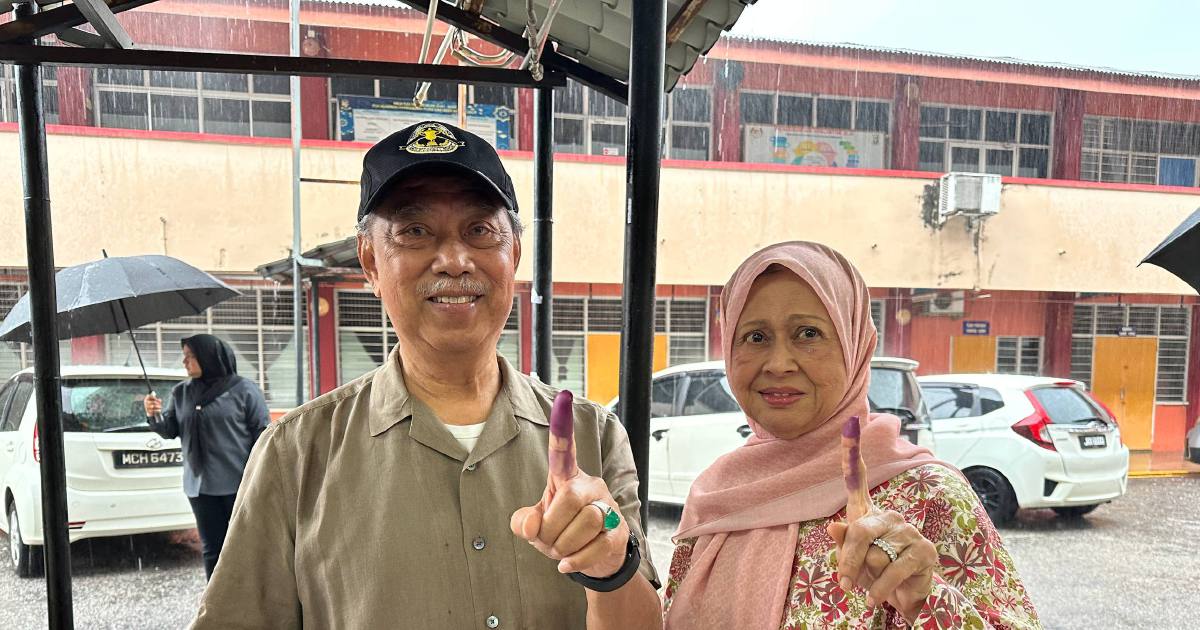
Bersatu's leadership is projecting an optimistic outcome for voter participation in the Johor state election held today, hoping that turnout will climb above the 70 percent threshold. The aspiration reflects the party's confidence in mobilising its support base, even as meteorological conditions presented a challenge during the crucial morning polling period, when inclement weather including heavy downpours affected multiple districts across the state.
The rainfall pattern observed across Johor's electoral landscape raised initial concerns among election officials and observers about potential suppression of voter participation, a phenomenon commonly documented during Malaysian state contests. However, Bersatu's public statements underscore an assessment that structural enthusiasm among the electorate would overcome environmental obstacles. This projection carries significance given that turnout figures serve as a barometer of voter engagement and legitimacy in electoral contests, with higher participation traditionally lending greater credibility to the eventual results.
Historical context matters considerably here. Malaysian state elections have shown considerable variability in participation rates, influenced by factors ranging from voter fatigue following federal campaigns to weather disruptions and logistical challenges at polling centres. The 70 percent threshold that Bersatu referenced would position this Johor election near the upper range of typical turnout figures for state-level contests in Malaysia, suggesting the party anticipated mobilisation efforts would bear substantial fruit despite external headwinds.
Rain in the early hours of polling day created a test for election administration across Johor. Polling stations typically experience heavier traffic during morning hours as working-age voters seek to cast ballots before commencing their day, and moisture-related issues could potentially compromise voter flow and queue management. Election Commission officials would have monitored these dynamics closely, ensuring that despite wet conditions, the fundamental infrastructure and procedures enabling citizens to exercise their franchise remained accessible and functional.
Bersatu's public confidence regarding turnout expectations might also reflect sophisticated internal polling or analysis of early-voting data and pre-election surveys. Political parties typically conduct sophisticated assessments before major electoral contests, utilising both quantitative data and qualitative feedback from ground-level operatives to calibrate expectations. The party's specific projection of exceeding 70 percent suggests data-driven reasoning rather than mere optimism.
Johor's political significance within Malaysia's broader electoral landscape amplifies interest in turnout figures. As the nation's second-largest state by population and a traditional stronghold of particular political blocs, results from Johor contests reverberate throughout the national political system. Turnout becomes particularly instructive in such contexts, as it reveals the relative enthusiasm of different voter demographics and geographical regions, potentially foreshadowing patterns relevant to future federal-level contests.
Weather-related disruptions to voting carry implications beyond simple participation numbers. They can introduce equity concerns, as certain demographics—including the elderly and those with mobility constraints—may find rain particularly discouraging. Election administrators must therefore balance weather monitoring with supplementary measures ensuring that environmental factors do not inadvertently create barriers to electoral participation for vulnerable groups. Bersatu's public statements might partially reflect confidence that such safeguards were sufficiently robust.
The timing of rainfall early in polling day proved advantageous compared to scenarios where rain persisted throughout the day. Citizens observing clearing skies after morning downpours might have found motivation to visit polling stations during afternoon hours, potentially compensating for initial weather-suppressed turnout. Such patterns have manifested in previous Malaysian electoral contests, where rainy mornings followed by clearer afternoons did not necessarily depress final participation figures.
Bersatu's emphasis on the 70 percent target reflects understanding among Malaysia's political class regarding how participation metrics shape electoral narratives. Beyond pure vote tallies, the story surrounding an election encompasses judgments about voter engagement, enthusiasm, and legitimacy. A turnout exceeding 70 percent would constitute a powerful narrative supporting the mandate of the eventual winners, whilst potentially placing underperforming contestants in positions requiring explanation or strategic recalibration.
The broader Southeast Asian context reveals that Malaysian state election turnouts at this level represent respectable democratic participation compared to neighbouring countries facing varying challenges in electoral mobilisation. For Malaysian voters and observers accustomed to navigating between enthusiasm and routine in political engagement, a 70 percent-plus outcome would indicate that sufficient segments of the eligible electorate considered the Johor contest consequential enough to overcome inclement conditions and exercise their democratic rights on polling day.

