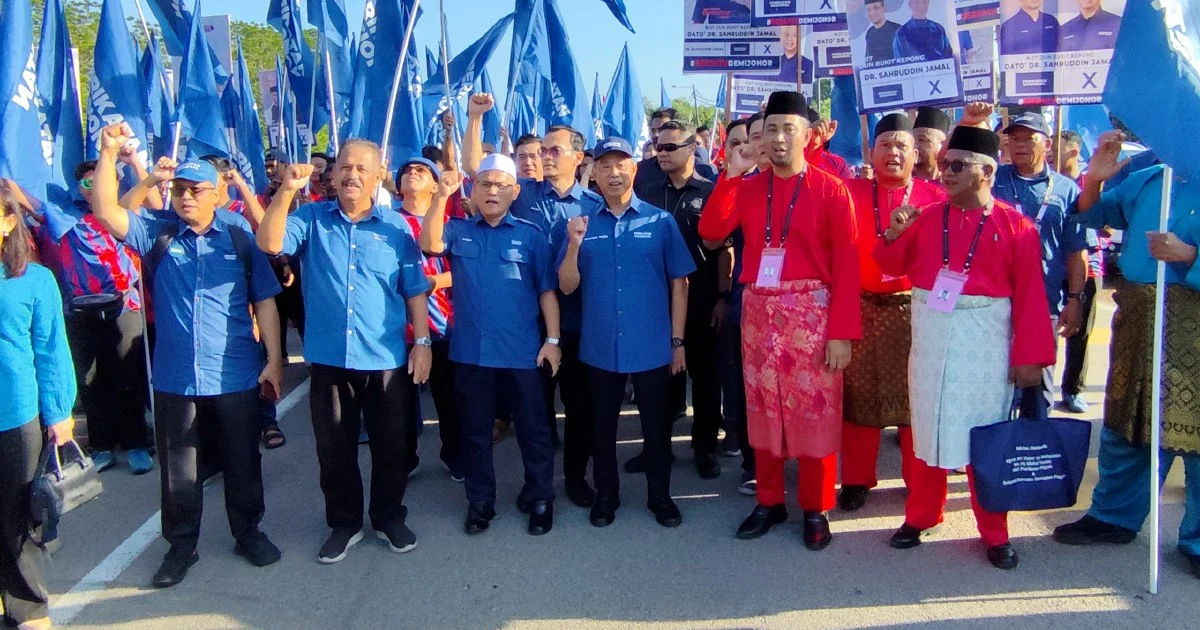
Tan Sri Muhyiddin Yassin, president of Bersatu, arrived at the nomination centre housed within Pagoh Sports Complex Hall at 8.45 am, underscoring the ruling coalition's intensified ground efforts in Johor's electoral contest. His presence alongside Sahruddin during the critical nomination phase represents a strategic show of force by the party, which continues to navigate its political fortunes across Malaysia's most economically significant state.
The decision by Muhyiddin to personally escort Sahruddin through the nomination process carries symbolic weight within Bersatu's internal hierarchy and signals to party members and voters alike that the leadership ranks its Bukit Kepong representative highly. Such public displays of solidarity have become increasingly important in state-level contests, where local strongmen and their networks determine electoral outcomes more decisively than in federal races.
Johor has long represented contested terrain between competing political blocs. The state's demographics, sprawling rural constituencies, and economically diverse voter base make it a crucial testing ground for any political coalition's strength. Bersatu's positioning within the broader government coalition means that its performance in constituencies like Bukit Kepong carries implications extending well beyond Johor's borders, affecting the party's bargaining power within the federal administration.
Sahruddin's candidacy in Bukit Kepong places him in a neighbourhood with deep historical roots in Malaysian politics. The Pagoh division has consistently demonstrated the capacity to shift electoral allegiances, with constituencies showing responsiveness to local issues and personality-driven campaigns. This volatility requires sustained leadership attention, justifying Muhyiddin's direct involvement in the nomination process.
Bersatu's electoral strategy in Johor reflects the party's evolving position within Malaysia's political ecosystem. After its tumultuous journey through federal politics and internal ruptures, the party recognises that state elections provide opportunities to rebuild grassroots credibility and demonstrate organisational resilience. Ground operations during nomination periods become occasions to energise party machinery and project confidence to undecided voters.
The timing of Muhyiddin's appearance carries operational significance. Nomination centres attract not merely candidate representatives but also party faithful, media observers, and rival candidates' supporters. A show of top-tier leadership presence compounds media coverage and signals to the broader electorate that resources and institutional backing stand behind particular candidates. In Malaysia's intensely factional political environment, such symbolic gestures often translate into tangible voting behaviour shifts.
Bukit Kepong's electoral composition encompasses both urban pockets and substantial rural hinterland, requiring candidates to juggle development-focused messaging for townspeople with agricultural and community services appeals for village constituents. Sahruddin's campaign would benefit considerably from Muhyiddin's regional profile and his ability to leverage Bersatu's organisational structures across traditional party strongholds.
The Johor election arrives at a moment of broader political recalibration across Malaysia. The previous state-level contests in Selangor and elsewhere demonstrated how effectively deployed local campaigns can sway outcomes in ways federal-level narratives cannot predict. Johor's electoral exercise provides Bersatu and its coalition partners with critical data about voter sentiment, party member morale, and the efficacy of campaign infrastructure that will inform subsequent contests leading toward the next general election.
Muhyiddin's hands-on involvement also reflects internal party dynamics within Bersatu. Divisions have periodically surfaced regarding leadership direction and resource allocation between competing factional interests. Personal appearances at nomination centres allow senior figures to showcase commitment to particular candidates and constituencies, thereby reinforcing loyalty networks and demonstrating active stewardship rather than remote administration.
For Malaysian observers tracking coalition stability and party positioning, Muhyiddin's participation in ground-level campaign activities serves as a barometer of his current political standing. Leaders relegated to peripheral roles typically absence themselves from such public campaign functions, while those possessing secure authority and ambition actively participate in competitive electoral contests.
The nomination process itself represents more than procedural formality; it constitutes a visible statement about which candidates have backing from party hierarchies and, by extension, access to financial and organisational resources for the campaign proper. Voters and party operatives alike interpret such signals when assessing candidates' viability and likelihood of delivering on electoral promises.
As Johor voters prepare to cast ballots, the constellation of alliances and personal rivalries that shape state politics continues evolving. Muhyiddin's appearance alongside Sahruddin crystallises momentarily these broader currents, anchoring a particular candidate to institutional support networks while simultaneously reinforcing Bersatu's determination to retain relevance within the competitive Malaysian political arena.

