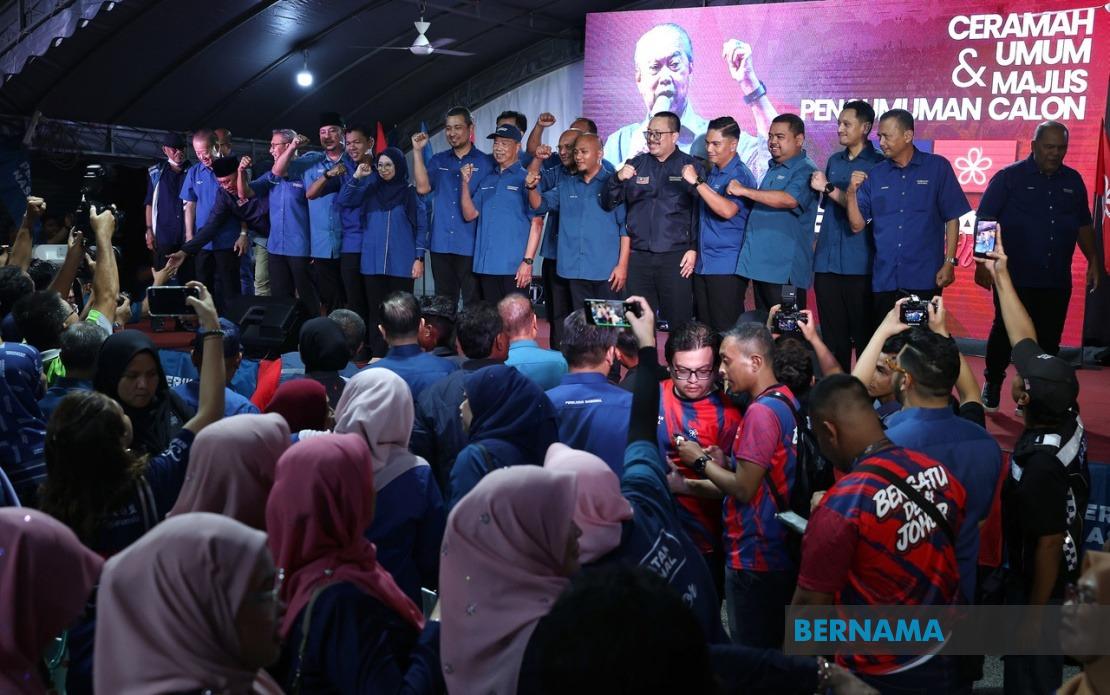
Parti Pribumi Bersatu Malaysia (Bersatu) has formally unveiled its 16 candidates for the imminent Johor State Election, with party president Tan Sri Muhyiddin Yassin making the announcement at a packed event in Muar. The revelation came during a candidates presentation and public talk held at the Pagoh Parliamentary Service Centre in Taman Pagoh Jaya, signalling the party's readiness to contest across all state assembly seats in the peninsula's second-largest state by population.
The timing of the announcement reflects the compressed campaign schedule following the dissolution of the Johor State Assembly on June 1. With the Election Commission setting June 27 as nomination day and July 11 as polling day, parties across the political spectrum have had roughly four weeks to prepare their machinery and messaging. Bersatu's early candidate declaration represents a strategic move to establish momentum and allow the party apparatus time to mobilise support across constituencies before the formal campaign period intensifies.
For Malaysian observers, the Johor election carries outsized political significance beyond the state's borders. As the nation's economic powerhouse and a traditionally influential state in national politics, Johor's electoral outcome carries implications for the broader political landscape and coalition dynamics at federal level. Bersatu's performance in these polls will provide crucial barometric readings of the party's standing after its exit from the Pakatan Harapan coalition and subsequent repositioning within the Perikatan Nasional framework.
The party's decision to contest all 16 seats demonstrates Bersatu's confidence in its grassroots organisation and voter appeal in Johor, despite the state's complex political terrain. Johor has historically been a battleground between competing coalitions, with multiple political parties vying for dominance. Bersatu's full slate entry suggests the party believes it can carve out meaningful representation and possibly influence kingmaking negotiations that may determine the eventual state government composition.
Muhyiddin's personal involvement in the candidate announcement underscores the importance Bersatu leadership places on this election. As party president, his direct participation in candidate unveiling signals that the organisation has vetted candidates thoroughly and expects them to carry party colours with credibility. The public ceramah format adopted—combining candidate presentation with public persuasion—reflects the traditional Malaysian campaign approach of combining organisational readiness with direct voter engagement.
The Pagoh constituency carries particular significance given the venue selection. Pagoh is represented in Parliament by Muhyiddin himself, making the location symbolically important for the party's narrative. This geographic choice anchors Bersatu's Johor campaign in the heartland of one of Malaysia's most influential contemporary political figures, lending the candidate announcements additional weight and organisational heft.
For Johor voters, the emergence of Bersatu as a full contestant with 16 candidates expands electoral choices across the state. The party positions itself as an alternative to the traditional dominant coalitions, offering voters a distinct ideological and political platform. Bersatu's presence in the contest guarantees that discussions around Malay-Muslim political representation, economic management, and state development will feature multiple competing visions rather than a binary choice between established camps.
The campaign dynamics in Johor will also be shaped by how Bersatu coordinates with coalition partners within Perikatan Nasional, as seat-sharing agreements across multiple parties have become standard in Malaysian electoral politics. The party's decision to contest 16 seats across the entire state, rather than concentrating on particular regions, suggests confidence in its ability to compete competitively regardless of specific coalition arrangements, though such details typically emerge during the nomination period or shortly thereafter.
Bersatu's Johor strategy reflects broader calculations about the party's future trajectory in Malaysian politics. Having repositioned itself as a kingmaker alternative rather than a dominant coalition member, Bersatu is seeking to build independent credibility and electoral legitimacy. Strong performance in Johor could strengthen Muhyiddin's hand in national politics and provide evidence that the party retains substantive voter support beyond its organisational infrastructure.
The nomination process beginning June 27 will provide clarity on how many candidates ultimately proceed to contest, as the Election Commission must validate all nominations. This period typically sees last-minute withdrawals, realignments, or coalition adjustments as parties negotiate final seat distributions. For Bersatu, seeing all 16 candidates successfully nominated would demonstrate organisational competence and absence of internal discord over candidate selection.
Voters in Johor will face their electoral decision just over two weeks after nominations close, a compressed timeline that will test parties' capacity to execute effective campaigns. Bersatu's early candidate announcement gives the party a head start in media coverage and voter consciousness, allowing campaign messaging to permeate constituencies before competitors launch comparable visibility offensives.
The Johor State Election ultimately represents a significant test of Bersatu's political resilience and voter appeal in one of Malaysia's most important electoral battlegrounds. With comprehensive candidate deployment across all 16 seats, the party is signalling not merely participation but serious competitive intent, setting conditions for a complex three-way or multi-way contest that could reshape Johor's political representation and potentially influence coalition mathematics at the national level.

