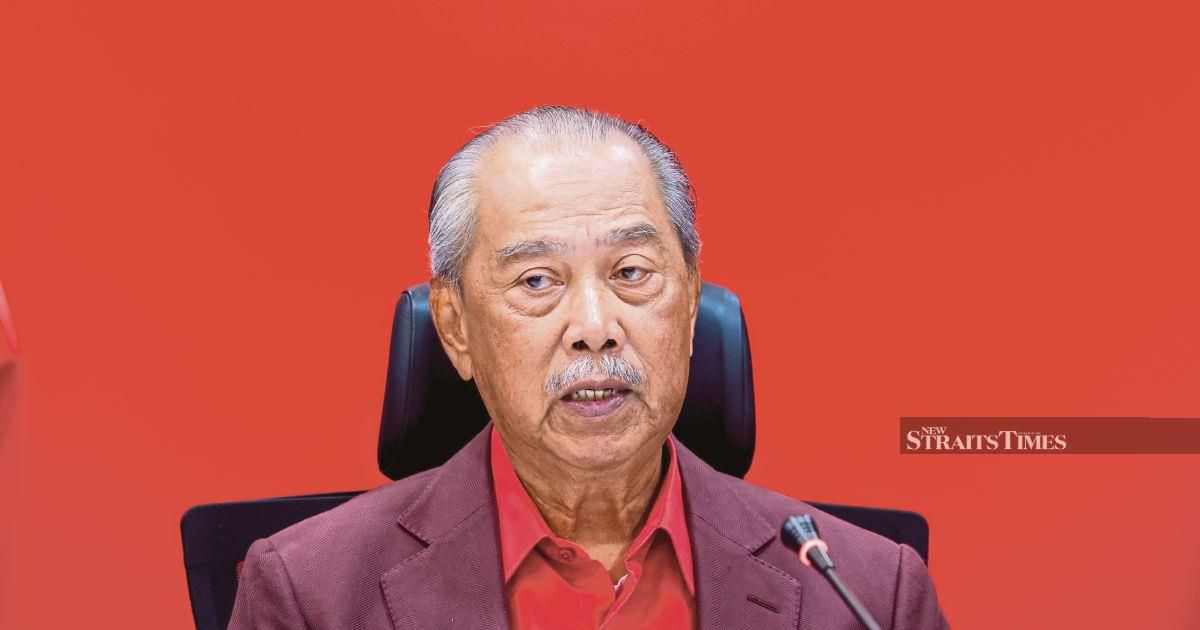
Bersatu president Tan Sri Muhyiddin Yassin has levelled fresh accusations against Umno, claiming the party is executing a strategy to destabilise the current unity government—a coalition he helped construct together with Pakatan Harapan. The allegation represents an escalation in intra-coalition tensions and reflects lingering suspicions about Umno's commitment to the broader political arrangement that has governed Malaysia since the 2022 elections.
Muhyiddin's warnings carry particular weight given his recent political history. His previous administration, which governed from 2020 to 2021 as the Perikatan Nasional government, ultimately collapsed amid internal bickering and defections. The Bersatu leader has long maintained that machinations within the ruling coalition—particularly involving Umno figures—precipitated his downfall. By framing current developments through this historical lens, Muhyiddin is signalling that he views familiar patterns re-emerging within the unity government framework.
The tension between Bersatu and Umno reflects deeper structural challenges inherent to Malaysia's current political architecture. The unity government comprises disparate ideological factions: Pakatan Harapan's secular-progressive orientation contrasts sharply with Umno's conservative Malay-Muslim positioning, while Bersatu occupies an increasingly ambiguous middle ground. This coalition of convenience, while providing stable parliamentary numbers, remains vulnerable to misalignments between constituent parties over policy direction and resource allocation.
Umno's position within the unity government has remained complicated since the arrangement's inception. The party, once Malaysia's dominant political force, experienced significant electoral losses in 2018 and has been gradually rebuilding influence. Some observers suggest that tension between Umno's leadership and other coalition partners stems from disagreements over economic priorities, educational policies, and religious affairs—areas where Umno traditionally exercised considerable sway during its sole governance. The party's current leaders may view the unity framework as insufficiently responsive to traditional Umno constituencies.
Muhyiddin's accusations also reflect broader anxieties about coalition stability that have preoccupied Malaysian political observers since 2022. The unity government, while achieving relative parliamentary stability, lacks the organic cohesion that typically characterises single-party or ideologically aligned administrations. Each component party maintains distinct policy preferences and leadership structures, creating perpetual negotiation requirements. This fragmentation potentially creates openings for opportunistic repositioning by coalition members.
For Malaysian business and investor communities, these internal political rumours carry material implications. Coalition instability risks policy discontinuity, disrupted parliamentary schedules, and unpredictable regulatory environments. Industries dependent on long-term government commitments—infrastructure development, renewable energy, advanced manufacturing—require reassurance about sustained policy direction. Recurring allegations of destabilisation plots, whether substantiated or rhetorical positioning, undermine such confidence.
The regional dimension deserves consideration as well. Southeast Asian nations, particularly Singapore, Indonesia, and Thailand, have demonstrated sensitivity to Malaysian political volatility. Coalition instability at the federal level can complicate bilateral arrangements, investment agreements, and security cooperation. A fractious ruling coalition sends mixed signals to regional partners about Malaysia's reliability as a consistent diplomatic and commercial partner.
Muhyiddin's public articulation of these concerns represents a calculated political move beyond mere venting of frustrations. By voicing allegations through media channels, he signals to Bersatu's broader membership and electoral base that party leadership remains vigilant against perceived threats. This messaging serves internal party cohesion purposes while simultaneously applying pressure on Umno to demonstrate loyalty to coalition arrangements—or at minimum, to avoid appearing duplicitous.
The credibility of Muhyiddin's specific allegations remains unclear without detailed supporting evidence. Malaysian political discourse frequently involves mutual accusations between coalition partners, with each side claiming superior commitment to shared governance arrangements. Distinguishing between genuine destabilisation attempts and standard political jockeying requires close examination of specific incidents and documented actions rather than broad claims of conspiracy.
Ultimately, these disputes underscore the inherent fragility of coalitions constructed primarily on parliamentary arithmetic rather than philosophical alignment. The unity government, despite delivering relative stability since 2022, continues operating with built-in tensions that could intensify if economic performance deteriorates or parliamentary calculations shift. Whether Umno harbours concrete intentions to exit the coalition remains speculative, but Muhyiddin's warnings reflect legitimate structural vulnerabilities within Malaysia's current governing arrangement.

