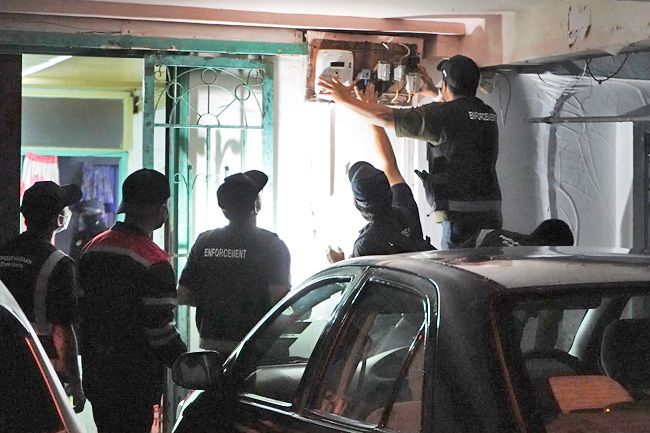
Brunei's security and labour authorities have concluded a large-scale coordinated enforcement operation that uncovered a range of violations across Bandar Seri Begawan, with particular focus on immigration compliance and workplace standards. The multi-agency initiative, staged at two separate locations within the capital district, resulted in the apprehension of one foreign male and one foreign female by the Immigration and National Registration Department (INRD), both detained for further investigation under the Immigration Act.
The Labour Department emerged as a significant enforcer during the sweep, identifying five distinct contraventions across the two operational sites. Three of these violations fell under Section 81 of labour legislation, relating to employers' failure to furnish workers with appropriate accommodation facilities and inadequate maintenance of environmental hygiene standards in breach of statutory requirements. An additional two breaches were recorded under Section 86, specifically concerning the non-disclosure of worker accommodation details within Foreign Worker Licence documentation—a critical compliance mechanism that authorities use to track and verify legitimate employment conditions.
The Department of Electrical Services similarly detected regulatory breaches, uncovering two offences under the Electricity Act (Chapter 71) during the operation. These findings indicate that safety compliance in utility provision remains a concern requiring sustained regulatory attention. The electrical violations, combined with labour and immigration offences, paint a picture of scattered non-compliance across multiple regulatory domains, suggesting that systematic oversight mechanisms require continuous reinforcement.
A dedicated human trafficking investigation component formed an integral part of the operation, with specialised personnel conducting interviews with 19 individuals across both locations. Despite the vulnerability factors often present in workplaces with accommodation and licensing violations—conditions that can mask trafficking activity—investigators determined that no human trafficking offences were detected during this particular sweep. This outcome, while positive, underscores the importance of rigorous investigative protocols in identifying modern slavery and labour exploitation in jurisdictions hosting migrant workforces.
The operation reflects Brunei's institutional approach to enforcement, requiring coordination among agencies with distinct but overlapping mandates. The breadth of participating departments—spanning immigration, labour standards, electrical safety, customs, narcotics control, internal security, municipal administration, and religious affairs—demonstrates how contemporary compliance challenges demand multidisciplinary responses. Such collaborative frameworks are increasingly common across Southeast Asia as governments recognise that isolated sectoral enforcement often misses systemic vulnerabilities that span multiple regulatory categories.
Superintendent Mohamad Noor Abd Rahman, Acting Commanding Officer of the Brunei-Muara Police District, led the operation, which mobilised over 200 enforcement personnel. This substantial deployment reflects official prioritisation of the Brunei-Muara District, which encompasses the capital and its immediate surroundings. The scale of personnel involved suggests a proactive rather than reactive stance toward compliance, indicating that authorities are conducting regular sweeps rather than responding solely to specific complaints. Such preventive enforcement strategies can deter future violations, though they also require sustained resource commitment.
For Malaysia's business community and regional observers, Brunei's enforcement operations carry implications for cross-border labour mobility and business regulation. As a small, high-income economy with limited domestic labour supply, Brunei relies significantly on migrant workers across construction, domestic service, and hospitality sectors. Violations related to worker accommodation and licensing—the primary breaches identified in this operation—often stem from labour-cost pressures that tempt employers to cut corners. Malaysian companies operating in or sending workers to Brunei should note that regulatory frameworks appear to be actively monitored.
The labour violations detected, particularly those concerning worker accommodation standards, address a persistent challenge across the region. Inadequate housing for migrant workers remains prevalent in many Southeast Asian jurisdictions, often driven by labour market imbalances and insufficient enforcement resources. Brunei's approach, combining surprise enforcement operations with inter-agency coordination, represents one model for addressing this issue, though questions remain about whether episodic sweeps constitute sufficient deterrence or whether sustained workplace inspection regimes would prove more effective.
The electrical code violations detected during the operation suggest that utilities safety—often overlooked in labour-focused discussions—warrants attention as a workplace safety issue. Substandard electrical installations in worker accommodation, combined with overcrowding and poor maintenance, create fire and electrocution hazards. The inclusion of the Department of Electrical Services in this operation demonstrates recognition that worker safety encompasses multiple technical domains beyond traditional labour regulation.
Brunei's enforcement architecture reflects broader Southeast Asian trends toward institutional consolidation and multi-agency task forces. The Royal Brunei Police Force's coordination with specialised agencies mirrors models adopted in Malaysia, Singapore, and Indonesia, where labour trafficking, irregular migration, and workplace exploitation increasingly receive attention from anti-trafficking and public safety units rather than labour departments alone. This institutional shift acknowledges that labour compliance has become entangled with border security and criminal justice concerns.
The operation's outcome—two immigration detentions, five labour violations, and two electrical breaches—provides limited insight into the overall compliance landscape without comparative data from previous operations. Whether these figures represent typical findings or an unusually high violation rate remains unclear from the available information. Such data transparency would help regional policymakers benchmark their own enforcement effectiveness and identify common violation patterns warranting targeted interventions.
Looking ahead, the Royal Brunei Police Force's stated commitment to ongoing inter-agency collaboration suggests that similar operations will likely continue. For migrant workers, employers, and businesses operating in or engaging with Brunei, these enforcement initiatives underscore the importance of maintaining full compliance with accommodation, licensing, and safety standards. The detection mechanisms deployed during this operation—surprise multi-agency sweeps with dedicated investigation units—indicate that violations are neither overlooked nor treated leniently once detected.

