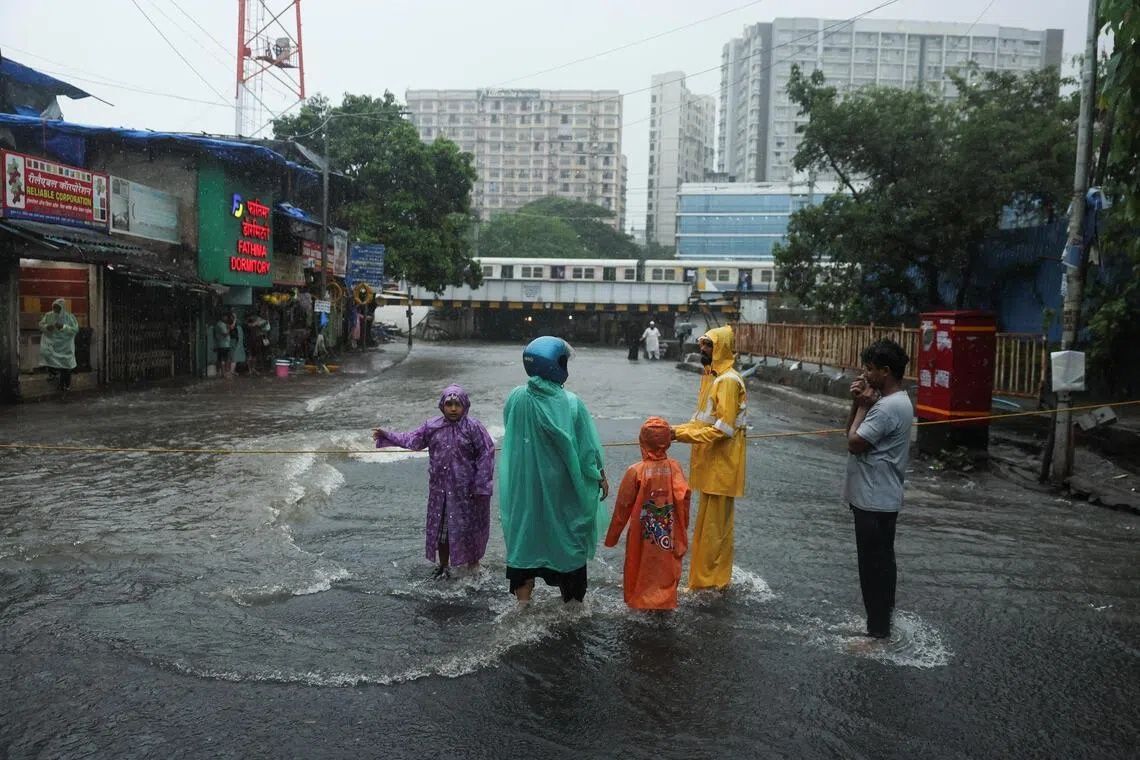
India's financial hub faces mounting pressure to overhaul its disaster response systems after monsoon rainfall claimed two lives within days of each other, exposing persistent gaps in municipal infrastructure management and emergency preparedness. The incidents have sharpened political scrutiny of civic authorities even as the India Meteorological Department issued an orange alert for Mumbai on July 3, with forecasts warning of continued downpours throughout the following 24-hour period. The cascading failures underscore a recurring vulnerability in one of Asia's largest cities: its struggle to balance rapid urbanisation with adequate maintenance of critical systems that protect residents during extreme weather.
The first tragedy unfolded on June 30 in Chembur, when a massive tree uprooted by strong gusty winds fell directly onto a school bus transporting students from Universal High School and Tilak Nagar School. Emergency responders deployed cutting equipment to extricate children trapped within the vehicle, but eleven-year-old Vihan Shrivastav could not be saved despite being rushed to hospital. Several other students sustained injuries and received treatment at Zen Hospital and Jain Hospital, transforming what should have been an ordinary commute into a parent's worst nightmare. The incident immediately raised uncomfortable questions about tree maintenance schedules and whether the Brihanmumbai Municipal Corporation had adequately assessed risk factors in areas where large vegetation overhang major thoroughfares used by school transport.
Maharashtra minister Ashish Shelar responded to the school bus tragedy by acknowledging both the state government and the BMC bore responsibility for supporting the bereaved family and preventing recurrence. His statement, however, prompted broader criticism from elected representatives who argued that administrative acknowledgement alone proved insufficient without meaningful consequences for decision-makers at senior levels. MLA Rohit Pawar, who visited the grieving parents, emphasised that accountability must extend beyond junior officials who implement decisions made in higher offices. He specifically questioned whether pre-monsoon inspections of roads, drainage systems, and other municipal infrastructure had been conducted rigorously, noting that repeated similar incidents suggested possible systemic negligence rather than isolated lapses.
Just three days later, on July 2, a second fatality deepened anxieties about Mumbai's municipal oversight. Aslam Isak Shaikh, a 60-year-old resident, fell into an uncovered manhole in Sakinaka while heavy rain pounded the neighbourhood. The drainage cover had been removed for routine maintenance work, yet no adequate barricading or warning signage had been installed to alert pedestrians to the hazard. Shaikh, distracted by a mobile phone conversation, was swept away by the force of rainwater flowing through the drainage system. Recovery teams spent approximately three hours searching for his body, highlighting the additional complications posed when infrastructure defects coincide with extreme weather conditions.
The manhole incident provoked sharper demands for criminal accountability. MLA Vijay Wadettiwar called for first information reports to be filed against officials who had failed to properly secure the excavation site during monsoon season. His statement reflected broader frustration within Mumbai's political establishment about the apparent normalisation of preventable deaths tied to municipal negligence. The fact that Shaikh's death occurred not from environmental disaster but from inadequate safety protocols—a failure entirely within human control—elevated the sense of injustice among lawmakers and residents alike.
Mumbai Mayor Ritu Tawde characterised the manhole tragedy as an administrative error and announced compensation of 10 lakh rupees (approximately US$10,455) to Shaikh's family. While the gesture acknowledges official responsibility, critics questioned whether financial compensation addresses the root causes of poor infrastructure management. The offer of compensation, without corresponding systemic reform, risks becoming a routine response to preventable disasters rather than a catalyst for genuine change in how municipal authorities plan and execute maintenance operations during vulnerable seasons.
Beyond the immediate human toll, the twin incidents paralysed substantial portions of Mumbai's transport network during the critical monsoon period. Waterlogging affected numerous localities including Dadra East and Sion Gandhi Market, leaving commuters stranded for extended periods. Near the Kharghar Toll Plaza on the Sion-Panvel Highway, a truck overturned and blocked multiple lanes, generating severe congestion as emergency teams worked to clear the obstruction. These transport disruptions ripple through Mumbai's economy, affecting workers' ability to reach offices, shops, and service sectors that depend on reliable movement through the city.
The orange alert issued by the India Meteorological Department came as authorities urged residents to minimise unnecessary travel while civic teams laboured to remove fallen vegetation and debris from roads. The advisory acknowledged that forecasted rainfall would continue unabated, meaning existing waterlogging would likely worsen before conditions improved. For many Mumbaiites, the advisory felt insufficient—residents questioned why more aggressive preventive measures, such as pre-emptive tree trimming or mandatory infrastructure inspections, had not been undertaken before the monsoon season reached its peak intensity.
These events carry particular resonance for Southeast Asian nations confronting similar urbanisation pressures and seasonal weather challenges. Cities across Indonesia, Thailand, the Philippines, and Malaysia have faced comparable infrastructure crises during monsoon and typhoon seasons, often revealing identical weaknesses in municipal planning and emergency response capabilities. Mumbai's struggles suggest that rapid economic growth, while generating prosperity, often outpaces the administrative and investment capacity required to maintain basic safety systems. The contrast between Mumbai's status as a global financial centre and its periodic descent into chaos during heavy rain underscores how easily fundamental civic functions can be overwhelmed without sustained, long-term institutional commitment.
The political response from Maharashtra legislators demonstrates growing impatience with incremental, after-the-fact accountability measures. MLA speaker Rahul Narwekar's acknowledgement that the matter warranted detailed investigation signals that parliamentary oversight may intensify, potentially leading to structural reforms in how the BMC operates. However, converting political pressure into durable systemic change remains the critical test. Previous monsoon seasons have produced similar outcries followed by limited concrete action, suggesting that unless current momentum translates into budget reallocation, staff training improvements, and technological upgrades to infrastructure monitoring, Mumbai will likely face recurrent variations of these tragedies.
For Malaysian readers, the Mumbai case offers instructive parallels. Cities like Kuala Lumpur and George Town have experienced comparable flooding and infrastructure failures during heavy rainfall events, prompting similar debates about municipal competence and accountability. The Indian experience suggests that political rhetoric, while necessary, proves insufficient without corresponding investments in preventive infrastructure maintenance, worker training, and enforcement of safety protocols. As climate scientists predict intensifying extreme weather patterns across South Asia and Southeast Asia, the infrastructure management frameworks now being debated in Mumbai's political circles will likely determine whether urban centres can protect residents or merely offer compensation after preventable disasters claim lives.

