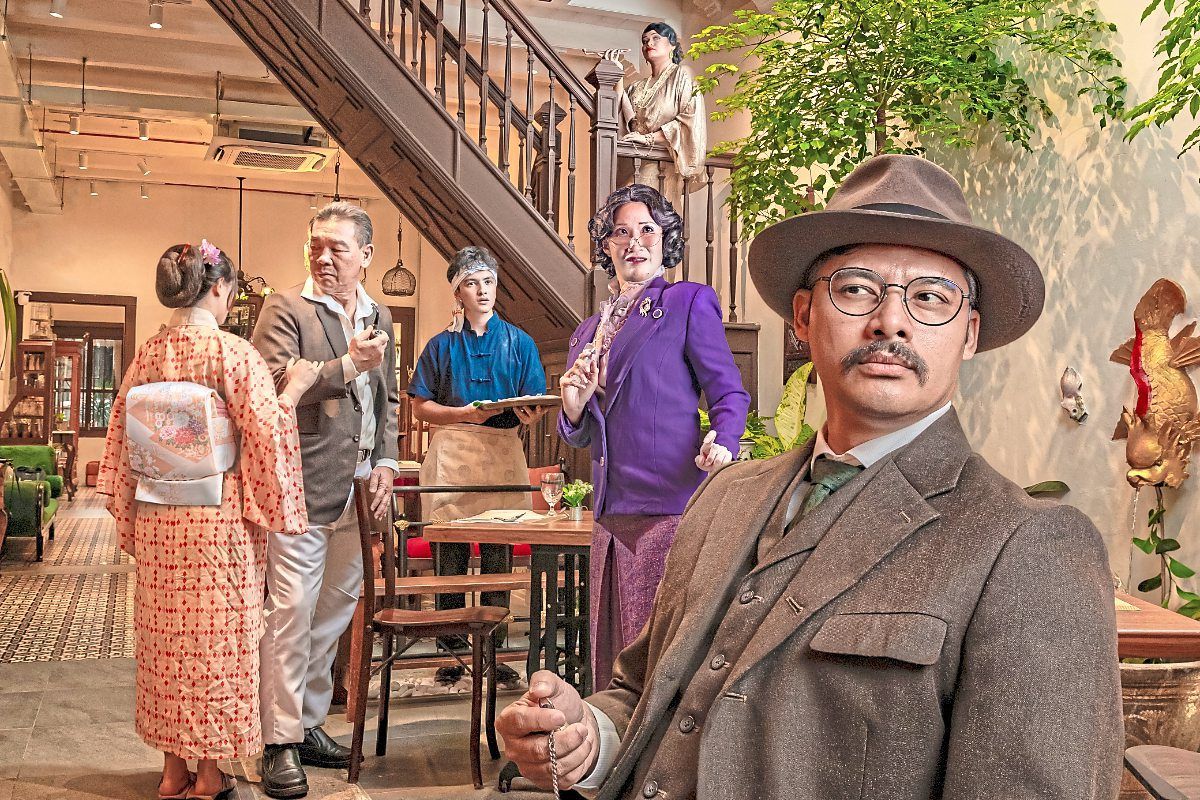
Melaka's thriving independent theatre scene is taking a sinister turn this summer, as Krate Creative Space unveils an innovative fusion of Peranakan gastronomy and interactive murder mystery theatre. Running across four carefully staged weekends in July and August at The Garden@Heeren, an elegantly restored Peranakan mansion on Jalan Tun Tan Cheng Lock, the production invites participants to step beyond the passive role of audience members and become active investigators within an unfolding crime drama. Rather than sitting passively to watch a predetermined narrative, guests will navigate the heritage house, question suspects, gather evidence and ultimately determine who they believe committed the crime.
The experience is carefully constructed to engage all five senses, beginning with an extensive multiple-course Peranakan dinner featuring signature dishes such as pie tee, pongteh chicken and cincalok omelette. As diners work through the meal, the evening's mystery gradually emerges through carefully timed character interactions and narrative revelations. The setting itself—a beautifully refurbished heritage restaurant preparing to celebrate the return of its renowned Chef Fa—provides the tragic backdrop for what begins as a festive grand reopening before descending into tragedy. When a shocking crime occurs, a detective present at the celebration immediately launches an investigation, and participants transition from guests to investigators, collaborating with law enforcement to solve the mystery across the venue's interconnected rooms and spaces.
Designer and writer Wee, who has developed all of Krate's interactive productions, emphasises that finding the right physical space was crucial to the project's success. The Garden@Heeren's restored 1930s architecture naturally evokes mystery and intrigue, with period-appropriate furnishings and layout that transport participants backward in time. The decision to intertwine Peranakan cuisine with theatrical performance reflects a deliberate strategy to ground the experience in authentic cultural detail rather than treating heritage as mere aesthetic backdrop. By incorporating regional food culture—something Melaka is internationally recognised for—the production creates a more holistic and emotionally resonant encounter that speaks to both local and visiting audiences seeking meaningful engagement with heritage rather than superficial tourism.
A distinctive structural feature of the production is its dual-ending framework. The first two weekends of performances will conclude with one resolution, while the final two weekends present an entirely different ending. This deliberate variation enables returning audiences to experience fundamentally different investigative pathways, suspect interactions and final revelations. Rather than encouraging passive re-consumption of identical content, the dual-ending approach acknowledges that audiences shape the experience through their own questioning, deductive reasoning and interpersonal choices. No two performances are identical because different groups of participants will pursue different lines of inquiry, request varying information from suspects and piece together evidence in unique combinations.
The professional cast assembled for the production includes several performers familiar from previous Krate productions: Francis Augustine plays Detective Raymond, who guides participants through the investigation; Sonia Lee takes the role of Miss Irene; Lee You Meng portrays Baba Pang; Elijah Skye appears as Peter Pang; and Neena Shu performs as Mama Maria. The casting deliberately combines established theatrical talent with the specific demands of interactive performance, requiring actors to remain responsive to participant questions and investigative directions whilst maintaining narrative coherence. The two-and-a-half hour format, designed for audiences aged fifteen and above, balances narrative complexity with practical pacing, allowing sufficient time for investigation whilst preventing fatigue from extended immersion.
Krate Creative Space itself represents a significant institutional development within Melaka's cultural landscape. Established in 2016, the company has positioned itself as Malaysia's first independent creative community specialising in customised, interactive and multi-disciplinary live performances. Over eight years of operation, Krate has produced more than ten original productions whilst cultivating a loyal audience base that extends well beyond the state. Approximately half of their participants originate from Melaka, but the company regularly attracts visitors from the Klang Valley, Penang, Johor and Singapore—and occasionally international tourists seeking cultural experiences that extend beyond conventional heritage tourism.
The organisation's physical base in Bukit Beruang exemplifies creative adaptation within Malaysia's challenging arts funding landscape. Beyond functioning as rehearsal and performance space, Krate's creative hub incorporates a cafe, allowing the company to diversify revenue streams whilst maintaining community engagement. This pragmatic approach reflects broader pressures facing independent cultural organisations in Southeast Asia, where consistent public funding remains limited and theatre companies must continually innovate to sustain operations. Wee openly acknowledges the financial difficulties inherent in maintaining independent theatre production, framing Krate's cafe and ancillary activities as necessary adaptations rather than compromises to artistic vision.
Wee's broader ambition for Krate extends beyond individual productions toward establishing immersive theatre as a meaningful component of Malaysia's cultural tourism sector. She envisions heritage cities like Melaka as natural settings for year-round immersive experiences that combine original Malaysian storytelling with respect for local history and cultural identity. This positioning represents a significant departure from extractive tourism models that treat heritage primarily as consumable backdrop. Instead, Wee proposes immersive theatre as a vehicle for facilitating genuine encounters with cultural narratives, allowing both locals and visitors to engage with stories rooted in specific places and communities.
The murder mystery production's timing reflects strategic thinking about Melaka's tourism calendar and audience availability. Scheduling across four weekends in July and August targets both school holidays—when families might seek educational entertainment—and the international tourist season when cultural visitors have discretionary time and spending capacity. The emphasis on authentic Peranakan cuisine and heritage architecture distinguishes this offering from generic murder mystery formats available elsewhere, anchoring the experience in Melaka's specific cultural identity and historical significance.
Previous Krate productions demonstrate the company's track record in expanding beyond Melaka's borders whilst maintaining creative integrity. In May of the previous year, the company brought its original production The Best Nyonya to Penang for the first time, performing at Georgetown Mansion. This expansion into neighbouring heritage cities suggests a sustainable model where Krate develops productions capable of resonating across different communities whilst maintaining connection to regional Peranakan culture. The willingness of audiences to travel across states for Krate productions indicates market demand for high-quality, culturally specific theatrical experiences that transcend conventional entertainment categories.
For Malaysian theatre practitioners and cultural audiences, Krate's murder mystery initiative represents an encouraging example of how heritage conservation and contemporary performance can productively intersect. Rather than relegating historical architecture and cultural traditions to static museum contexts, the production demonstrates how immersive theatre can activate heritage spaces as living sites of narrative, investigation and shared cultural meaning-making. The model potentially offers pathways for other Malaysian heritage cities—from Penang to Kuching—to develop distinctive cultural offerings that leverage local architecture, cuisine and historical narratives as foundations for sophisticated theatrical experiences.
The production also addresses ongoing challenges within Malaysian theatre regarding audience development and financial sustainability. By consciously marketing to both local communities and regional visitors, emphasising cultural authenticity over formulaic entertainment, and creating repeat-attendance incentives through dual endings, Krate demonstrates strategic thinking about contemporary audience expectations. Malaysian theatre practitioners increasingly recognise that sustaining creative work requires moving beyond single performance models toward developing integrated cultural experiences capable of supporting long-term institutional stability whilst maintaining artistic ambition and community relevance.

