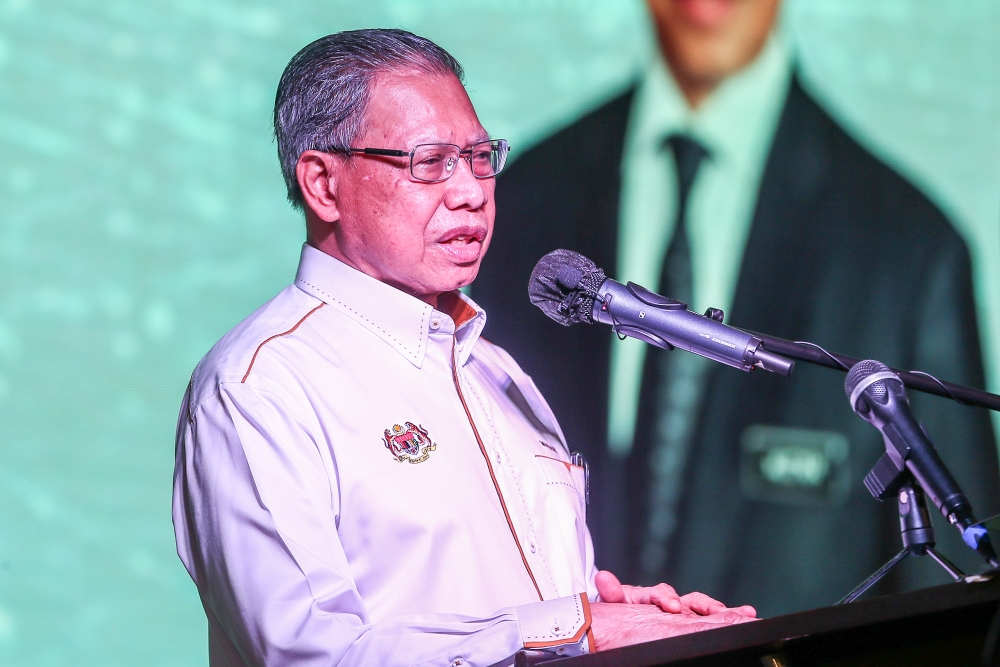
Datuk Seri Mustapa Mohamed, the veteran politician who represented Jeli for three decades, has drawn a firm line under his parliamentary career at age 76, declaring that he will not be a candidate in the upcoming general election. Speaking in his hometown of Pasir Mas, the former minister left no room for ambiguity about his political future, signalling that his time on the national stage has definitively ended and that the torch must pass to the next generation.
The timing of Mustapa's announcement reflects broader dynamics within Malaysia's political landscape, where questions about leadership succession have become increasingly urgent across multiple parties and coalitions. With general elections potentially drawing nearer, the retirement of long-serving MPs creates both vacancies and opportunities for fresh political talent to emerge in constituencies that have remained under single representation for extended periods. Mustapa's decision to step aside voluntarily represents the kind of generational transition that political analysts suggest is necessary for institutional renewal and democratic vitality.
Mustapa's parliamentary career spanned three consecutive decades representing Jeli, a seat he held with consistent electoral support from his constituents. His longevity in the same constituency is notable in Malaysian politics, where frequent electoral competition and boundary revisions often reshape political alignments. This sustained tenure gave him significant influence within his party and within parliament, allowing him to accumulate expertise in parliamentary procedure and legislative matters that younger MPs typically require years to develop.
During his tenure, Mustapa held various ministerial portfolios and served in senior party positions, contributing to economic and agricultural policy formulation at critical junctures in Malaysia's development. His experience spans the era of rapid industrialisation through to the digital economy phase, positioning him as a custodian of institutional knowledge about Malaysia's economic transitions. However, his decision to step back suggests a recognition that different challenges now confront the nation and that new approaches and perspectives are required to address contemporary issues.
The former MP's call for younger leaders to assume greater responsibility carries particular weight given the seniority he commands within his party and his reputation for speaking forthrightly on matters of governance. This is not merely a passive retirement but an active endorsement of generational change, suggesting that he believes established figures must create space deliberately rather than cling to positions until forced out. Such sentiments have resonated across Malaysia's political ecosystem, where discussions about leadership renewal have intensified following recent election cycles.
For the Jeli constituency itself, Mustapa's withdrawal opens significant implications. The seat, which has been firmly anchored under his representation, will face a competitive race in which multiple aspirants may emerge. This presents both challenges and opportunities: while supporters of the incumbent political coalition will seek to maintain the seat, opposition parties may view the transition as a chance to contest previously secure ground. Local dynamics, candidate quality, and ground-level campaign machinery will become decisive factors in determining the next representative.
Mustapa's emphasis on younger leaders taking the helm reflects awareness that Malaysia faces governance challenges distinctly different from those his generation primarily addressed. Issues spanning climate change, digital transformation, youth unemployment, and evolving social values require policy responses grounded in contemporary understanding rather than historical precedent. The incoming generation of politicians will inherit a nation navigating regional economic competition, technological disruption, and shifting geopolitical relationships that demand innovative thinking.
Within his own political coalition and party structures, the signal from Mustapa may influence other senior figures to consider similar transitions. Leadership succession planning remains under-developed in many Malaysian political parties, where power often concentrates among senior figures reluctant to cede ground. Visible examples of voluntary retirement from prominent politicians can reshape institutional expectations about appropriate tenure lengths and create cultural permission for younger figures to step forward without waiting for generational replacement to occur through attrition.
The implications for Malaysian politics extend beyond individual constituencies or party-level dynamics. A political system that successfully facilitates generational transition demonstrates institutional health and adaptability, reducing incentives for destructive factional conflicts and creating pathways for diverse talent to contribute. Conversely, systems where power concentrates among aging cohorts risk talent drain, as capable younger politicians either leave politics entirely or remain frustrated in subordinate positions. Mustapa's publicly announced retirement signals his confidence that institutional mechanisms exist to facilitate such transitions constructively.
Looking forward, the Jeli seat will become a test case for how smoothly generational transitions occur within Malaysian electoral politics. The calibre of candidates who emerge to contest the seat, the sophistication of campaign strategies deployed, and ultimately the voting patterns of constituents will provide insight into whether younger political aspirants can command the same level of voter confidence that sustained Mustapa's three-decade tenure. Success in this transition may encourage similar outcomes elsewhere, while difficulties could reinforce patterns where established figures remain entrenched despite advancing age.
Mustapa's decision also reflects evolving expectations within Malaysian society about appropriate retirement ages for political office holders. As life expectancy increases and health care improves, politicians remain capable of serving well into their seventies and beyond. Yet voluntary retirement at 76, despite ongoing capability, sends a message that continued service should be weighed against the need for generational opportunity and fresh perspectives. This positioning suggests a philosophy of stewardship rather than personal entitlement, framing political office as a temporary trust rather than a permanent possession.

