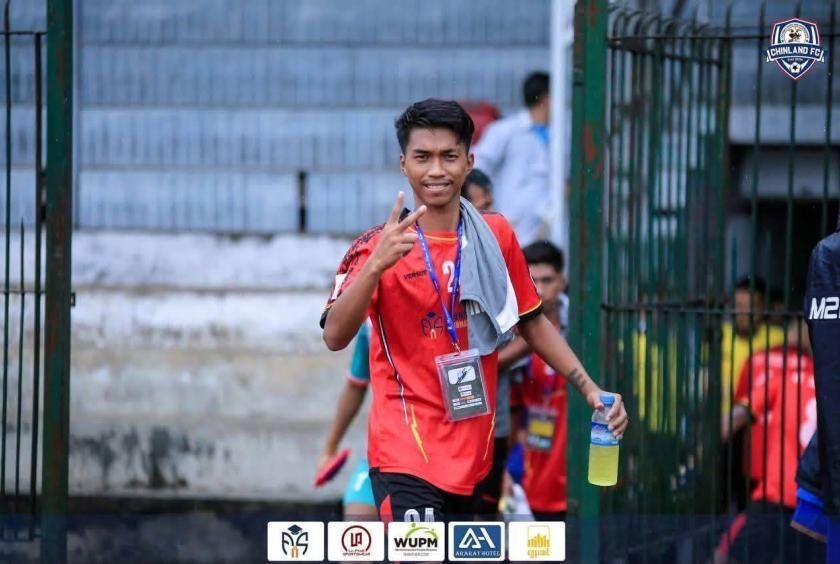
Chinland FC announced on the evening of August 29 that Pa Lung, the footballer who had vanished from contact seven days earlier, had been found and safely reunited with the squad. The club's statement, shared across its Facebook platform, brought relief to supporters and officials who had grown increasingly anxious about the player's whereabouts and wellbeing during the extended communication gap.
The circumstances surrounding Pa Lung's disappearance emerged through the club's disclosure: the athlete had made an urgent, unplanned journey to his hometown after learning of his mother's critical health emergency. The gravity of the family situation meant he departed without the customary notification procedures to his club, leaving Chinland FC unaware of his departure or destination. This sudden absence, combined with practical obstacles during his journey, created the communication void that sparked concern among club leadership and supporters alike.
According to the club's account, Pa Lung's inability to maintain contact stemmed from his mobile phone battery depleting during travel, coupled with additional communication impediments he encountered on his route home. These technical and logistical obstacles prevented him from alerting the club to his whereabouts or expected return date. The compounding factors—urgent family circumstances, exhausted battery power, and difficult terrain or connectivity issues—created a perfect storm of incommunicado status that extended for the entire seven-day period.
When days passed without any word from Pa Lung, Chinland FC escalated its response by filing an official missing-person report with the appropriate police authorities. Club officials simultaneously launched their own independent search operation, dedicating five days of intensive effort to locate the player. Their systematic approach combined internal investigations with coordination with law enforcement, demonstrating the seriousness with which the club treated the situation.
As initial search efforts yielded no breakthrough, Chinland FC made the strategic decision to seek public assistance. Recognizing that community networks and citizen awareness often prove crucial in locating missing persons, the club issued a formal public appeal seeking information about Pa Lung's location. This move signalled to supporters and the broader Myanmar football community that the situation had moved beyond a routine absence and warranted coordinated public action.
The club's latest statement emphasizes that contact with Pa Lung has now been fully restored and that he has resumed his position within the team structure. This resolution came as considerable relief not only to the Chinland FC organization but to the extensive network of individuals who had invested emotional energy and practical effort in the search. The player's safe location and return vindicated the decision to escalate the search and seek public help.
Chinland FC's public gratitude extended across multiple institutional and governmental bodies that had assisted in locating Pa Lung. The Myanmar Football Federation, the Myanmar National League, relevant state authorities, the Myanmar Police Force, media organizations, and numerous individual officials from supporting institutions all received explicit acknowledgment. This multi-sectoral coordination reflects how seriously Myanmar's football governance structures treat player welfare and safety matters.
The resolution of Pa Lung's case carries implications for how Southeast Asian football clubs balance player privacy with duty of care protocols. Many regional clubs operate without formal missing-person procedures, making Chinland FC's methodical approach—filing police reports, conducting systematic searches, and issuing public appeals—noteworthy. The experience underscores the importance of clubs establishing clear communication protocols and emergency contact procedures that allow players flexibility for genuine family crises while maintaining institutional awareness.
For Malaysian readers familiar with regional football operations, the case illustrates persistent communication infrastructure challenges across Southeast Asia. The combination of battery depletion and connectivity difficulties that stranded Pa Lung reflects geographic and technical realities affecting rural areas in Myanmar and other nations in the region. These practical barriers to communication often complicate routine club operations and player management.
The broader context of player welfare in Myanmar football has been complicated by the country's political turbulence and its effects on institutional stability. Chinland FC's comprehensive response to Pa Lung's disappearance demonstrates that despite external pressures, professional football clubs in Myanmar maintain functional welfare systems and engage responsibly with law enforcement and community institutions. The incident also showcases how family health emergencies remain significant factors shaping player conduct and availability in developing sports systems across Southeast Asia, where extended family obligations typically supersede institutional commitments during critical situations.

