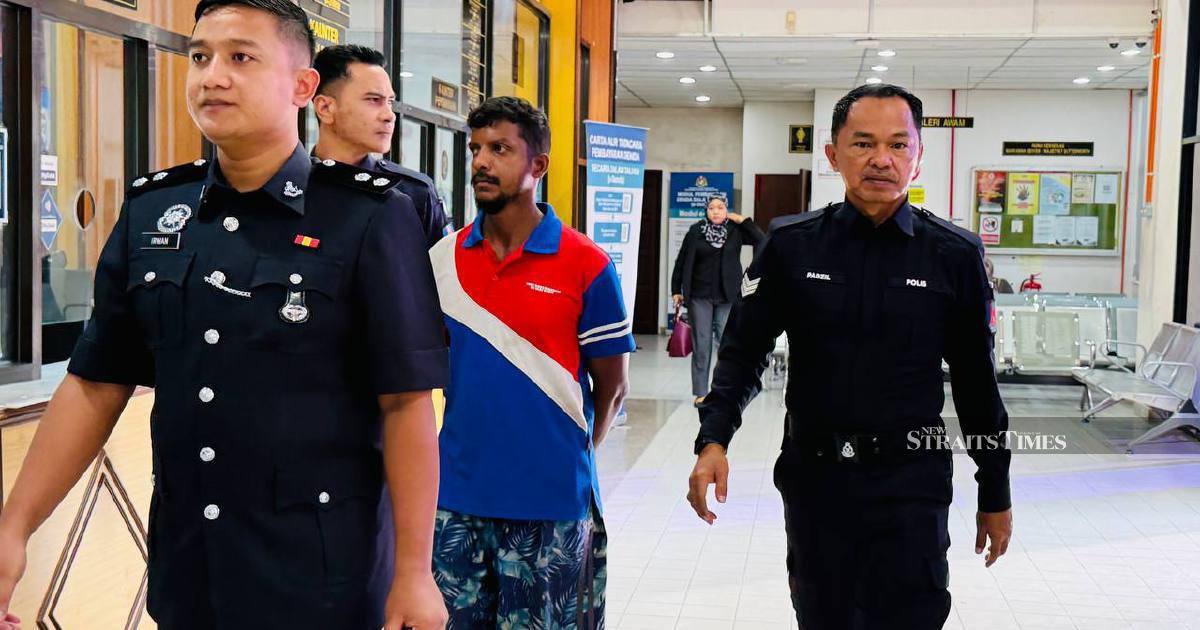
A Myanmar national made his initial appearance at the Butterworth Sessions Court on charges of causing grievous hurt to another Myanmar citizen during an altercation that occurred in the preceding week. The accused man entered a plea claiming trial to the allegations, rejecting any admission of liability in connection with the incident.
The court declined to grant the defendant bail while the legal proceedings advance. Instead, judicial authorities have withheld release pending the completion of identification documentation procedures—a common requirement when cases involve foreign nationals whose status requires verification through immigration and identity verification systems. The withholding of bail highlights the court's concern regarding the defendant's status and ties to the jurisdiction, particularly when the accused is a non-citizen with potentially limited roots in Malaysia.
This development reflects the complexities that arise when disputes between foreign nationals enter Malaysia's criminal justice system. Myanmar citizens represent a significant migrant population across Peninsular Malaysia and Sabah, engaged in various sectors including construction, domestic work, and small-scale commerce. When such individuals become entangled in violent disputes, the prosecution must navigate additional procedural steps involving immigration records, travel documentation, and identity confirmation before bail determinations can be finalised.
The decision to remand the defendant pending documentation suggests the Sessions Court regarded the identification verification process as essential to establishing the accused's residential status, employment legitimacy, and local connections—factors that typically influence bail eligibility. Courts generally consider whether an accused presents a flight risk or poses a danger to the community. For foreign nationals, the absence of verified documentation raises legitimate concerns about the defendant's ability to remain available for trial proceedings.
Grievous hurt under Malaysian law constitutes a serious bodily injury charge that carries substantial penalties upon conviction. The categorisation distinguishes it from simple hurt offences, requiring proof of injury that causes severe disfigurement, danger to life, or extended incapacity. The fact that charges were elevated to this severity level indicates the victim sustained injuries meeting this elevated threshold, though specific details regarding the nature of injuries or circumstances precipitating the violence remain undisclosed at this early procedural stage.
The Butterworth Sessions Court in Penang has jurisdiction over such matters, serving as an intermediate tribunal between subordinate courts and the High Court. Cases involving foreign nationals and interpersonal violence between migrant communities have become increasingly common in this court's docket as Malaysia's foreign worker population has expanded substantially over recent decades. Penang, with its significant port and manufacturing base, hosts substantial numbers of workers from Myanmar, Bangladesh, and Indonesia.
For readers familiar with Malaysia's immigration landscape, the bail decision underscores how citizenship status fundamentally shapes criminal procedure outcomes. While Malaysian citizens charged with similar offences might secure bail relatively straightforwardly upon demonstrating employment and family connections, foreign nationals face additional scrutiny. This is not necessarily discriminatory—it reflects legitimate state interests in ensuring defendants remain within jurisdiction throughout potentially protracted trial proceedings.
The case also illustrates broader challenges facing Myanmar nationals in Malaysia. Beyond criminal justice concerns, many undocumented or inadequately documented Myanmar workers operate in precarious circumstances, vulnerable to exploitation and with limited recourse when disputes arise. Some seek work through informal channels without proper work permits, making them hesitant to engage with authorities even as victims or witnesses, thereby potentially allowing perpetrators to operate with relative impunity.
The identification verification process referenced in the court decision likely involves cross-checking information with Myanmar authorities when possible, examining visa status and employment documentation with Malaysian immigration authorities, and confirming the defendant's identity through fingerprinting or other biometric methods. These procedures are standard but can extend detention periods significantly, sometimes for weeks, while bureaucratic processes unfold across international borders.
Once identification documentation is completed and bail status is reassessed, the case will advance through the standard trial procedure. The prosecution bears the burden of proving beyond reasonable doubt that the defendant committed the alleged offence. The defendant's counsel will have opportunity to challenge evidence presented and cross-examine prosecution witnesses. The eventual outcome will depend substantially on medical evidence regarding the victim's injuries, witness testimonies, and the circumstances surrounding the confrontation.
For the broader Myanmar migrant community in Malaysia, such cases generate concern about treatment within the justice system and workplace safety. When workers become involved in violent disputes—whether as perpetrators or victims—language barriers, cultural misunderstandings, and differing legal expectations can complicate outcomes. Community organisations working with Myanmar migrants have long highlighted the need for improved access to legal information and dispute resolution mechanisms.
The withheld bail status does mean the defendant remains in custody pending the next court mention, when updated documentation status will presumably be reviewed. The cost of extended detention—both financially for any family attempting to support him and emotionally through separation—creates incentives for rapid resolution, though rushing justice often produces unsatisfactory outcomes. This case will likely progress through several court appearances before substantive trial proceedings commence.