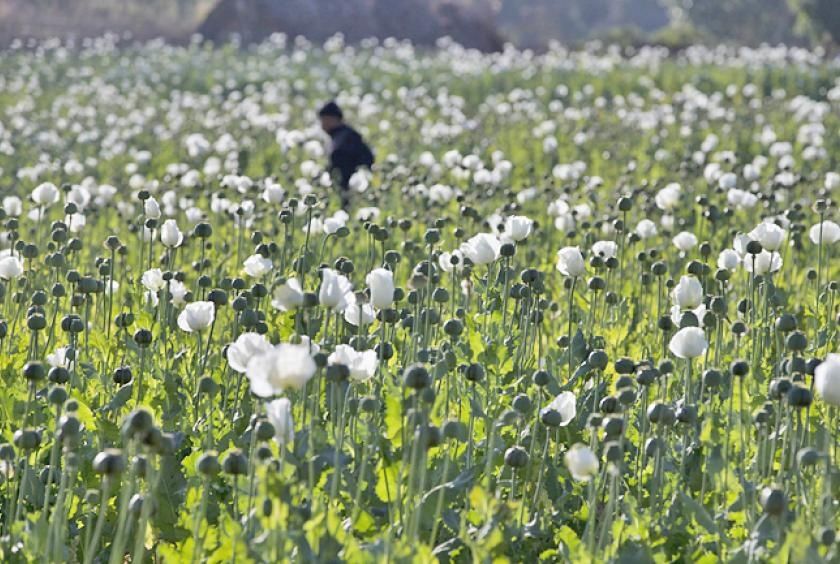
Myanmar's drug enforcement authorities have delivered a significant blow to narcotics trafficking networks operating across the country's central regions, securing the seizure of 17.6 kilograms of heroin and one million stimulant tablets in coordinated enforcement actions. The Central Committee for Drug Abuse Control (CCDAC) reported the twin operations, which collectively resulted in the arrest of nine individuals suspected of involvement in major drug distribution networks. These seizures underscore the persistent challenge Myanmar faces in combating the flow of illicit substances through its territory, a persistent issue affecting the broader Southeast Asian region.
The first operation took place in Amarapura township, located in Mandalay region in central Myanmar. Acting on information received from informants, anti-narcotics police conducted searches on four motorcycles on Tuesday, revealing a significant cache of heroin hidden among the vehicles. The confiscation of 17.6 kilograms represents a substantial quantity of the narcotic substance, sufficient to supply thousands of users or to be distributed through multiple downstream trafficking channels. Four individuals were taken into custody during this operation, with authorities linking them to the heroin distribution network uncovered through the seizure.
In a parallel enforcement action, police in Lewe township of Naypyitaw Union Territory, Myanmar's capital region, conducted a separate raid on July 23 that yielded equally substantial results. During this operation, authorities discovered and seized approximately one million stimulant tablets, suggesting an organized distribution apparatus capable of manufacturing or sourcing synthetic drugs at industrial scale. The seizure of such a large quantity of stimulant pills points to either a major production facility or a significant regional distribution hub being targeted by law enforcement. Five suspects were arrested in connection with this operation, indicating that the stimulant network involved a sizeable organized operation rather than small-scale activity.
The legal framework governing these enforcement actions derives from Myanmar's Narcotic Drugs and Psychotropic Substances Law, under which all nine arrested suspects have been formally charged. This legislation provides the statutory foundation for Myanmar's anti-drug operations and establishes penalties for trafficking, possession, and related offenses. The charges against these individuals carry potential for substantial prison sentences, reflecting the severity with which Myanmar's legal system treats major drug offenses. The invocation of this law in both cases demonstrates Myanmar's commitment to pursuing organized drug trafficking networks through formal judicial processes rather than informal administrative measures.
These operations reflect the broader context of Myanmar's struggle with drug trafficking, a challenge that has intensified in recent years due to the country's porous borders, ongoing political instability, and the proliferation of clandestine manufacturing networks. Myanmar lies along major drug trafficking corridors connecting the "Golden Triangle" production regions of Shan State with markets throughout Southeast Asia, China, and beyond. The heroin seized in Mandalay represents the type of product typically sourced from opium poppy cultivation in Shan State, refined through clandestine laboratories, and transported via networks that exploit Myanmar's complex geography and border regions.
The stimulant tablets present a different narcotics profile, suggesting the involvement of synthetic drug manufacturing or distribution networks. Methamphetamine and similar synthetic stimulants have become increasingly prevalent throughout Southeast Asia, particularly in Thailand, Malaysia, and other regional nations. The seizure of one million pills in Myanmar indicates that the country's territory is being utilized not only as a transit route but potentially as a production location for synthetic drugs destined for regional markets. This suggests that enforcement authorities must contend with both traditional opioid networks and modern synthetic drug operations.
From a Southeast Asian perspective, these seizures carry implications for neighboring countries facing their own drug challenges. Thailand, which shares a porous border with Myanmar, particularly in Shan State, has documented increasing flows of both heroin and synthetic drugs originating from or transiting through Myanmar. Malaysia, as a major market for narcotics, continues to grapple with drug seizures linked to trafficking networks that span Myanmar, Thailand, and other regional countries. The successful operations in Myanmar suggest that coordinated enforcement can disrupt major trafficking networks, though the scale of these seizures also indicates the enormous quantities that must flow through the region to make such large confiscations significant fractions of total trafficking volumes.
The arrests of nine individuals provide law enforcement with opportunities to gather intelligence regarding the organizational structures, financing mechanisms, and distribution methods of Myanmar's drug trafficking networks. Interrogation of these suspects may reveal connections to larger organized crime syndicates, production facilities, or regional trafficking coordinators. Such intelligence proves invaluable for developing targeted enforcement strategies and disrupting the relationships that enable drugs to flow from production regions through distribution hubs to end-user markets.
Myanmar's capacity to conduct these operations, while positive, must be contextualized within the country's broader law enforcement challenges. The military coup in 2021 created significant institutional disruption, and ongoing internal conflicts have rendered large portions of Myanmar's territory difficult for central authorities to police. Criminal networks operating in ungoverned or poorly controlled regions enjoy relative freedom from enforcement pressure. The seizures in Mandalay and Naypyitaw, both areas under reasonably effective government control, suggest that enforcement capacity exists in central Myanmar but may not extend effectively to border regions and remote areas where much drug production and transshipment occurs.
The CCDAC's public announcement of these seizures serves multiple purposes within Myanmar's domestic and international contexts. Domestically, it demonstrates government commitment to drug control objectives. Internationally, it signals Myanmar's participation in regional and global drug enforcement norms, despite the country's political isolation following the military coup. Regional partners, including ASEAN nations and international drug enforcement agencies, receive evidence that Myanmar's authorities continue operational activities against narcotics trafficking.
Looking forward, these operations highlight the need for sustained, systematic enforcement against drug networks in Myanmar. Single seizures, while noteworthy, must be components of comprehensive strategies that target production facilities, dismantle organized crime structures, and disrupt trafficking routes. Enhanced border controls, improved intelligence sharing among regional partners, and capacity building for Myanmar's law enforcement institutions represent essential complementary measures. For Malaysia and other Southeast Asian nations seeking to reduce drug availability and trafficking within their territories, the security situation in Myanmar represents a persistent challenge requiring diplomatic engagement and practical cooperation mechanisms.

