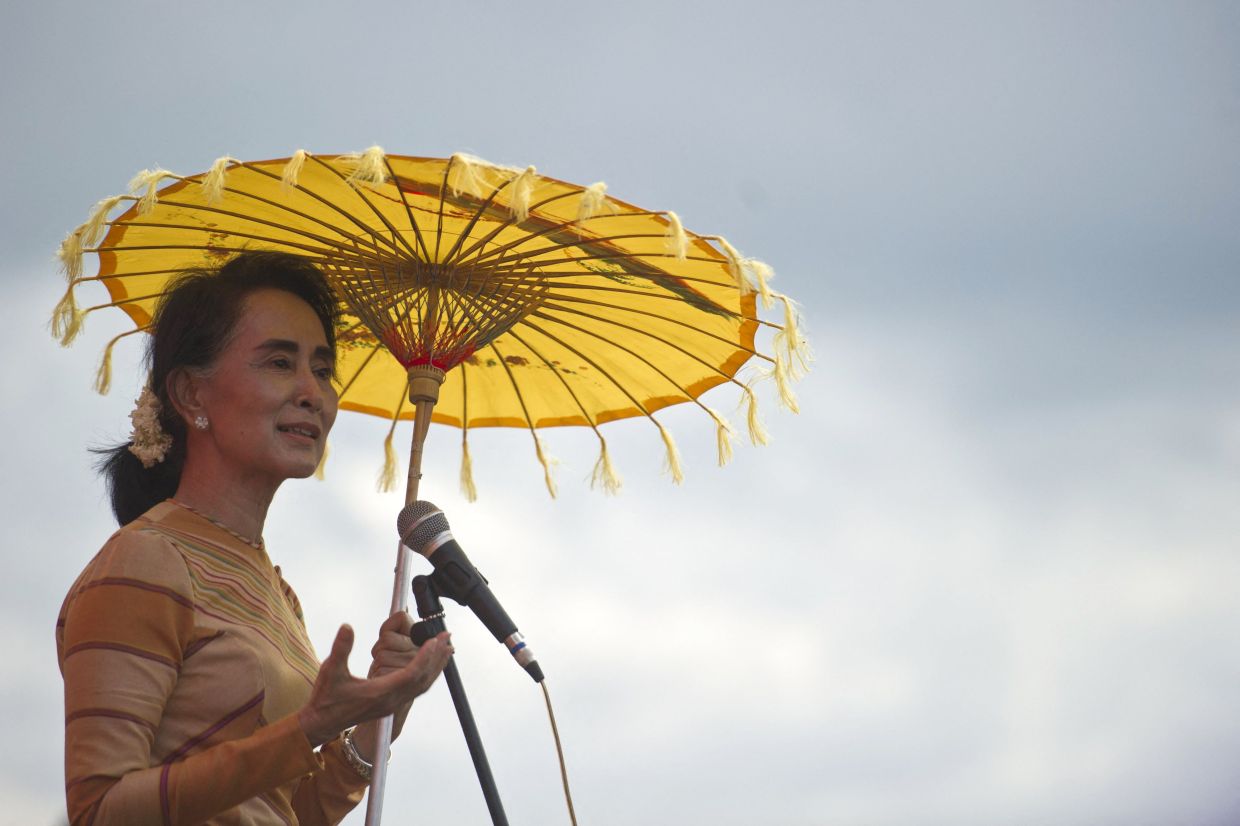
Myanmar's military regime has once more rejected requests from Asean members to visit imprisoned former leader Aung San Suu Kyi, who recently celebrated her 81st birthday in detention. The latest refusal, issued through regime spokesperson Khaing Khaing Soe on June 30, came when the Philippines' Foreign Secretary Maria Theresa Lazaro sought access during her official visit. This marked the second diplomatic rebuff for Lazaro, following an unsuccessful attempt in January when she met regime leader Min Aung Hlaing but was denied permission to see Suu Kyi, the ousted civilian leader who has remained locked away since the 2021 military coup.
The continued stonewalling exposes a fundamental power imbalance within the regional bloc that has troubled policy analysts and diplomats across Southeast Asia. Hunter Marston, director of the South-East Asia programme at the Lowy Institute, argues that the junta's brazen disregard for Asean pressure reflects a strategic calculation that the military government does not require the regional grouping as much as Asean requires Myanmar's participation. This asymmetry fundamentally undermines Asean's ability to influence outcomes in Naypyitaw, particularly regarding governance and human rights concerns. The regime's reasoning that Suu Kyi, as a convicted prisoner, cannot meet international representatives represents a convenient legal framework that allows the junta to maintain absolute control over who accesses its most prominent political detainee.
Who the junta does allow to visit tells a revealing story about its true diplomatic priorities. The regime granted visits from former Thai foreign minister Don Pramudwinai in July 2023 and, according to reports, Chinese Foreign Minister Wang Yi in April this year. These selective permissions demonstrate that Myanmar's military leadership views Bangkok and Beijing as significantly more important partners than the broader Asean community. The contrast is stark: while Asean chair the Philippines cannot secure a meeting, representatives from Thailand and China have been able to access Suu Kyi, suggesting the regime reserves its hospitality for states it perceives as having concrete strategic or economic benefits or as regional powers with genuine influence.
Analysts suggest the regime's approach to restricting Suu Kyi's visitors serves multiple strategic purposes simultaneously. Phyo Win Latt, an independent historian of Myanmar, contends that the junta's refusal fundamentally comes down to rejecting what it views as illegitimate external oversight of Myanmar's internal affairs. By keeping Suu Kyi isolated and inaccessible, the regime signals that it will not acknowledge any Asean supervisory authority over Myanmar's political settlement, regardless of agreements or consensus statements. The junta wants international recognition as the legitimate government, but categorically refuses to accept scrutiny of its governance practices or treatment of detainees. This distinction reveals a crucial bargaining position: Myanmar seeks the prestige and practical benefits of Asean membership while reserving the right to disregard the grouping's norms and expectations.
Suu Kyi's legal status as the regime defines it has become the primary mechanism for her isolation. She is technically serving an 18-year sentence following multiple convictions, substantially reduced from an original 33-year judgment handed down by military courts. The charges against her, including violating the official secrets act and corruption allegations, have been widely dismissed by international observers as politically motivated and baseless. Reports indicate that in April, the regime placed her under house arrest, further restricting any possibility of independent observers verifying her condition or wellbeing. Since her detention began, international access to verify her health or circumstances has been virtually nonexistent, meaning her family, humanitarian organisations, and regional peers must rely entirely on regime assurances that she remains in good condition.
The isolation of Myanmar's most recognisable political figure represents a broader pattern of the regime's contempt for Asean's peace framework. Since the coup, the military government has largely ignored the Five-Point Consensus agreement that Asean established to guide Myanmar towards stability and democratic restoration. That plan explicitly calls for an end to violence, humanitarian aid access, dialogue between all parties, and visits from the Asean special envoy to stakeholders across the political spectrum—a provision that logically should include Suu Kyi, who represents the ousted civilian government. Min Aung Hlaing, who recently transitioned from military chief to president in April, has demonstrated little willingness to comply with these conditions, effectively treating the regional agreement as advisory rather than binding.
The human cost of this intransigence remains staggering. According to data from Armed Conflict Location & Event Data, an independent global monitor, at least 100,000 people have died since the 2021 coup, a figure that reflects the violent resistance to military rule and the regime's brutal counterinsurgency operations. This death toll underscores why Asean's inability to enforce its peace plan carries consequences far beyond diplomatic protocol. The framework specifically addresses humanitarian access and cessation of hostilities, yet the regime's unwillingness to cooperate means civilians continue experiencing the consequences of factional conflict and state violence. Asean has repeatedly and publicly called upon Min Aung Hlaing to fully implement the consensus agreement, yet these calls have yielded minimal results, exposing the bloc's limited enforcement mechanisms when dealing with a recalcitrant member state.
Min Aung Hlaing's positioning on Asean oversight reveals interesting parallels to how the regime views other regional grievances. According to analysts including Amara Thiha of the Stimson Centre, the junta perceives Asean's insistence on implementing the Five-Point Consensus as selective and unfair. From Naypyitaw's perspective, the regional grouping does not intervene in disputes between other member states, such as the long-running territorial disagreements between Thailand and Cambodia. The regime therefore questions why Myanmar should be treated as an exception requiring special monitoring and conditions. This argument, while strategically convenient, obscures the reality that no other Asean member experienced a recent military coup followed by widespread violence and democratic backsliding of the scale witnessed in Myanmar.
The absence of Suu Kyi from international view has also served the regime's domestic political consolidation objectives. In the early months of 2024, the junta orchestrated a carefully managed electoral process that most regional observers characterised as severely compromised or outright fraudulent. By keeping Suu Kyi incarcerated and out of sight, the regime eliminated the possibility of her becoming a rallying symbol for opposition forces or international attention during the critical period when the military consolidated its hold through pseudo-democratic proceedings. Her son Kim Aris, now 48 years old, has expressed profound disappointment at Asean's inability to secure his mother's access to visitors, noting that the regime's continued isolation raises troubling questions about what the military government wishes to conceal. Aris himself has not been permitted to visit or communicate with his mother for five years, a constraint the regime justifies through its status as a convicted prisoner.
Asean's formal response to Myanmar's intransigence has involved maintaining a ban on Min Aung Hlaing attending the regional leaders' summits, a punishment that has remained in effect for more than five years. The bloc explicitly links the restoration of Myanmar's military leadership to the grouping's diplomatic high table with compliance with the Five-Point Consensus conditions. However, this leverage appears increasingly hollow given the regime's apparent indifference to such exclusions. The junta has proven willing to sacrifice participation in Asean forums if the alternative requires accepting the kind of scrutiny and accountability measures the consensus implicitly demands. For regional states that prize stability and cohesion, Myanmar's continued defiance represents a fundamental challenge to Asean's stated commitment to collective decision-making and adherence to agreed frameworks.
The broader implications for Southeast Asia's geopolitical balance extend beyond Myanmar's borders. Asean's apparent inability to influence outcomes in a member state experiencing political upheaval and humanitarian crisis undermines the grouping's credibility in addressing regional challenges more broadly. If the bloc cannot enforce agreements with Myanmar, smaller nations may question whether Asean commitments to regional stability and conflict resolution possess genuine enforcement capacity. Simultaneously, the regime's cultivation of closer ties with China and Thailand demonstrates how individual member states can pursue bilateral relationships that supersede collective Asean interests, further fragmenting the bloc's unified positioning. The junta's strategic calculation that it needs Asean recognition more than Asean needs Myanmar, combined with its apparent confidence that it can outlast regional pressure, suggests the regime intends to maintain its current trajectory regardless of Asean's formal positions or diplomatic appeals.

