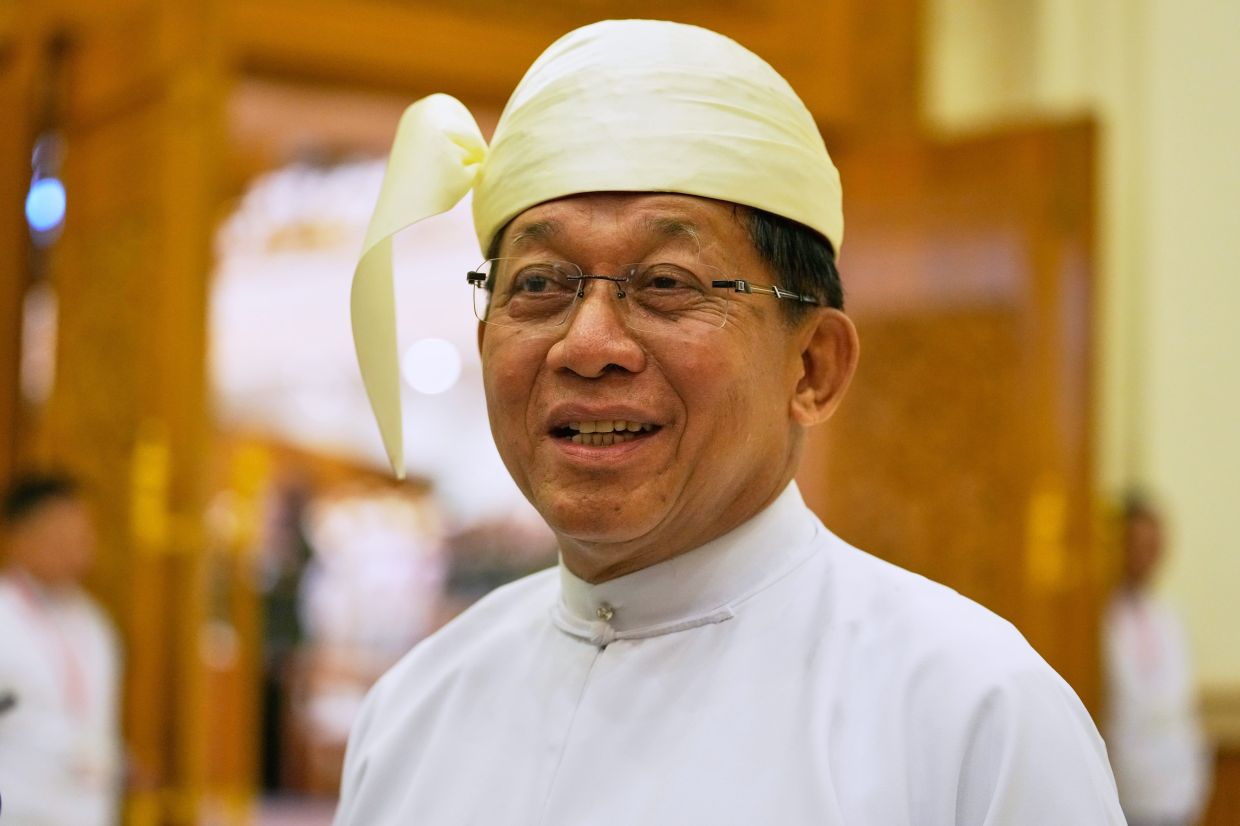
Myanmar's former military strongman Min Aung Hlaing arrived in Thailand on Thursday for his inaugural state visit since assuming the civilian presidency, a carefully choreographed diplomatic manoeuvre designed to ease his country's pariah status in the international community. The journey represents a significant milestone in the junta leader's rehabilitation campaign, as he seeks to transition from uniformed military chief to legitimate statesman while consolidating power at home and restoring Myanmar's regional standing.
Min Aung Hlaing orchestrated the February 2021 military coup that deposed democratically elected Aung San Suu Kyi, an action that unleashed a devastating civil conflict across Myanmar. The ensuing violence has claimed an estimated 100,000 lives across competing factions, displaced hundreds of thousands of civilians, and destabilised large portions of the country. Faced with severe international isolation and widespread condemnation from democracies worldwide, the junta held carefully controlled elections in April that international observers and Western governments dismissed as illegitimate theatre designed to create a veneer of civilian legitimacy while perpetuating military rule beneath the surface.
Thailand has emerged as Myanmar's crucial diplomatic champion, positioning itself as the primary architect of regional efforts to gradually reintegrate its troubled neighbour into the Association of Southeast Asian Nations. This strategy reflects Bangkok's pragmatic calculation that engaging Myanmar proves more effective than exclusion, particularly given the security challenges that instability across the border creates. Thailand hosts substantial refugee populations fleeing Myanmar's conflict, manages extensive cross-border trade relationships, and confronts growing challenges from criminal networks operating in Myanmar's lawless border regions. By normalising relations with Min Aung Hlaing's government, Thai leaders believe they can better address these transnational issues through diplomatic channels and bilateral cooperation frameworks.
Asean has maintained formal restrictions on Myanmar's leadership attendance at high-level summits since the coup, reflecting the bloc's nominal commitment to democratic principles and regional stability. However, this institutional response has proved more symbolic than substantive. Myanmar's foreign minister participated in an informal ministerial gathering in Bangkok last month, signalling that the organisation's hardline stance is gradually eroding. The pathway toward full Myanmar reintegration hinges significantly on Thailand's quiet lobbying efforts, which have created space for incremental normalisation despite continued political uncertainty and violence within Myanmar itself.
Min Aung Hlaing's diplomatic offensive has already yielded tangible results beyond Asean consideration. He has cultivated strong relationships with India, leveraging Myanmar's geographical and strategic importance to New Delhi. More significantly, he has secured explicit recognition and support from China, a geopolitical heavyweight whose endorsement provides substantial insulation against Western pressure. Visits to Laos and Russia have further consolidated support among nations less invested in democracy promotion, creating a coalition of states willing to treat Myanmar's military-backed government as legitimate. These relationships effectively reduce Myanmar's dependency on Asean approval for basic international legitimacy and diplomatic standing.
The symbolic importance of Asean readmission for Min Aung Hlaing extends beyond practical diplomatic benefits. Experts describe his campaign for full participation as fundamentally about status and regional prestige. Readmission would represent international validation of his government's legitimacy and normalcy, allowing Myanmar to reassert itself as a responsible regional actor rather than a pariah state under international sanction. For a leader whose entire political project rests on consolidating authority and projecting strength, Asean acceptance carries profound psychological and political significance within Myanmar itself, signalling to his domestic audience and international partners that the transition to civilian rule is proceeding successfully.
Yet this diplomatic rehabilitation effort collides sharply with Myanmar's refusal to embrace the Asean consensus framework for resolving the nation's devastating internal conflict. The bloc's much-publicised five-point consensus, intended to provide a roadmap for dialogue involving all competing parties and a cessation of hostilities, has been systematically rejected by Min Aung Hlaing's government. The junta continues military operations against various armed opposition groups, explicitly dismissing international pressure for inclusive negotiations. This contradiction—simultaneously seeking acceptance as a responsible regional member while refusing to adopt basic mechanisms for conflict resolution—exposes the fundamental tensions at the heart of Myanmar's diplomatic rehabilitation campaign and raises serious questions about whether genuine political change is occurring beneath the civilian political veneer.
During his Bangkok visit, Min Aung Hlaing received full ceremonial honours at Government House, reflecting Thailand's commitment to treating him as a legitimate statesman. His meeting with Prime Minister Anusin Charnvirakul focused substantially on bilateral labour cooperation, with both governments expected to sign a memorandum of understanding addressing cross-border workforce movements. A business forum and state dinner rounded out the itinerary, providing opportunities for economic engagement and relationship building with Thai commercial interests. These practical cooperation mechanisms offer concrete benefits that ground the diplomatic relationship in functional partnership beyond mere symbolic recognition.
Thailand's strategic approach addresses several pressing security concerns beyond simple diplomatic courtesy. The protracted conflict in Myanmar has created substantial refugee populations along Thailand's border, with hundreds of thousands of ethnic minorities and conflict-displaced persons residing in camps. Military spillover violence has occasionally affected Thai border communities and military units. Perhaps more urgently, Myanmar's unstable borderlands have become havens for cybercrime networks perpetrating international scams and drug trafficking organisations trafficking narcotics throughout the region. Foreign Minister Sihasak Phuangketkeow explicitly stated that Bangkok would raise cybercrime issues during Min Aung Hlaing's visit, signalling that Thailand's engagement comes with specific policy demands rather than unconditional rehabilitation.
International human rights organisations and Western governments have strongly criticised Thailand's diplomatic accommodation of Min Aung Hlaing, noting that he faces multiple Western sanctions, including those from the United States and European Union. The International Criminal Court has issued an arrest warrant against the Myanmar leader on crimes against humanity charges relating to the post-coup violence and systematic persecution of the Rohingya Muslim minority. These legal jeopardies remain unresolved and represent potential constraints on his international movement, though most countries lack political will to enforce ICC jurisdiction against regionally important figures backed by major powers.
Meanwhile, Aung San Suu Kyi remains under de facto house arrest within Myanmar, her political future entirely uncertain. A carefully timed meeting with a representative of the International Committee of the Red Cross on Monday represented her first documented encounter with a foreign official since her February 2021 detention, a poignant reminder that despite Min Aung Hlaing's diplomatic progress, fundamental questions about Myanmar's political trajectory remain unresolved. This brief diplomatic acknowledgement of Suu Kyi's continued detention came precisely as the Myanmar leader moved toward regional normalisation, illustrating the uncomfortable coexistence of democratic rhetoric and authoritarian practice that characterises contemporary Southeast Asian realpolitik.

