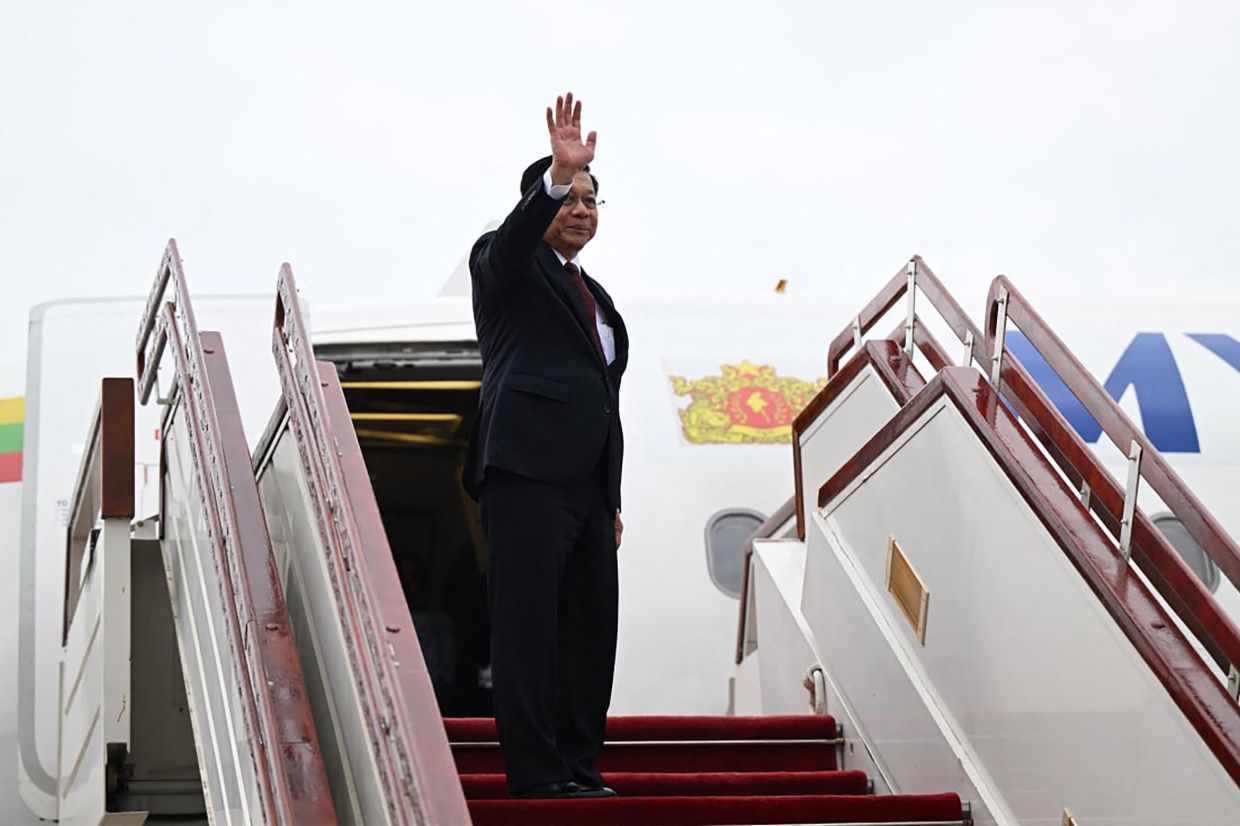
Myanmar's military-installed leader Min Aung Hlaing departed for Russia on Monday for high-level talks with President Vladimir Putin, according to an official statement from Naypyidaw. The visit represents a significant diplomatic engagement and the first time the former junta chief has travelled to Moscow since assuming the presidency in April following elections that drew widespread international condemnation. The trip signals Myanmar's strategic pivot towards Russia as it grapples with deepening international isolation and seeks to consolidate ties with one of its few remaining allies.
Russia has emerged as a crucial backer of Myanmar since the February 2021 military coup that deposed democratically elected leader Aung San Suu Kyi and ignited a civil conflict that independent observers estimate has claimed more than 100,000 lives. While most Western nations and regional democracies have condemned the coup and imposed sanctions, Moscow maintained diplomatic support and continued military and economic engagement with Naypyidaw. This backing proved invaluable as Myanmar faced international censure and growing isolation from traditional partners.
Min Aung Hlaing's ascension to the civilian presidency in April occurred through elections that the international community widely dismissed as fraudulent. Western governments and democracy advocacy organizations rejected the electoral process as a choreographed exercise designed to legitimize military rule while maintaining a veneer of democratic governance. The Myanmar military's decision to hold these contested elections reflected efforts to normalize its position internationally, even as it continued conducting military operations against armed resistance groups and faced accusations of targeting civilian populations.
The official purpose of this Moscow visit centres on deepening bilateral relations across multiple dimensions. Myanmar's presidency emphasized that discussions would focus on consolidating the "longstanding friendly and close relations" between the two nations while advancing strategic cooperation in security matters and economic development. These broad objectives mask the underlying reality that Myanmar increasingly depends on Russian military support and technological assistance as it confronts simultaneous challenges from multiple armed opposition groups and regional instability.
Military cooperation represents the cornerstone of Myanmar-Russia relations. The Myanmar armed forces operate Russian-made combat jets in operations against resistance factions, though international human rights organizations have documented incidents involving these aircraft in alleged attacks on civilian targets. Some conflict monitors have characterized certain military operations as potential war crimes, raising questions about the nature of military cooperation and Moscow's willingness to provide advanced weaponry to a government engaged in combat against its own population. The delivery of sophisticated military equipment continues despite these concerns, reflecting both Myanmar's desperation and Russia's strategic interest in maintaining influence in Southeast Asia.
The deepening military partnership was formalized through a five-year military cooperation agreement signed in February, though the comprehensive details of this pact remained largely undisclosed. The agreement likely covers areas including arms transfers, training programmes, joint exercises, and intelligence sharing, though the opacity surrounding the arrangement prevents clear public understanding of its scope and implications. Such military agreements typically involve significant financial commitments and create lasting dependencies that extend well beyond the initial agreement period.
Min Aung Hlaing's entourage includes other high-ranking officials, underscoring the diplomatic importance Myanmar attaches to this engagement. During his stay, the Myanmar leader will conduct meetings with Russia's prime minister and the speaker of the State Duma, Russia's lower parliamentary chamber, indicating engagement at senior levels across the executive and legislative branches. Additionally, he will participate in a Myanmar-Russia economic forum, suggesting attempts to diversify bilateral cooperation beyond purely military dimensions and explore commercial opportunities for economic recovery.
This Moscow visit forms part of a broader diplomatic offensive that Min Aung Hlaing has undertaken since assuming the presidency. Since April, he has undertaken international travels to neighbouring Thailand, as well as major Asian powers China and India. These journeys reflect a calculated strategy to reconstruct Myanmar's international standing and rebuild relationships with key regional and global actors. The sequencing and selection of destinations reveal Myanmar's understanding that regional acceptance and great-power support are essential for regime consolidation.
For Myanmar's civil society and pro-democracy movements, Russia's continued military support for the military government represents a significant impediment to efforts seeking international pressure for political transition. Moscow's backing effectively insulates the junta from coordinated international sanctions and provides legitimacy in the eyes of developing nations that maintain non-aligned positions. The military cooperation particularly concerns humanitarian organizations, given documented concerns about how Myanmar's armed forces employ such equipment in conflict zones populated by civilians.
The visit also carries implications for Southeast Asian regional dynamics and broader great-power competition. Russia's engagement with Myanmar reflects Moscow's strategy to maintain influence in Asia at a time when Western sanctions over Ukraine limit its traditional avenues of engagement. For Southeast Asia, Russia's military presence through Myanmar arrangements complicates regional security calculations and could influence how various nations navigate great-power rivalry.
Myanmar's predicament underscores the complex realities facing pariah states navigating international isolation. While Western capitals maintain principled opposition to the military government, Myanmar continues accessing sophisticated weapons and strategic support through non-Western channels. This dynamic suggests that military-installed regimes can persist through selective engagement with willing partners, even when facing widespread international opposition. For Myanmar's neighbours and ASEAN as a bloc, the situation presents a dilemma between diplomatic pressure and pragmatic engagement, with no clear resolution in sight.

