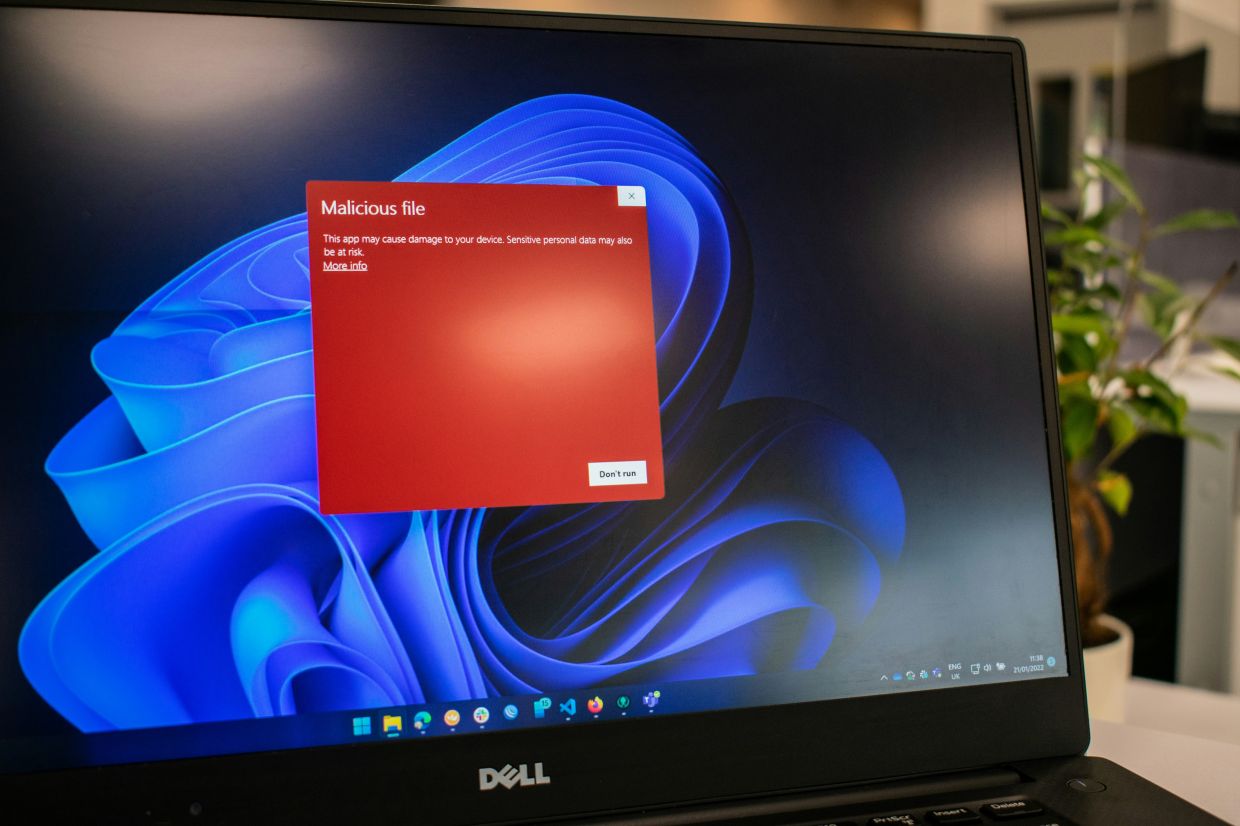
Malaysia's cyber security centre MyCert has raised alarm over an active malware campaign leveraging WhatsApp Web and Desktop platforms to compromise Windows computers across the country. The attack chain employs sophisticated social engineering methods, with criminals dispatching messages containing malicious file attachments masquerading as routine financial and legal documentation to unsuspecting recipients.
The scammers have adopted a deceptive naming convention designed to exploit user trust and momentary inattention. Files circulating in the wild include "Acknowledgment of Debt.vbs", "Sila semak bil anda.vbs", "December statement of account.vbs", and "Reconciliation.vbs". The use of Malay-language filenames in some variants suggests targeted campaigns aimed at Malaysian and Southeast Asian audiences, demonstrating the attackers' familiarity with local communication patterns and financial vocabulary.
A critical technical aspect of this threat lies in the file format deception. Despite their names implying PDF documents, these files are actually Visual Basic Script executables with a .vbs extension. The distinction matters significantly: when users open these files, they do not simply display document content as expected. Instead, the embedded script automatically executes immediately upon opening, bypassing traditional document-opening safeguards and triggering a malware infection process without requiring additional user interaction or confirmation steps.
The malicious payload installed through this mechanism is particularly dangerous. Remote Access Trojans (RAT) represent one of the most severe categories of malware, as they grant attackers genuine remote control capabilities over compromised machines. Once installed, these trojans allow criminals to manipulate the affected computer's operations and maintain persistent access even after system reboots, establishing a foothold that survives basic troubleshooting procedures that ordinary users might attempt.
What makes this campaign especially insidious is the sophistication of the post-infection behaviour. The trojan actively disables security alerts and system prompts, effectively silencing the computer's built-in defence mechanisms. This stealthy approach allows the malware to conduct surveillance activities undetected. Attackers can capture everything displayed on the screen or typed into the keyboard, including sensitive credentials such as banking passwords, personal identification numbers for financial accounts, and one-time password codes sent via SMS or authentication apps. These captured credentials provide criminals with direct pathways to financial theft and identity fraud.
For Malaysian users and businesses accustomed to receiving genuine financial communications through digital channels, this threat carries particular resonance. The targeting of banking credentials and transaction verification codes suggests that cybercriminals are specifically motivated to commit financial fraud rather than pursue other objectives like corporate espionage or data exfiltration. This motivation pattern reflects broader cybercrime trends throughout Southeast Asia, where financial theft remains the primary driver of malware campaigns.
MyCert has provided comprehensive guidance emphasizing prevention as the primary defensive strategy. Users should exercise extreme caution regarding file attachments received through WhatsApp or any messaging platform, particularly files with ambiguous names suggestive of financial or legal documents. Replying to suspicious messages is explicitly discouraged, as responding confirms to attackers that a phone number is actively monitored by a responsive user, potentially escalating targeting efforts. Reporting functionality built into WhatsApp provides a formal mechanism for quarantining such messages, while MyCert accepts dedicated reports through the Cyber999 email address ([email protected]), along with supporting evidence including message screenshots, timestamps, and sender identification.
For users who have already executed suspicious files, the cybersecurity agency recommends treating their devices as fully compromised. The immediate priority involves disconnecting the affected device from internet connectivity entirely, severing the attacker's remote access channel and preventing further data exfiltration or command execution. Corporate users operating compromised equipment must simultaneously notify their organization's information technology departments, triggering incident response protocols and network-level protections.
Credential management assumes critical importance for infected device scenarios. All passwords associated with accounts previously accessed on the compromised machine should be changed immediately using a separate, trustworthy computer. This precaution extends to banking login credentials, email passwords, and any other sensitive authentication elements. Any password, PIN, security question answer, or similar information entered on the infected system must be assumed exposed and therefore dangerous to reuse elsewhere.
Standard antivirus software installed on consumer computers typically lacks the specialized detection and removal capabilities required for sophisticated RATs. MyCert's recommendation for professional malware removal assistance reflects the technical complexity of properly disinfecting systems that have been compromised by determined attackers. DIY removal attempts risk missing hidden components, backdoors, or persistence mechanisms that trojans routinely install as backup access routes.
This campaign underscores the evolving threat landscape facing Southeast Asian internet users. Attackers demonstrate increasing sophistication in cultural adaptation, using locally-recognizable filenames and document types to exploit regional communication norms. The reliance on WhatsApp, the dominant messaging platform throughout Malaysia and the broader region, provides attackers with access to vast user populations. Defensive awareness and prompt reporting represent the most effective community-level responses, as each reported instance helps security authorities map the attack's scope and identify perpetrators.

