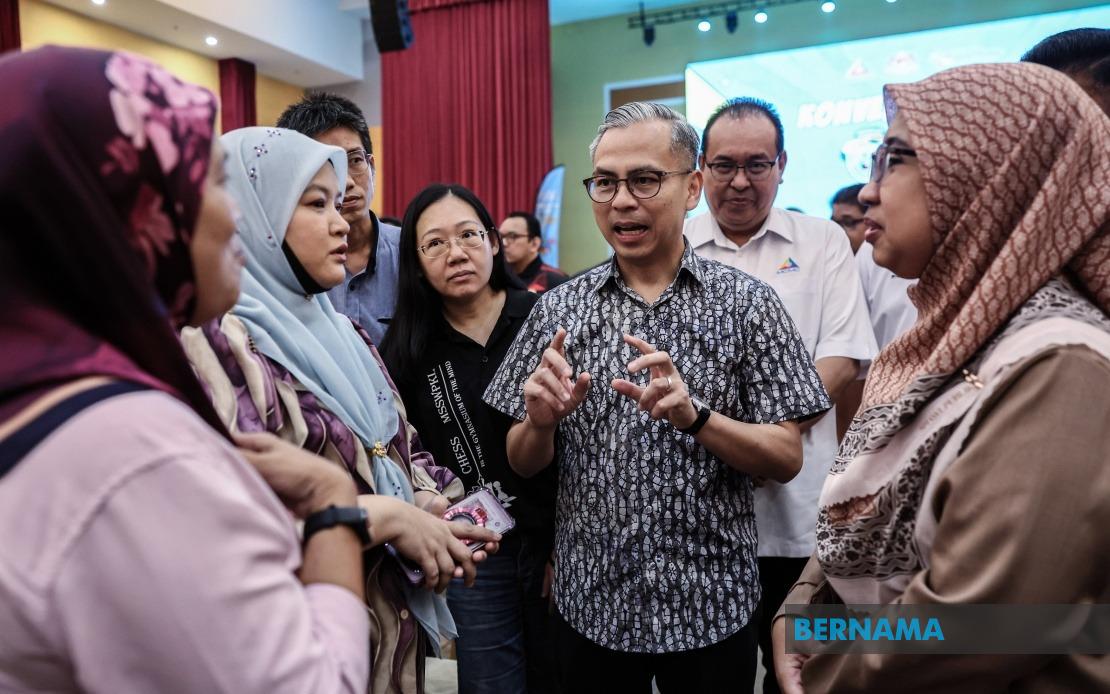
The Malaysian government has moved to settle ongoing debate about the MyKhas fund by making clear it is not a personal entitlement for Members of Parliament, but rather a special allocation designed to address the needs of people within parliamentary constituencies. Communications Minister Datuk Seri Fahmi Fadzil delivered this clarification on Thursday, reinforcing the position taken by Prime Minister Datuk Seri Anwar Ibrahim that government disbursements remain the property of the people they serve, not the elected officials who represent them.
Fahmi explained that MyKhas operates as a special provision housed within the Prime Minister's jurisdiction and documented formally in the Malaysia Plan and Budget papers. This administrative arrangement ensures the fund sits outside the individual discretion of any single MP, regardless of party affiliation. The mechanism functions as a dedicated resource pool, with the Prime Minister's office determining how and when the allocation flows to address specific constituency-level requirements. This structure reflects broader government thinking about the relationship between elected representatives and public resources in a democratic system.
The distinction Fahmi drew is significant for understanding how public money moves through Malaysia's political system. By anchoring MyKhas directly to the Prime Minister's office rather than to individual parliamentarians, the government creates a layer of central oversight that theoretically prevents misuse or partisan allocation of funds. This approach aligns with Anwar's repeated messaging that government allocations exist to serve citizens and improve their standard of living, not to enrich or empower particular politicians. The Communications Minister underscored this principle by noting even he cannot access MyKhas for personal purposes, emphasizing the fund's exclusive orientation toward public welfare.
The announcement carries particular significance for constituencies across Malaysia that may have opposition-held seats. Fahmi noted that residents in such areas can apply for assistance through the Implementation Coordination Unit situated within the Prime Minister's Department. This provision theoretically ensures that government resources reach communities regardless of whether their elected MP belongs to the ruling coalition or the opposition. Such transparency mechanisms help address concerns that development funds might be weaponized along party lines, a persistent worry in Malaysian politics where infrastructure and development spending frequently intersects with electoral competition.
Anwar reinforced these principles the day before Fahmi's press conference, emphasizing that the allocations funneled to parliamentary constituencies remain the common property of residents rather than exclusive instruments of elected representatives. The Prime Minister illustrated the scope of possible disbursements, ranging from school facilities and religious institutions to essential infrastructure maintenance including drainage systems. These examples demonstrate that MyKhas can address both social and physical development needs, providing constituencies with flexibility to direct resources toward their most pressing gaps.
The timing of this clarification suggests the government felt compelled to address confusion or criticism about how the fund operates. Malaysian politics has long grappled with questions about whether development resources flow fairly across different electoral areas, and whether MPs of ruling and opposition parties receive equal capacity to deliver benefits to their constituents. By institutionalizing MyKhas within the Prime Minister's apparatus rather than treating it as an MP perk, the MADANI administration attempts to impose neutral criteria for fund distribution. This approach, if genuinely implemented, could reduce the perception that government infrastructure favors government-aligned constituencies.
However, the effectiveness of such reforms ultimately depends on implementation practices and political will. While the formal structure places MyKhas under Prime Minister supervision, actual disbursement decisions will reflect the priorities and values of those administering the program. Opposition MPs seeking to access funds for their constituencies will need to navigate the Implementation Coordination Unit process, which adds an additional bureaucratic layer not faced by government backbenchers. This distinction, however unintentional, could still create practical disparities in access and responsiveness.
For Malaysian constituents and voters, the clarification offers important information about government resource flows. Rather than assuming their MP controls development allocations, residents now understand these funds operate through a centralized system nominally devoted to their welfare. This knowledge empowers citizens to engage directly with the Prime Minister's Department to advocate for their community's needs, potentially circumventing local political bottlenecks. Constituents can appeal directly through formal channels for assistance, whether their MP is sympathetic or obstructive to their requests.
The emphasis on institutional safeguards reflects broader regional trends in governance. Southeast Asian democracies increasingly grapple with questions about separating government resources from political actors' personal interests. Malaysia's approach through MyKhas joins comparable efforts across the region to create systems where development funds serve citizens rather than entrench political power. The success of such mechanisms ultimately hinges on whether political culture embraces their intended logic or finds workarounds to preserve patronage networks that have historically defined Malaysian politics.
Fahmi's position also addresses legitimate questions about resource equity in Malaysia's federal system. Constituents in states or regions without federal government representation might worry their areas receive less attention or support. By centralizing MyKhas allocation through the Prime Minister's office and explicitly welcoming applications from opposition-held constituencies, the government signals commitment to national equity rather than regional or partisan favoritism. Whether this rhetoric translates into practice will significantly shape public confidence in government fairness and accountability going forward.

