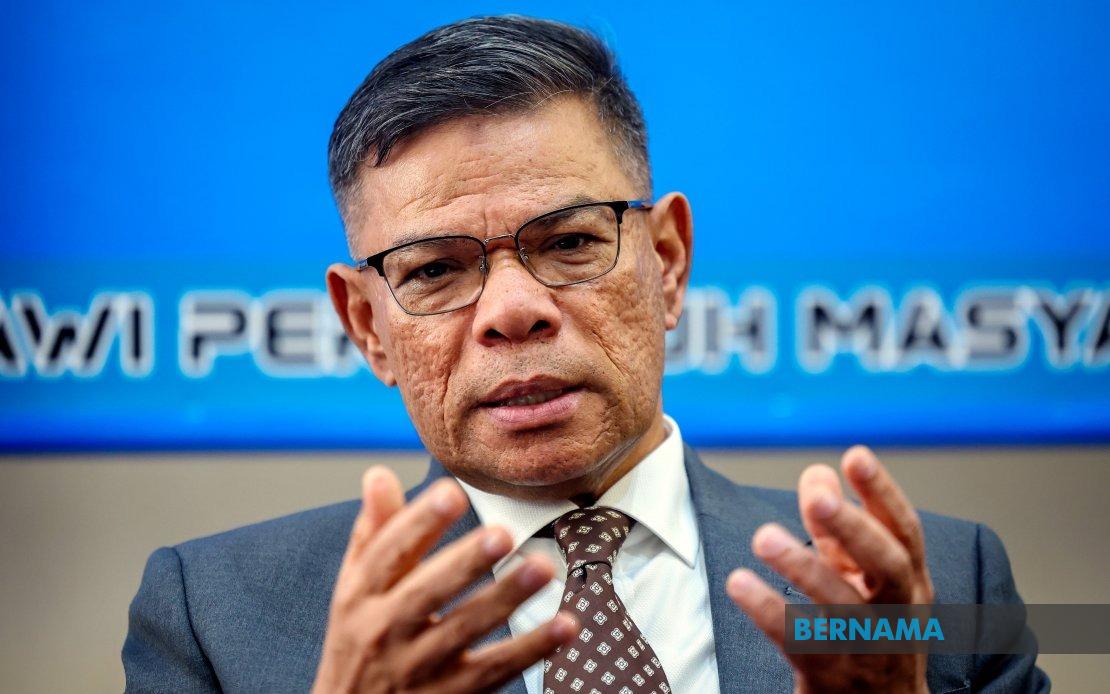
Malaysia's push to modernise its border crossing procedures is gaining momentum, with the National Integrated Immigration System (MyNIISe) recording nearly 20 million quick response code transactions at the country's two primary Johor entry points by late June. Home Minister Datuk Seri Saifuddin Nasution Ismail highlighted the growing uptake of the digital facility at the Sultan Iskandar Building and Sultan Abu Bakar Complex, underscoring how technology is reshaping the way travellers navigate Malaysia's immigration checkpoints.
The figures underscore a significant shift in border management practices. The system has amassed 2.4 million downloads and 1.27 million registered users, metrics that point to a meaningful proportion of regular cross-border commuters and travellers embracing the QR-based digital lanes. For a region where congestion at the Johor Causeway has long been a persistent headache affecting commerce and daily commuting patterns, the adoption statistics suggest that targeted infrastructure solutions can yield tangible results when properly implemented and promoted.
The Johor crossings serve as a critical testing ground for Malaysia's broader digital transformation agenda. Millions of people traverse these checkpoints annually—workers commuting to Singapore, tourists, and commercial traffic—making efficiency gains here particularly consequential for regional trade and mobility. The transition from traditional queuing systems to faster digital processing represents more than mere technological change; it reflects an attempt to address long-standing bottlenecks that have constrained economic activity and frustrated travellers for years.
What distinguishes MyNIISe's rollout is its integration across multiple entry points. The application has expanded beyond the Johor land borders to encompass five major airports nationwide, where it recorded more than 5.59 million transactions during the same period. This multi-modal approach suggests that Malaysian authorities are viewing digital immigration not as a piecemeal pilot but as a comprehensive overhaul intended to modernise border procedures across the country's primary gateways. The inclusion of airports acknowledges that international travel patterns encompass both land and air routes, and that comprehensive coverage strengthens the system's overall utility.
For Malaysian business operators and regular travellers, the implications are practical. Reduced waiting times at border crossings translate directly into lower transaction costs, faster goods movement, and more predictable travel schedules. Retailers in Johor, many of whom depend on cross-border commerce and daily foot traffic from Singapore, have potential to benefit from smoother operational flows. The digital lane concept also promises to improve data collection and security screening, allowing authorities to process more people more thoroughly without sacrificing speed—a balance that traditional manual systems struggle to maintain.
The government framed MyNIISe as emblematic of its MADANI agenda, emphasising that digital reforms should deliver concrete benefits rather than remain aspirational announcements. Saifuddin Nasution's public remarks about solving the congestion problem represent an implicit acknowledgment that previous administrations faced criticism for making pledges without achieving measurable improvement. By publicising specific transaction volumes and user figures, the current government is attempting to establish credibility around its reform commitments, signalling that administrative transformation is progressing.
Regional analysts note that Malaysia's move mirrors broader Southeast Asian trends towards digitising border management. Singapore, Thailand, and Indonesia have pursued similar initiatives, recognising that in an era of heightened mobility and e-commerce, outdated manual procedures become competitive disadvantages. Malaysia's adoption of QR-based systems positions it within this modernisation current, potentially enhancing its attractiveness as a transit hub and demonstrating commitment to facilitating legitimate cross-border movement.
The availability of MyNIISe across multiple app platforms—Apple App Store, Google Play Store, and Huawei AppGallery—reflects pragmatic design choices. Offering access through Huawei's ecosystem, for instance, acknowledges the significant user base in Malaysia and the region that relies on Huawei devices, ensuring inclusivity rather than defaulting to Western-centric platforms. This attention to local device preferences suggests that the system's designers considered user accessibility seriously.
Nonetheless, achieving the 1.27 million registered user milestone represents approximately 40-50 per cent penetration among regular Johor Causeway crossers, indicating that significant adoption gaps remain. Factors including digital literacy disparities, awareness levels among certain demographic groups, and varying degrees of smartphone penetration likely account for the gap. Expanding user numbers will require sustained promotion and potentially addressing technical barriers for older travellers and those less comfortable with mobile applications.
The transaction velocity also matters. At roughly 19.48 million transactions across two major checkpoints over approximately five months, the daily average suggests that the system is handling a meaningful but not yet dominant share of total border crossings. Full optimisation of border efficiency probably depends on achieving significantly higher adoption rates, particularly among heavy-volume users like daily commuters and commercial transport operators. This suggests that while MyNIISe represents genuine progress, the evolution towards fully digitised borders remains a work in progress.
Looking forward, the initiative's success will hinge on continuous improvement and integration with complementary systems. Cross-border coordination with Singapore's immigration authorities could amplify benefits by enabling reciprocal data sharing and synchronised processing. The system must also adapt to evolving security requirements and unexpected contingencies—as pandemic-related disruptions demonstrated, border systems require resilience and flexibility alongside technological sophistication.
For Malaysian policymakers, MyNIISe offers a model for how targeted digital investments can address longstanding service delivery challenges. If current momentum sustains and adoption increases further, the system could become a blueprint for modernising other government services plagued by congestion and inefficiency. The true measure of success will emerge not in headline statistics but in whether the technology translates into demonstrably shorter wait times, improved user satisfaction, and enhanced regional competitiveness for cross-border commerce and movement.

