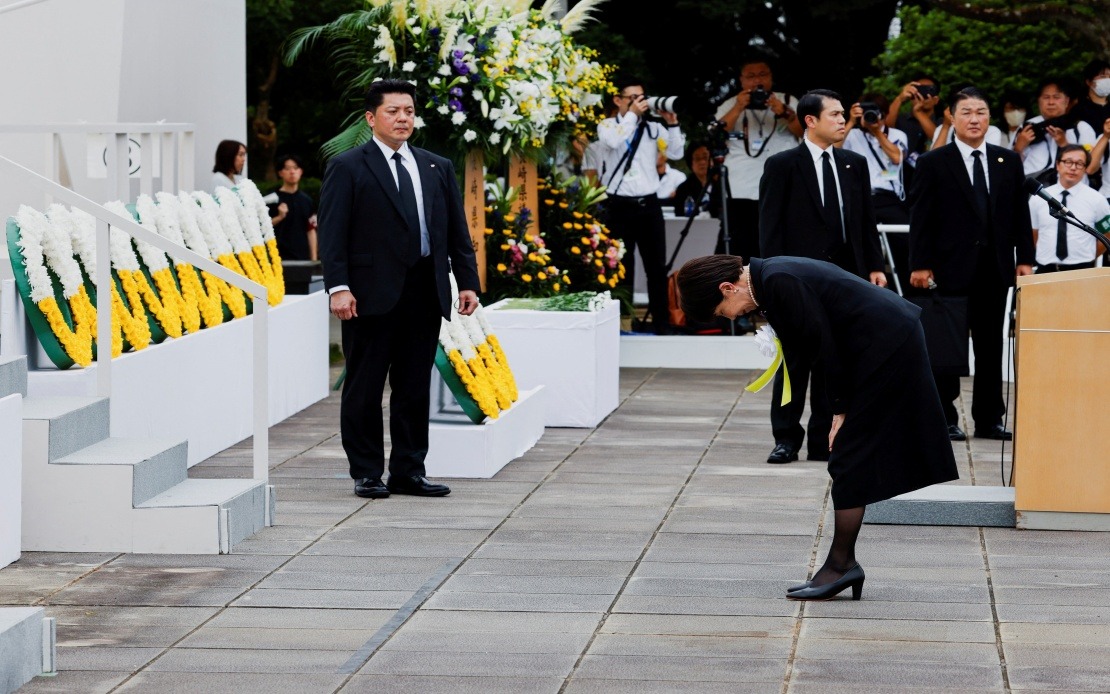
Nagasaki observed the 81st anniversary of the United States atomic bombing that devastated the southwestern Japanese city on August 9, 1945, with commemorative ceremonies that underscored deepening divisions over nuclear strategy in an increasingly volatile international environment. The observance coincided with intensifying global debate surrounding nuclear deterrence, prompted by deteriorating geopolitical conditions that have prompted some nations to reconsider their nuclear policies while advocates for disarmament pressed their calls for wholesale elimination of atomic weapons.
The anniversary event featured a moment of silence at 11.02 a.m., marking the precise moment when the "Fat Man" plutonium device was released from a US bomber and detonated above the city, an instant that killed approximately 74,000 residents by year's end 1945 and left countless others bearing lifelong injuries from radiation exposure. Nagasaki remains the only urban centre to have experienced a nuclear attack in warfare, a distinction that has shaped Japanese consciousness about atomic weapons for more than eight decades.
Mayor Shiro Suzuki, presiding over Sunday's ceremony, was expected to issue a forceful appeal to global leaders to pursue nuclear disarmament, emphasizing that human civilization cannot endure coexistence with nuclear arsenals. His remarks reflected the persistent advocacy by Japanese officials and survivors' groups who have positioned nuclear abolition as a moral imperative rather than merely a policy option. Prime Minister Sanae Takaichi attended the ceremony alongside a statement read on behalf of UN Secretary-General Antonio Guterres, underscoring the international dimensions of Japan's nuclear remembrance.
The timing of this year's anniversary proves particularly significant given shifting attitudes within Japan itself regarding its traditionally absolutist nuclear stance. The three nonnuclear principles enshrined in Japanese policy—renouncing the production, possession, and importation of nuclear weapons—have faced renewed scrutiny as regional security threats have mounted. Following the Hiroshima ceremony three days earlier, Prime Minister Takaichi reaffirmed that the government remains committed to these longstanding principles, a statement that appeared designed to quell speculation about potential policy revision despite mounting domestic debate on the subject.
The underlying tension reflects broader fractures within the international nonproliferation regime. In May, the quinquennial review conference of the Nuclear Non-Proliferation Treaty concluded without achieving consensus, marking the third consecutive failure to produce binding outcomes from such high-level gatherings. The monthlong negotiations held in New York exposed fundamental disagreements between nuclear-armed states, aspiring nuclear powers, and nations committed to disarmament, revealing how far removed the world remains from achieving any coordinated framework for reducing atomic arsenals.
For Malaysia and other Southeast Asian nations bound by the Southeast Asia Nuclear-Weapon-Free Zone Treaty, Nagasaki's anniversary carries particular relevance as it illuminates the risks inherent in nuclear proliferation and the fragility of regional security arrangements. The Comprehensive Nuclear-Test-Ban Treaty, while signed by most nations including Malaysia, remains unratified by several possessor states, limiting its enforceability. Japan's adherence to nonnuclear principles, despite hosting US nuclear capabilities under the bilateral security alliance, represents a delicate diplomatic balance that many regional observers view as a model worth preserving.
The aging hibakusha—atomic bomb survivors officially recognized by Japanese authorities—face a race against time to transmit their testimonies to younger generations. The average age of these survivors has now exceeded 86 years, with their numbers declining annually as natural mortality claims those who lived through the catastrophe. Their efforts to educate the world about nuclear war's human consequences have become increasingly urgent, as new geopolitical tensions threaten to normalize nuclear weapons discourse and potentially lower psychological barriers to their employment.
Japan's journey from atomic bombing victim to pacifist nation shaped by Article 9 of its post-war constitution has made it an eloquent advocate for disarmament on global platforms. Yet this principled stance now intersects uneasily with contemporary security anxieties, particularly regarding China's expanding military capabilities and North Korea's advancing nuclear programme. The tension between idealistic commitment to nuclear abolition and pragmatic concerns about regional military balances has become increasingly pronounced within Japanese political circles, with some conservative voices questioning whether strict adherence to nonnuclear principles remains viable.
The August 9, 1945, attack occurred merely three days after Hiroshima's destruction, yet it commanded less international attention despite comparable devastation. This asymmetry in historical memory partly reflects the rapid conclusion of the war—Japan surrendered just six days later on August 15—leaving limited time for comprehending the dual catastrophe. Contemporary observers in Southeast Asia, many of whose nations experienced Japanese military occupation during World War II, recognize the atomic bombings' significance within broader narratives of total war's destructive capacity and the technological means by which civilians bear warfare's heaviest burdens.
The continued observance of Nagasaki's anniversary assumes heightened significance as nuclear-armed powers modernize their arsenals and develop new delivery systems seemingly without international oversight. The collapse of Cold War-era arms control frameworks, including the Intermediate-Range Nuclear Forces Treaty, has removed guardrails that previously constrained nuclear competition. For Asian nations concerned about great power rivalry in their region, Nagasaki's commemoration serves as a sobering reminder of nuclear weapons' apocalyptic potential and an implicit argument for renewed commitment to nonproliferation regimes, regardless of whether major powers prove willing to reduce existing stockpiles.

